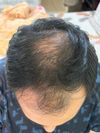
Winlevi (clascoterone 1%) is being discussed as a potential hair loss treatment. Users are considering its use despite concerns about its delivery method.
Hair loss discussion mentions using Minoxidil, Finasteride, and RU58841. Users compare subscription services for hair treatments to other daily necessities and discuss cheaper alternatives.
The conversation discusses whether age affects the side effects and effectiveness of hair loss treatments like finasteride and dutasteride. Some believe early treatment yields better results, while others mention varied outcomes across ages and personal regrowth experiences without a clear consensus on age impact.
The user experienced headaches and brain fog with a topical solution containing Dutasteride, Minoxidil, Tretinoin, Fluocinolone, Latanoprost, and Caffeine. They are considering switching to oral or topical Finasteride to see if it alleviates these side effects.
PP405 increased hair density by 20% in 31% of participants, but results are considered underwhelming. Minoxidil and finasteride are seen as more effective treatments.
The user is considering switching from topical to oral finasteride due to lack of progress with their current hair loss treatment, which includes topical fin/min, microneedling, Nizoral shampoo, oral minoxidil, biotin, collagen, tretinoin, and hair masks. A suggestion was made to try oral finasteride for potentially better results and to monitor progress over 6-12 months.
Someone looking for solutions to their hair loss, who has tried and failed to tolerate anti-androgen treatments such as finasteride, CB-03-01, RU58841, and Eucapil. The user is seeking advice and understanding of their extreme sensitivity to these treatments.
The conversation discusses the potential benefits of creating a hydrophobic version of finasteride to reduce systemic side effects while maintaining scalp health. It compares this idea to fluridil, which is designed to be hydrophobic and has less systemic absorption.
User deciding between oral and topical minoxidil, concerned about hypertrichosis and myocarditis interaction. They're using topical finasteride, LLLT, natural oils, dermastamping, and scalp massage, and considering adding oral minoxidil.
The user is considering using 2 vials of Fluridil every other day instead of 1 vial daily for better scalp coverage. They are questioning if this method would be as effective.
The user seeks alternatives to Propylene Glycol (PG) for delivering topical finasteride due to scalp irritation. They consider using Propanediol 1,3 and ask for other suggestions.
GT20029 shows promising results for hair loss treatment, with potential approval in China by 2026 or 2027, but U.S. approval may take longer. It could serve as an alternative to finasteride, with a potentially better side effect profile.
The conversation discusses coping with hair loss and the emotional impact of balding, with some users finding peace in shaving their heads. Treatments mentioned include minoxidil, finasteride, and lifestyle changes like diet and exercise.
A 23-year-old male plans to temporarily stop finasteride to donate plasma for financial reasons and seeks alternative hair loss treatments like minoxidil, ketoconazole, or RU58841 during this period. He is open to suggestions to prevent further hair loss until he can resume finasteride.
The conversation is about whether 0.5 mg of finasteride reduces scalp DHT as effectively as 1 mg. Users suggest that even lower doses like 0.05 mg can significantly reduce scalp DHT.
The conversation discusses biannual SCUBE3 injections and microneedling as treatments for hair loss. Specific treatments mentioned include Minoxidil, Finasteride, and RU58841.
Users discuss potential game-changing hair loss treatments in the next 10 years. Some mention KX-826, SCUBE3, and stem cells as promising options, while others express doubt due to past disappointments and lack of focused research.
The user is considering lowering the dosage of finasteride and minoxidil due to side effects like mood changes, lower libido, and brain fog, while wanting to maintain hair regrowth. A suggestion was made to try a lower dose of finasteride, such as 0.2 mg.
A user is considering finasteride for hair loss and is concerned about its effects on DHT levels and potential side effects, including those from creatine. The user seeks advice on finasteride's impact on hair and body hair, given their high DHT and testosterone levels.
A 16-year-old considering finasteride for hair loss is advised to consult medical professionals due to age-related concerns, as they are currently using minoxidil and ketoconazole. Users suggest waiting until 17 or consulting a dermatologist for a professional opinion, with some recommending topical finasteride as an alternative.
The conversation discusses the need for a localized 5-alpha reductase inhibitor that only affects the scalp without systemic side effects, similar to pyrilutamide's approach. Current treatments like topical liposomal finasteride and dutasteride are mentioned, but concerns about their systemic effects and lack of research are highlighted.
The conversation humorously discusses various hair loss treatments and alternatives, including finasteride, minoxidil, and rosemary oil, with some users joking about wigs and unconventional items like roadkill. One user mentions using oral finasteride and minoxidil, topical rosemary oil, and microneedling.
The conversation discusses how the absorption rate of topical finasteride varies and is not equivalent to its oral form, with only a small percentage reaching the scalp. It also mentions that minoxidil in high concentrations is used topically because only a small amount is absorbed.
A 21-year-old male is concerned about hair loss, particularly his hairline, and is considering using minoxidil and finasteride but is unsure about the safety of finasteride. He is seeking opinions on these treatments to maintain his hair through his 20s.
The conversation expresses frustration over the lack of clear evidence regarding the effectiveness and systemic impact of topical Dutasteride for hair loss treatment, despite years of discussion. People are criticized for not conducting proper research and for providing contradictory anecdotal claims.
Pelage received $120 million for phase 3 of PP405, a potential hair loss treatment, but there is skepticism about its success. Some users believe any improvement over finasteride is a win, while others expect full hair regrowth.
The conversation discusses the use of coenzyme Q10 as a potential aid for androgenetic alopecia, alongside dutasteride. The user is seeking feedback on whether coenzyme Q10 improves or worsens hair condition.
The user is considering adding an anti-androgen, RU58841, to their current hair loss treatment routine due to receding hair. They are also contemplating waiting for Breezula or Pyrilutamide to become more affordable.