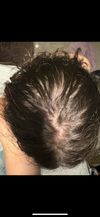
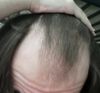
The conversation is about whether the phase 2 results for pyrilutamide, a potential hair loss treatment, were presented at a dermatology convention and inquiries about the completion of phase 3 trials. Specific treatments mentioned include pyrilutamide.
The conversation discusses the delay in bringing FAK inhibitors and Stanford's hydrogel to market for hair transplants, with a preference for FAK inhibitors over Verteporfin due to their superior potential in preventing scarring. The user expresses frustration over the slow progress and hopes for faster development by companies like FAKnostics.
User experienced hair thinning due to high cortisol and thyroid issues, along with insulin resistance. They are taking magnesium, zinc, vitamin D, calcium, and selenium as supplements.
Using PP405 and Clascoterone after a hair transplant may not cause issues if the transplant didn't achieve native density, but could lead to competition for blood supply if it did. Some users suggest waiting for these drugs to be available, as they might not significantly impact blood supply or regrowth.
The user is considering using topical finasteride for thinning hair around the middle part, vertex, and crown, and is unsure if the whole scalp is thinning. Another user suggests oral finasteride is more effective than topical, and recommends consulting a dermatologist for proper treatment.
A 28-year-old man shared his experience with a 2990 graft FUE hair transplant at HDC Clinic in Cyprus, praising the professionalism and care received. He has been using topical Minoxidil, Biotin, Dermarolling, and recently started Finasteride and oral Minoxidil.
A recent discovery in hair cloning identified a previously unknown cell type essential for hair follicle growth, which could potentially make lab-grown hair viable if translated to humans. However, skepticism remains due to past delays and the challenges of replicating results in humans and making the process affordable.
TGF-B affects hair growth, both causing stem cell division and death depending on amounts. Amplifica's treatment injects Scube3 to increase TGF-B for hair growth.
A user shared progress pictures showing improvement in PCOS-related hair loss after six months of using topical minoxidil, dermarolling 0.5mm weekly, and taking biotin gummies. They expressed happiness about the appearance of new baby hairs.
Concerns about the long-term safety of VDPHL01, an extended-release minoxidil, due to potential risks similar to Cantu syndrome, were raised, highlighting the lack of monitoring for chronic connective tissue changes. The conversation suggests that while the treatment may improve hair growth, it could lead to issues not detected in short-term trials.
Gut microbiota significantly influences androgen metabolism, impacting hair loss treatments like finasteride. Probiotics, dietary changes, and fecal microbiota transplants may help manage DHT levels and improve hair health.
An arthritis drug, baricitinib, is discussed as a potential treatment for autoimmune alopecia, not androgenetic alopecia. Ritlecitinib is also mentioned as a possible treatment for scarring alopecia.
Visible hair improvement after 10 weeks using minoxidil, estradiol enanthate, acetophenide algestone, and bicalutamide. The user is a 25-year-old male with reduced testosterone levels, expressing a preference for less masculinity.
A user shared their 9-month progress using RU58841 at 2% daily for hair regrowth, initially starting at 5% but reducing the dose due to early signs of gynecomastia, which has since mostly resolved. They achieved their goal of regrowing hair at the temples and hairline.
OP shared progress pictures 8 months after FUE surgery in Korea by Dr. Hyun, using Dutasteride. Users discussed the use of Dutasteride over Finasteride in Korea.
Peptides like GHK-Cu, BPC-157, and TB-500 have significantly reduced hair loss, with GHK-Cu being particularly effective. The discussion also covers the high cost of these peptides and explores more affordable purchasing options.
Kintor announced Phase 3 results for pyrilutamide, a hair loss treatment, in China. The conversation is focused on this announcement and its implications for hair loss treatment.
The user is experiencing hair thinning and loss at the temples, likely due to androgenetic alopecia. Suggested treatments include finasteride and minoxidil to slow hair loss and promote regrowth, with buzzing hair short as a styling option.
PP405 shows promise in stimulating new terminal hair growth by activating dormant follicles, with no systemic adverse effects observed in a short-term trial. However, long-term efficacy remains unproven, and further trials are needed to confirm its potential as a hair loss treatment.
A user experienced a hard lump under their nipple and increased hair loss after four months of finasteride. They are concerned about the lump and plan to stop the treatment.
TDM-105795 showed promising hair growth results, with higher efficacy than placebo and minimal side effects. It activates dormant hair follicle stem cells and may maintain gains without immediate loss, unlike minoxidil.
The conversation discusses the use of spironolactone, cyproterone acetate, and bicalutamide for hair loss, with concerns about side effects like gynecomastia and depression. Topical spironolactone is considered safe for men and effective when combined with regular treatments.
The conversation discusses alternative and unorthodox hair loss treatments, including RU58841, nandrolone, and dianabol, as well as theoretical approaches involving high doses of estrogen and selective estrogen receptor modulators. These methods are considered extreme and potentially harmful but are explored for those unable to tolerate traditional 5-alpha reductase inhibitors.
A user is seeking recommendations for doctors who perform Dutasteride mesotherapy in NJ or PA, as they are having trouble finding one through Google. The conversation focuses on finding a suitable provider for this specific hair loss treatment.
People are discussing hair loss treatments, including pyrilutamide, minoxidil, dutasteride, alfatradiol, and bimatoprost. Users share their experiences and side effects, noting that pyrilutamide is considered more effective and safer than RU58841.
After jaw surgery caused intense hair shedding and scalp itch, using pyrilutamide significantly reduced these symptoms. It's suggested to test pyrilutamide for authenticity before use, despite positive personal experience with the product from MV Supplements.
A user traveled to Turkey for a 5000-graft FUE hair transplant at ASMED Clinic with Dr. Koray Erdogan. They used finasteride before and after the surgery and shared detailed experiences, costs, and recovery tips.
After 4 months of using topical finasteride and minoxidil, blood tests showed increased E2, Test, and Prolactine levels. The user is concerned about potential side effects like gyno and is seeking advice on managing these values.
PP405 is a potential hair loss treatment undergoing trials, with discussions on its effectiveness and comparison to existing treatments like finasteride and minoxidil. There is skepticism about its status as a cure, with hopes for future advancements in genetic treatments like CRISPR.