Search
for
Sort by
Community Join
480-510 / 1000+ resultscommunity My dear dog (M9) is balding...
The conversation is a satirical discussion about a user joking that their dog is balding and needs hair loss treatments like finasteride, with others commenting on the creepiness of an AI-generated image of a dog with human features.
community ~3 year update on my singular DHT immune hair for you guys
The post is an update on the user's hair loss journey. They have a strong hair follicle that has remained unaffected by hair loss for almost 3 years. The user is starting finasteride and using ketoconazole, alfatradiol, and oral castor oil for hair maintenance.
community Hair transplant AI simulations research
A user developed AI software to simulate hair transplants on photos, helping people visualize potential results. The tool offers photo-realistic renderings but advises caution regarding exact outcomes due to various factors.
community Verteporfin Update #4: Month 5 | Dr Blake Bloxham, Feller & Bloxham Medical
The conversation discusses patient updates on hair loss treatment with Verteporfin after five months, as reported by Dr. Blake Bloxham. Patients voluntarily sent their progress pictures to Dr. Bloxham.
community Which hairsurgeon - except Dr. Barghouthi - is using Verteporfin right now?
A discussion on the use of Verteporfin as a hair restoration treatment and whether there are any other doctors or clinics using it currently, aside from Dr. Barghouthi. Treatments such as Minoxidil, Finasteride and RU58841 were also mentioned.
community My next option should be what? After a transplant.
The user is unsatisfied with their hair transplant and is considering another transplant, PRP, exosomes, or stem cells. They currently use topical minoxidil, dutasteride, and tretinoin.
community Thoughts on this Article: Post-Finasteride and Neurological Effects
The conversation discusses the effects of finasteride on hair loss and its potential neurological and sexual side effects. Users share personal experiences, with some reporting positive outcomes and others expressing concerns about cognitive function.
community Nest topical compound stack to fight hair loss
The user is seeking advice for the best topical treatment to combat their ongoing hair loss, despite already using oral dutasteride, RU-58841, and minoxidil. They are considering adding CB-03-01 or topical Spiro to their regimen to lower testosterone levels at the follicles.
community After quitting min and fin I asked AI on how fix the mess I am in and it says:
Prolonged use of topical minoxidil and finasteride can lead to neuroendocrine and autonomic dysfunction, causing severe sensitivity and side effects. Recovery involves avoiding these treatments, supporting neurosteroid recovery, calming the sympathetic system, and rebuilding scalp health naturally.
community Is "hair stem cell transplant" legitimate?
community Finally did my hairline transplant at 21
community Has anyone tried Peptonix microneedling?
The conversation discusses Peptonix microneedling, a copper peptide serum, as a potential hair loss treatment. Users compare it to finasteride and minoxidil, noting side effects and personal experiences with these treatments.
community Has Anyone Heard About Ethossomal Finasteride? 6x Finasteride Delivery in Hair Folicule?
A user is considering switching from oral to topical finasteride to reduce systemic DHT impact and is exploring ethossomal finasteride for better skin penetration and potential hair regrowth. They found ethossomal finasteride in Brazil and are seeking opinions on its effectiveness compared to other topical delivery methods.
community REVOLUTION in AUGUST: New possibilities according to Dr. Muñoz (pinacidil, cromakalim, diazoxide and nicorandil)
Dr. Muñoz's discovery suggests that targeting potassium channels in fibroblasts could reactivate hair growth, offering new treatment possibilities for alopecia. Potential strategies include using minoxidil, diazoxide, and other potassium channel openers, as well as bioelectric devices and direct growth factor applications.
community Hair transplant, 3 month progress
The user experienced hair loss after a hair transplant and stopped using finasteride and minoxidil temporarily, as advised by their medical team. They resumed the treatments and are hopeful for regrowth, attributing the current hair loss to shock loss and shedding.
community 4 months after HT and 3 months on every other day 1.25 mg fin + 2x daily topical min
The user had a hair transplant with 2000 grafts in the frontal and mid-scalp areas and has been using finasteride and minoxidil for 3 months. The crown area is expected to improve with continued treatment, and results are generally positive so far.
community Stemson Therapeutics and hair cloning pipeline
The conversation discusses the progress and potential of hair cloning by Stemson Therapeutics, questioning if it will be realized in the next 5-10 years or if it's just false hope. Specific treatments mentioned include Minoxidil, finasteride, and RU58841.
community Which mesotherapy should I choose?
A user is considering adding PRP and mesotherapy to their hair loss treatment and is deciding between two options: Promoitalia, which contains Phosphatidic acid, Riboflavin, and Superoxide dismutase, and the more expensive Melsmon, a human placenta derivative. They seek advice on which option to choose based on effectiveness and scientific backing.
community is this a hair transplant (57 yo)
A 57-year-old man uses a hair system, not a hair transplant, and likely had cosmetic procedures. Discussions include the effectiveness of hair systems and finasteride side effects.

community M17 regrowth journal
A 17-year-old is addressing hair loss with finasteride, topical minoxidil, and microneedling. They are considering adding GHK-Cu to their regimen, but others advise caution with finasteride due to age.
community Does microneedling regrow hair on dormant bald regions which have been bald for many years?
Microneedling may help regrow hair in dormant bald regions by stimulating stem cell transfer. Users discuss its effectiveness and how collagen might aid in the process.
community Hairloss Reversal with Stem Cell Therapy
community Dealing with Retrograde Alopecia
User on Dut, oral minox 20 mg, Saw Palmetto, Pumpkin Oil, RU, 8% topical minox, and topical fina for hair loss; top of head improves, but retrograde alopecia worsens. Asks for options besides exosomes and where to find topical melatonin.
community Finasteride gyno experience and in dire need of advice
A user experienced puffy nipples and lumps from finasteride, leading to a dilemma between continuing treatment with potential surgery or accepting hair loss. They restarted finasteride at a lower dose with supplements but still face side effects and are seeking advice on whether to persist or stop.
community FUT Verteporfin trials coming up soon. Dr. Baghouthi will also do a second FUE trial in the next months
Hair loss discussion involved Finasteride, Minoxidil, and RU58841. User experienced sudden shedding after 1.5 years of Finasteride and Minoxidil use, seeking advice.
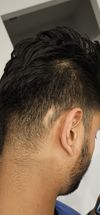
community Patch Behind Ear Possibly Due to Glasses, Is it Traction Alopecia?
The patch behind the ear is likely traction alopecia caused by glasses. No specific treatments like Minoxidil, finasteride, or RU58841 were mentioned.
community Peeps who arent able to get gains even after using fda approved meds
Some people don't see results with FDA-approved hair loss treatments like finasteride or minoxidil due to underlying issues. The video suggests addressing these issues, especially if there are atypical symptoms or other health conditions.
community Hair Transplant + Scalp Treatments
The conversation discusses the benefits of combining scalp stem cell treatments and exohealer with RF microneedling before a hair transplant. The original poster recommends these treatments for better results.
community My Near-Nuclear Stack is Saving me; Hyperresponder?
An 18-year-old is using a high-dose hair loss treatment regimen including finasteride, minoxidil, dutasteride, and plans to add RU58841 and bimatoprost, despite warnings from others about the risks. The user is determined to reverse hair loss but acknowledges the potential dangers and does not recommend others follow their approach.