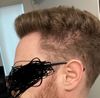
Redensyl improved hair thickness slightly with no side effects, but no regrowth. Minoxidil provided significant regrowth but caused facial side effects like puffiness.
The conversation questions the lack of feedback on the effectiveness of PGE2 and setipiprant for hair loss, despite their availability. The user is puzzled by the absence of reviews or results, whether positive or negative.
Cosmo Pharmaceuticals has enrolled about 850 out of 1400 patients for their phase 3 clinical trials of clascoterone (Breezula) and claims to be on schedule. The conversation is about hair loss treatments.
A 34-year-old male is experiencing hair loss on the sides of his head, with inflammation and itchiness, while the top remains thick. He is using topical dutasteride and keto shampoo to address the issue.
Topical minoxidil can cause increased body hair due to systemic absorption, varying by individual skin sensitivity. The user seeks experiences and solutions to prevent this side effect.
The user tried Redensyl but stopped using topical finasteride and continued with 5% minoxidil. They are experiencing hair loss and considering accepting baldness.
A user is considering trying Aevin hair creme, which contains ingredients like jojoba oil and saw palmetto, despite skepticism about its effectiveness compared to treatments like finasteride, minoxidil, or hair transplants. They are wary of the product's legitimacy due to the lack of reviews outside the brand's website.
Oral minoxidil can cause severe side effects, including heart issues, even at low doses. Users suggest starting with a lower dose or using topical treatments to minimize risks.
The user started using topical finasteride 0.025% and minoxidil 5% twice daily, seeing initial improvement but later experiencing shedding and scalp pain. They are considering increasing the finasteride dose to 0.05% while using keto shampoo and dermarolling, and are debating the effectiveness of low versus standard doses of finasteride.
The conversation discusses hair loss treatments, specifically using 5% minoxidil foam, Vitamin B12, and Vitamin D, with suggestions to add oral finasteride and minoxidil for better results. Concerns about side effects, particularly from finasteride, and the need for a DHT blocker are also highlighted.
Clascoterone's European release is expected in Q4 2026, with FDA approval anticipated by mid-2027. The discussion includes questions about the approval timeline and potential acceleration due to unmet needs.
A 26-year-old male is unhappy with his current hair loss routine, which includes microneedling, ketoconazole shampoo, and a topical formula with Minoxidil, Finasteride, and other ingredients. He struggles with consistency due to ADHD and is considering switching to oral medication for simplicity, but is concerned about side effects and effectiveness.
The user is experiencing white flakes on their scalp despite using anti-dandruff shampoos and oils for six weeks. A suggestion was made to try ketoconazole at higher concentrations, as it might be seborrheic dermatitis, which can lead to hair loss if untreated.
The conversation discusses scalp issues and hair loss, with treatments like Accutane, Nizoral, and H&S being used. Suggestions include considering finasteride, minoxidil, and jojoba oil, with caution advised for the latter.
The user is asking if they are experiencing hair regrowth while using a treatment regimen that includes hair regrowth gel with castor oil, minoxidil 5% with latanoprost, dermastamping once a week, ketoconazole shampoo, and nizoral cream. They have shared photos after applying these treatments.
Avoid home-compounding topical minoxidil due to potential risks and complications. Use proper equipment and techniques to prevent aerosolization and ensure effective dissolution.
A user from China is participating in a clinical trial for Pyrilutamid, a potential hair loss treatment originally developed for prostate cancer. They've experienced no side effects except initial scalp itchiness, and will share results after the year-long trial.
Applying Epidermal Growth Factor (EGF) topically may improve skin and potentially promote scalp health and hair growth, especially after microneedling. The user shares their positive experience with EGF and provides a product link.
The user experienced increased hair shedding after using RU58841, despite initial improvements in scalp condition and appearance. They are considering stopping RU58841 to see if shedding decreases.
A user is testing clascoterone (Winlevi) on their scalp for hair loss and has noticed a reduction in scalp sebum after one month. They are also using other unspecified treatments and plan to provide an update after the second month.
The conversation is about making a hair loss treatment combining minoxidil with azelaic acid, retinol, and caffeine, similar to the product Xandrox. The user has tried Xandrox but switched to Kirkland minoxidil for cost reasons and is seeking advice on creating a similar mixture.
Skin, Hair, and Nails by Pharmekal was withdrawn from the market. Users discuss alternative supplements and treatments like Minoxidil, finasteride, and RU58841.
Minoxidil may age skin by slowing collagen synthesis, but using collagen peptides and a basic skincare routine might counteract this. Foam minoxidil could reduce systemic absorption and avoid alcohol-related side effects.
The routine involves using minoxidil, dermapen, and tretinoin for hair loss, with minoxidil applied daily and tretinoin used on alternate days. It is suggested to avoid using tretinoin and dermapen on the same day to prevent irritation.
The conversation discusses the use of topical minoxidil for hair loss and the potential benefits of taking a Minoxidil Response Test to determine enzyme activity related to its effectiveness. Some users have considered or tried alternatives like oral minoxidil or tretinoin, with mixed experiences regarding side effects and effectiveness.
A 22-year-old male is concerned about hair loss and questions the effectiveness of prescribed "Merz special" and "Revalid" products, which lack finasteride or minoxidil. Users suggest seeking a different doctor for finasteride and minoxidil treatments.
A user is considering using a 0.025% topical finasteride solution with DMSO to enhance absorption but is unsure about its effectiveness and safety. Other users express concerns about DMSO's properties and potential effects on the scalp.
The conversation discusses using topical dutasteride with a dermapen for hair loss treatment. The user is deciding between liposomal and mesosomal formulations for this purpose.
The user is using topical dutasteride, finasteride, minoxidil, and tretinoin but seeing no results or side effects. They also microneedle every two weeks but experience little bleeding, questioning if a thick scalp is preventing treatment effectiveness.
A 19-year-old diagnosed with AGA was refused finasteride by a dermatologist who cited fertility concerns and prescribed minoxidil, vitamins, and shampoos instead. The user is unsure about using minoxidil and considers finding another dermatologist.