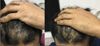
Eucapill 2% used for 1 month reduced shedding from 200 to 10/20 hairs daily with no side effects. Finasteride caused side effects like ED and watery semen.
The user has been using oral minoxidil and dutasteride for hair loss without success and is considering adding topical 17α-estradiol, Pyrilutamide, Clascoterone, or cetirizine. They have confirmed low serum DHT levels and are exploring additional treatments due to genetic sensitivity to DHT and prostaglandin D2.
The user is considering adjusting their hair loss treatment by adding 1-2 weekly doses of Dutasteride to their current daily regimen of Minoxidil and Finasteride, aiming to gradually increase effectiveness while minimizing drug use. They seek experiences from others who have tried similar combination therapies.
The user is using 0.1% dutasteride, 1% minoxidil with 2% procapil and 0.005% caffeine in the morning, and 1% minoxidil with 2% procapil and 0.01% tretinoin at night. They are concerned about the solution vehicle's effectiveness in preventing systemic absorption and ensuring the products stay around the hair follicles.
Exploring hair loss treatments beyond DHT, including Minoxidil, pyruvate, Gt20029 targeting androgen receptors, and vasodilators. Other options like Kx826, adenosine signaling, growth factor topicals, and microneedling are also discussed.
The conversation discusses using high molecular weight hyaluronic acid after microneedling to form a protective barrier, though it's considered expensive and offers marginal improvement. Users share experiences with different microneedling tools like derma rollers, dermastamps, and Dr. Pen, with some opting not to use any products on the scalp.
A 22-year-old is using a hair loss treatment protocol including dutasteride, microneedling, 10% minoxidil, 0.1% finasteride topical, a healthy diet, and a hair multivitamin. Users discuss the effectiveness of microneedling and the intensity of the treatment.
PP405 is ineffective for miniaturized, fibrosed hair follicles in androgenetic alopecia. AMP303 may activate hair follicle stem cells, but minoxidil and finasteride are still the main treatments.
The user experienced hair loss while using finasteride for over 2 years, but saw slight improvement after switching to dutasteride. They also started using a scalp moisturizer for seborrheic dermatitis, which may have contributed to the hair regrowth.
Veradermics' phase 2 trial of slow-release oral minoxidil shows promising hair regrowth with minimized side effects, gaining significant attention and funding. PP405 is also noted for its potential as a side-effect-free alternative.
Using dermaneedling or dermapen for hair loss while managing seborrheic dermatitis and dandruff. Treatments mentioned include ketoconazole, peppermint and jojoba oil, and rubbing alcohol.
A user is seeking advice on adding dutasteride to their finasteride regimen to stop DHT-related scalp itch. They have tried selenium sulfide and ketoconazole shampoos with temporary success.
Azelaic acid is discussed as a DHT inhibitor with no reported sexual side effects, but its effectiveness and absorption as a topical treatment are questioned. The user is interested in azelaic acid due to concerns about finasteride affecting penile health.
The conversation is about a user expressing concerns over the safety of a new drug called Pyrilutamide (also known as KX-826) for hair loss. The user will only trust the drug if it's permitted by EU regulations and sold by a reputable company.
How Pyrilutamide, a hair loss treatment, has improved texture and regrowth of hair without any side effects for users, who are encouraged to post progress photos.
Aminexil/Kopexil may help reduce hair loss by addressing perifollicular fibrosis in androgenetic alopecia, but it lacks the extensive clinical backing of finasteride and minoxidil. Some users find it effective, but availability and cost are issues, especially in the US where it's not FDA-approved.
The user stopped oral treatments due to side effects and switched to a regimen of topical minoxidil, tretinoin, azelaic acid, and dermaneedling, with recent addition of topical finasteride. They are questioning the long-term effectiveness of non-hormonal methods and considering hair transplantation.
Spraying pyrilutamide on the crown area shows noticeable improvement compared to using a dropper. Applying directly to the vertex is challenging without wasting the product.
The conclusion of the conversation is that the user has experienced significant hair regrowth using a combination of medications, including dutasteride, RU58841, and minoxidil. They have not experienced any noticeable side effects and are considering a hair transplant in the future.
The user experienced severe scalp itching and hair loss while on dutasteride, which they linked to caffeine and masturbation. They plan to cut out both to see if their hair density improves.
The user experienced hair thickening and regrowth using dutasteride on alternate days, oral minoxidil every third day, and daily hair massages, but is dealing with dandruff and inflammation. They are considering adjusting their minoxidil dosage and have started using ketoconazole shampoo and cupping therapy for additional benefits.
The user is using Dutasteride (90.5mg) and Minoxidil (2.5mg) for hair loss since October 2025 and is seeking feedback on their progress. They provided comparison photos from October 2025 and January 2026.
The conversation discusses using a multimodal approach to treat androgenic alopecia, including substances like gamma-linolenic acid, DHA, sulforaphane, melatonin, cetirizine, astaxanthin, fisetin, apigenin, curcumin, limonene, genistein, and berberine. Users also mention using ketoconazole, minoxidil, and low-level laser therapy (LLLT) as part of their hair loss treatment regimens.
A user shared their experience using dutasteride for hair loss, noting subtle improvements and thicker hair without significant regrowth. They did not use finasteride or minoxidil, and experienced occasional shedding but no side effects.
The user is using a hair recovery treatment with 0.5 mg dutasteride, 5 mg biotin, 5% topical minoxidil, and dermarolling twice a week. They are considering using a 1.5 mm dermaroller and red light therapy.
Switching from finasteride to dutasteride can lead to varied results, with some experiencing better hair regrowth and fewer side effects, while others continue to lose hair. Dutasteride is generally seen as more effective but has a longer half-life, potentially extending side effects.
The potential of using a specific antibody, HMI-115, as a treatment for hair loss alongside traditional treatments such as minoxidil and finasteride. The user suggests trying either a 240 mg or 30 mg dose to see if it works.