The conversation discusses hair loss treatments, specifically Minoxidil, finasteride, and RU58841. It also mentions observations about the Amla page on Examine.
A user discusses their experience with at-home microneedling at 1mm for hair growth, feeling like they're hitting their skull. Other users suggest lowering the needle depth or stopping due to discomfort.
The user experienced noticeable hairline regrowth after starting finasteride for crown hair loss, despite scalp irritation from topical minoxidil. They are impatient for crown results.
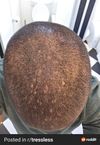
The user noticed small circular hairless spots after a buzz cut and has been using finasteride, dutasteride, and oral minoxidil for hair loss. They are experiencing continuous shedding and thinning, and it is suggested they consult a dermatologist for a scalp examination and possible biopsy to determine if it's alopecia areata or androgenetic alopecia.
A user bought questionable RU58841 powder from AliExpress and seeks a way to test its composition in Europe. Another user suggests using Janoshik for testing.
The user has been dermarolling and applying argan oil with peppermint or rosemary oil, noticing baby hair growth on the hairline. They are questioning if this indicates treatment success or faster hairline recession.
A user shared their 9-month progress using RU58841 at 2% daily for hair regrowth, initially starting at 5% but reducing the dose due to early signs of gynecomastia, which has since mostly resolved. They achieved their goal of regrowing hair at the temples and hairline.
The user is experiencing hair loss at the hairline and is using finasteride, but considering minoxidil due to lack of improvement. Replies suggest that minoxidil may be more effective for hairline maintenance, especially when used in combination with finasteride.
PP405 is a safer alternative to JXL069 for hair loss treatment because it penetrates the skin effectively and degrades in the blood, avoiding systemic toxicity. JXL069, when forced into the body, can cause dangerous side effects like lactic acidosis due to its inability to degrade safely.
The user uses a 1.5mm derma stamp weekly for hair loss and applies minoxidil afterward, feeling a slight burn but no bleeding. They question if bleeding, seen in others using a derma pen, indicates proper technique.
Microneedling is discussed as a favorable hair loss treatment, with no consensus on whether to glide or remove the device between areas. Scalp irritation varies by individual, and some users report no need for gel during the process.
RU58841 is discussed as a treatment that stops scalp itching when used with finasteride or dutasteride. The user is considering trying RU58841 due to persistent itching despite using the "big 3" treatments.
The conversation discusses the use of trichoscopy to predict hair loss patterns and inform treatment approaches. Treatments mentioned include minoxidil, finasteride, and dutasteride, with varying effectiveness based on gender-specific hair loss patterns.
The conversation humorously discusses hair loss treatments, including minoxidil and finasteride, with a satirical suggestion of using fence castration as a natural finasteride for male deer. Participants joke about the side effects and effectiveness of these treatments.
User shows hair loss progress from NW4 to NW2.5 in 2.5 months using RU 8.5-9% daily and topical Dut .1% + RU 5% weekly. Discussion includes managing tension in African American hair and representation of different hair types.
A user discusses a company, Roots by Genetic Arts, that offers a genetic test for hair loss to create personalized treatments, and is curious about its legitimacy and the science behind it. The company tests 16 genes related to hair loss and compounds a topical treatment based on the results.
A user's successful hair transplant, with some people questioning the donor area regrowth, and others speculating that hair fibre may have been used to help fill in areas.
Finasteride and Nizoral shampoo with Ketoconazole are used for hair loss treatment. Liquid Chromatography–Mass Spectrometry (LC-MS) is recommended over Enzyme-Linked Immunosorbent Assay (ELISA) for more accurate DHT testing.
The user experienced positive scalp results with Dutasteride but noticed beard thinning, prompting a switch back to Finasteride. They plan to monitor the situation and may consider combining treatments in the future.
Small hairs around the hairline may regrow with continued use of minoxidil, finasteride, and ketoconazole. The user is hopeful about hairline improvement.
The user has been using finasteride and minoxidil for hair loss but experienced worsening temple recession. They suspect they might be more sensitive to testosterone and are considering trying RU58841 or CB 03 01 as additional treatments.