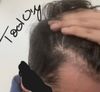
The user is experiencing hair shedding despite starting finasteride 4 months ago, with no signs of miniaturization. They are seeking advice after normal blood tests and similar family experiences.
The conversation discusses severe hair shedding and thinning, with the original poster using finasteride, oral minoxidil, and other supplements without improvement. The discussion highlights the possibility of telogen effluvium and the importance of addressing potential underlying health issues, such as stress and gut health, rather than assuming diffuse unpatterned alopecia (DUPA).
A 31-year-old male experienced significant hair regrowth after 6 months using daily 0.5 mg dutasteride, 5% topical minoxidil twice a day, occasional dermarolling, and hair supplements. He reported a slight decrease in libido initially but no other side effects, and there's potential for further improvement up to 12–18 months.
The user is considering switching from finasteride and minoxidil to dutasteride for better hair regrowth results, as they are experiencing thinning and shedding despite current treatments. They have also tried microneedling, Clobetasol, and salicylic acid to manage scalp issues and inflammation.
Eucapil, containing fluridil, is used for hair loss but has impractical packaging. Some users find it effective for maintenance, while others suggest alternatives like anageninc with pyrilutamide.
A user is considering quitting RU58841 after using it for over three years alongside Dutasteride and Oral Minoxidil, and is concerned about potential hair loss. Other users share mixed opinions on RU58841's effectiveness, with some suggesting continued use of other treatments like Dutasteride and Minoxidil.
The conversation discusses using finasteride topically for hair loss and concerns about potential side effects like feminization and impact on muscle growth. One person shared their experience with finasteride, indicating it increased testosterone and did not prevent them from gaining muscle or strength.
Dutasteride can cause prolonged hair shedding before regrowth begins, often taking 6-12 months for noticeable improvement. Users report varying experiences, with some seeing no shedding and others experiencing significant shedding before eventual regrowth.
The drugs RU-58841, Pyrilutamide (KX-826), Apalutamide, Enzalutamide, and Darolutamide, which are nonsteroidal antiandrogens (NSAA), potentially impacting male fertility. Pyrilutamide, similar to Enzalutamide, may have reversible effects on fertility.
The conversation discusses using RU58841 at a 2% concentration as an alternative due to side effects from finasteride. The user plans to start with a lower concentration and increase if necessary.
The user is frustrated with ongoing hair loss despite using treatments like finasteride, dutasteride, minoxidil, RU58841, and others. They express concern over the lack of improvement in hair density and the emotional toll it takes.
The user is experiencing hair regrowth with oral minoxidil and dutasteride but still has fragile hairs that easily pluck out from the front center. Despite improvements, the user is concerned about the persistent fragility and shedding of these hairs.
The user has been using topical minoxidil and oral finasteride for three months with visible hair thickening and no side effects. Another user mentioned experiencing watery semen and headaches with finasteride, and plans to add derma rolling and oils to their routine.
OP is considering Bicalutamide for female AGA and TE but is concerned about its side effects and effectiveness compared to Finasteride. OP is also using Minoxidil and Spironolactone but is experiencing significant shedding and is unsure if it's androgen-driven or due to Minoxidil changes.
The user is considering switching from topical finasteride to oral finasteride and is seeking advice on whether to transition directly or use both forms temporarily. They express concern about potential side effects.
The user has been experiencing sudden and aggressive hair shedding despite using oral dutasteride and topical minoxidil for six years, and recently added topical finasteride without improvement. Possible causes discussed include stress-related hair loss, dietary changes, or high DHT sensitivity, with suggestions to consult a doctor and consider adjusting treatments.
The conversation is about a 23-year-old man's positive experience with hair regrowth using oral finasteride (1mg daily) and topical minoxidil (twice daily), with initial side effects including zero libido and watery semen that resolved except for the semen consistency. He also used dermarolling initially but stopped due to brittleness.
A 27-year-old man experienced hair regrowth and gynecomastia from finasteride, leading to a cycle of stopping and restarting the treatment. He is considering gyno surgery and consulting an endocrinologist as potential solutions.
A 20-year-old feels defeated about hair loss and struggles with consistent minoxidil use due to ADHD. They plan to visit an endocrinologist for finasteride and consider shaving their head while continuing treatments.
A user shared their experience after one year on Finasteride, noting both positive effects on hair retention and minor side effects like reduced libido and high blood pressure. They also emphasized the importance of quitting porn to improve sexual health and mentioned using Viagra to boost confidence.
The user is experiencing hair loss despite using Dutasteride and plans to try RU58841, considering adding Oral Minoxidil. They express frustration with diffuse thinning and seek advice on managing hair loss.
Finasteride can cause gynecomastia, which may be reversible by stopping the drug and using selective estrogen receptor modulators (SERMs) like tamoxifen. Lifestyle changes such as weight loss and avoiding alcohol can also help, but surgery may be needed if the condition persists.
A user successfully managed finasteride-induced gyno symptoms by making lifestyle changes, including fasting, avoiding soy, and increasing cardio. They resumed finasteride with a lower dose combined with minoxidil and P7 vitamins without recurrence of symptoms.
The user has been taking 1mg of finasteride every other day for two months, experiencing improved hair quality but disrupted sleep. They are seeking advice on whether the sleep issues will improve with continued use or if they should stop the medication.
OP is experiencing ongoing hair shedding despite two years on finasteride, with some initial improvement but no long-term success. Users suggest seasonal shedding, checking for vitamin deficiencies, considering minoxidil, and possibly switching to dutasteride.
A 19-year-old seeks advice on obtaining a dutasteride prescription for hair loss, despite it being typically prescribed for urinary or prostate issues. Another user suggests starting with minoxidil or finasteride and exploring other telehealth options for dutasteride.
The individual is struggling with hair loss and depression, having tried treatments like Finasteride, Dutasteride, and Minoxidil, but faced side effects and limited success. They are considering a hair transplant and other options while dealing with personal challenges, including knee injuries and weight issues, and are encouraged by others to focus on self-improvement and acceptance.
A 19-year-old discusses feelings of envy towards men with full heads of hair, sharing their experience with hair loss since age 16. They have been using oral minoxidil and topical finasteride for two years, with initial improvement but continued shedding, and are considering switching to dutasteride.
A 36-year-old man has been using oral finasteride and minoxidil for six months and is considering switching to dutasteride due to concerns about shedding and lack of response. Users suggest continuing with finasteride, trying micro-needling, or cautiously adding dutasteride while monitoring for side effects.