A 23-year-old male with Norwood 2.5-3 hair loss is considering using a lotion containing 0.3% finasteride and 6% minoxidil spray, as recommended by a dermatologist. He is hesitant about using oral finasteride due to potential long-term side effects.
User considers trying AAPE for hair restoration, costing $700 for 6 months. Others discuss its potential effectiveness and mention a study with promising results.
The conversation discusses the lack of clinical studies on cysteine alone for hair loss, with the original poster already using medications like Minoxidil and finasteride. Suggestions include trying 2ddr as a growth stimulant, though concerns about side effects like gas are mentioned.
The conversation is about the difficulty in obtaining GT20029, a hair loss treatment, due to patent issues and the need to resort to group buys or Chinese labs for acquisition. Specific treatments mentioned include Minoxidil, finasteride, and RU58841.
Whether using both Fluridil and Alfatradiol together could be more effective than either one alone as a hair loss treatment, given their different mechanisms of action.
A user on Finasteride for over a year is asking if taking Glycine 1000 mg at night along with morning collagen peptides will increase DHT and cause hair loss. They are concerned about the potential impact on their hair loss treatment.
Breezula's effectiveness may depend on the vehicle used for its application, with concerns about the grey market version's formulation. Phase 3 results are promising, but skepticism remains about the grey market product's authenticity and effectiveness.
Pelage Pharmaceuticals is developing PP405, a topical treatment for hair growth, currently in Phase 2a trials. There is skepticism about the company's claims, and no fast-tracking approval timeline has been detailed.
NAD⁺ precursors and EGCG may increase hair density, but users report mixed results with no significant hair gains. Some users suggest combining these with finasteride or dutasteride for better results.
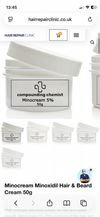
A user is considering switching from a 5% minoxidil spray to a minoxidil cream for easier application and less greasiness. They are inquiring about the Hair Repair Clinic 5% minoxidil cream, which includes optional tretinoin and other ingredients like isopropyl myristate and beeswax.
The user experienced side effects from daily finasteride and reduced the dosage to 0.25mg twice a week while continuing minoxidil. They are considering topical anti-androgens but are concerned about application difficulties and potential side effects.
The user applies 2ml of a lotion containing 5% minoxidil, 0.3% finasteride, hydrocortisone butyrate, and cetirizine before bed, but it leaves a residue on the scalp. Another user suggests reducing the amount to 1ml, as 2ml results in a high finasteride dosage.
A user is considering adding crushed finasteride pills to a serum containing redensyl, procapil, and anagain to treat hair loss. Another user shared their experience, noting some improvement in hair health but no significant reduction in hair loss, and plans to continue the treatment for six months.
A user shared their hair loss treatment progress, using 5% Minoxidil twice daily, 0.5 mg Finasteride daily, and a 1.5 mm dermaroller weekly. They started with a 1 mm dermaroller in May 2022.
The user experienced significant hair regrowth using dutasteride (0.5 mg three times a week) and RU58841 (5% once a day), with no side effects reported from RU58841. They are considering increasing the RU58841 dose or adding minoxidil for further improvement.
User asks if stacking Alfatradiol and Fluridil is effective for hair loss. Alfatradiol is a weaker, topical 5ar inhibitor, while Fluridil is an anti-androgen preventing DHT binding to hair follicles.
Treatments for hair loss, such as topical minoxidil, platelet-rich plasma therapy with or without minoxidil, ketoconazole, non-abative radio frequency, natural products, finasteride and cortexolone 17 alpha propionate. The post evaluates the efficacy and safety of these treatments in various studies.
The user experienced side effects from finasteride and is considering adding Alfatradiol or Fluridil to their regimen, which includes Minoxidil, dermarolling, and ketoconazole. Fluridil is noted to be more effective than Alfatradiol but less effective than finasteride, with mild side effects reported.
Akinfenrawr experienced negative side effects from oral finasteride and RU58841, and is seeking alternative hair loss treatments. They discuss various options, including raloxifene, oral dutasteride, liposomal finasteride, Breezula, Pyrilutamide, SM04554, and sulforaphane, but have concerns about efficacy, availability, and cost.
A user reported using 1.25mg finasteride daily for 9 months with positive hair growth results and increased libido but slower beard growth. Other users commented on the appearance of straightened vs. natural curly hair and potential hair damage from straightening.
The user plans to use a "nuclear protocol" for hair improvement, including topical minoxidil 12.5%, topical finasteride 0.1%, and tretinoin 0.05%, with microneedling once a week. They have seen improvements with minoxidil and are seeking opinions on their approach to achieve thicker hair.
AHK-Cu peptide is considered better than GHK-Cu for hair growth. The user is seeking recommendations for trusted AHK-Cu peptide brands with third-party testing.
A user is trying to make a topical finasteride solution by crushing tablets into ethanol and glycerin but struggles with spillage. Suggestions include letting the tablets dissolve in the solution or using a pill crusher for efficiency.
User discusses group buy for finerenone, a third-gen mineralocorticoid antagonist for hair loss treatment. Finerenone inhibits TGFb, NOX, and ROS, and improves renal and cardiac function; topical dose should be no more than 10mg per day.
Alfatradiol is considered a mild treatment for hair loss, often used alongside other treatments like finasteride, minoxidil, and dutasteride. Users report it helps maintain hair but is not effective for regrowth on its own.