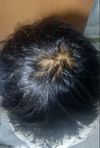
User Clay1211 shared 1-year progress using finasteride, minoxidil, and dermaroller for hair loss. Commenters expressed surprise and praised the impressive results.
The user is considering using 2 vials of Fluridil every other day instead of 1 vial daily for better scalp coverage. They are questioning if this method would be as effective.
An arthritis drug, baricitinib, is discussed as a potential treatment for autoimmune alopecia, not androgenetic alopecia. Ritlecitinib is also mentioned as a possible treatment for scarring alopecia.
The user started treating their slightly thinning, receded hairline with a serum containing Redensyl and other ingredients, and dermarolling weekly. They recently began taking finasteride and plan to stop Redensyl in the future to test if hair loss resumes.
Using finasteride and peptides, including GHK-Cu, improved hair thickness and regrowth. The user also used a KLOW blend and CJC/IPA for better sleep and recovery.
A user found a red light cap from China with good specifications for hair loss treatment, priced at €480. They seek opinions on its legitimacy and quality, especially from those with experience ordering from AliExpress.
The conversation is about whether vellus hair should be included in hair fall counts, with data showing daily hair loss. The consensus is that shedding, including vellus hair, is normal and within physiological limits.
Kintor apologized for using misleading images in their advertisements and promised stricter review processes. They are also considering developing a topical dutasteride formulation.
Users discussed experiences with Everychem's solution similar to PP405 for hair loss, noting some positive results like increased hair thickness and new growth. There was skepticism about the product's legitimacy and safety, with some users reporting early signs of effectiveness and others expressing concerns about the lack of evidence and safety profiles.
The conclusion of the conversation is that CosmeRna may not be an effective treatment for hair loss compared to topical minoxidil 2%. It is suggested to wait for more reviews before purchasing it.
A user shared their positive experience with a hair transplant at Wimpole Clinic, performed by Dr. Malkani, and discussed using finasteride at a reduced dose due to side effects. They also mentioned avoiding minoxidil due to heart pain and taking supplements like biotin, marine collagen, viviscal, and krill oil.
The conversation is about the effectiveness of Redensyl for hair loss and whether to continue using Minoxidil alone, despite planning for a hair transplant eventually. The user also mentions using dermarolling, PRP therapy, and Nutrafol.
The conversation discusses the delay in bringing FAK inhibitors and Stanford's hydrogel to market for hair transplants, with a preference for FAK inhibitors over Verteporfin due to their superior potential in preventing scarring. The user expresses frustration over the slow progress and hopes for faster development by companies like FAKnostics.
The conversation discusses hair loss treatments, specifically Regenera stem cells and exosomes from 'Cellgenic' umbilical cord donors. The user has been using topical minoxidil 5% and 0.001% estradiol for a year without seeing effects, and another user mentions the importance of microneedling.
The conversation discusses various hair loss treatments, including Breezula, KX826, and PP405, with mixed opinions on their effectiveness compared to finasteride and minoxidil. Some users express skepticism about the new treatments, while others remain hopeful about future developments.
John Cazale's hairline showed strong recession at the temples but maintained solid volume and density, sparking discussion on different hair loss patterns and the importance of overall hair density. Treatments like Minoxidil and Spironolactone were mentioned as potential factors in maintaining hair, though genetics and styling were also considered significant.
Hair loss discussion includes using fluridil (eucapil), minoxidil, and finasteride. One person takes 1 vial of fluridil daily and 1mg of finasteride every other day for effective treatment with minimal side effects.
The conversation discusses Shiseido's RepliCel Hair-01 technology for hair regeneration, which aims to stop hair loss with minimal regrowth. Treatments mentioned include Minoxidil, finasteride, and RU58841.
Creatine does not directly cause hair loss but may increase DHT levels, potentially worsening hair loss in those predisposed to male pattern baldness. Users have mixed experiences, with some reporting increased shedding and others seeing no effect.
The conversation discusses potential hair loss treatments, including methylating estrogen, losing body fat, and supplementing with vitamins A, K2, and D. It also mentions reducing exposure to environmental estrogenics, with skepticism about genetic factors being the primary cause of baldness.
The conversation discusses microneedling for hair loss, focusing on optimal needle depth and frequency. Users report varying practices, with some using Minoxidil after microneedling and others suggesting different depths and frequencies based on personal tolerance.
User shared progress on crown regrowth using Minoxidil Foam, oral Minoxidil 2.5mg daily, and Finasteride 1mg daily. They experienced initial headaches with oral Minoxidil, had a hair transplant, and are seeing regrowth but with thin hairs.
The conversation is about the release timeline for clinical trial results and the availability of Breezula, a hair loss treatment. The user is not comfortable buying it as a research drug from China.
Oleic acid and microneedling are being explored for hair regrowth, but results are mixed. Addressing DHT and fibrosis is crucial, with treatments like finasteride, minoxidil, and scalp massage also discussed.
The conversation is about a user's hair loss treatment regimen, which includes Dutasteride, oral Minoxidil, topical Dutasteride, Minoxidil sulfate, antioxidants, and various supplements. The user is also using a derma stamp and has paused Tretinoin due to a TCA peel recovery.
A user shared their 1-year crown transformation after a second hair transplant with 4000 grafts, using finasteride, minoxidil, and vitamins. Another user commented that while the crown has filled in, they expected more coverage from 4000 grafts and suggested a possible shedding phase.
Some users believe John Harper's hair regrowth claims using dermarolling, coffee, and oils are misleading, while others defend his methods. The conversation highlights skepticism about alternative treatments and emphasizes finasteride, dutasteride, and minoxidil as proven solutions for hair loss.