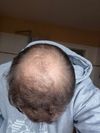
The user healthydudenextdoor starting a new topical anti-androgen hair loss treatment, Pyrilutamide, and discussing their current regimen of finasteride and minoxidil.
This conversation is about a user's regrowth journey using 5% Minoxidil and 1% Finasteride, with positive results after 2 months. Other users offered support or shared their experiences with hair loss treatments.
Triple Hair's TH-16, a product claimed to be more effective than Minoxidil 5%, has been released; it contains melatonin and resveratrol. One user reported success with topical melatonin and dermarolling.
The conversation discusses the importance of taking vitamin D with food for better absorption and its potential role in hair loss. Some users also suggest taking vitamin D with K2, getting sunlight, and using finasteride for hair loss treatment.
The conversation concludes that finasteride, a 5α-Reductase inhibitor used for hair loss, does not impair cognition either short-term or long-term. It suggests "brain fog" is not caused by the medication.
The availability of Topical Dutasteride, a potential treatment for hair loss, which can be purchased without prescription from MinoxidilMax. Other treatments discussed include Topical Finasteride and PRP injections, with discussion around dosage, efficacy, side-effects and safety.
People discuss taking finasteride and dutasteride with various drinks, noting that water is common, while some avoid grapefruit juice. Opinions vary on whether the choice of beverage affects drug absorption.
Breezula passed a clinical trial in August and there are questions about its availability in 2021 and potential delays due to Covid. No specific treatments were discussed.
Someone looking for solutions to their hair loss, who has tried and failed to tolerate anti-androgen treatments such as finasteride, CB-03-01, RU58841, and Eucapil. The user is seeking advice and understanding of their extreme sensitivity to these treatments.
A 29 year old female with hair loss issues that have been linked to PCOS; the user has started taking Spironolactone and iron supplements in hopes of regrowing their hair, but is wondering if it's too late.
A 22-year-old woman is experiencing genetic hair loss and has tried natural remedies like coconut oil and aloe vera without success. She seeks advice on whether to see a dermatologist or use treatments like Minoxidil (Rogaine) despite her parents' skepticism about professional help and chemical treatments.
The user is experiencing severe hair loss, possibly due to telogen effluvium, after stress, poor nutrition, and hormonal changes. They are using Nizoral and supplements but are considering hormonal treatments like spironolactone despite previous side effects.
Dutasteride is more effective in gel capsule form due to better absorption, as it is fat-soluble. If only pills are available, taking them with fat or increasing the dose slightly may help.
Balding is challenging, and relying on medications like finasteride is often seen as a better option than constantly shaving or trying to compensate in other areas. Many feel that societal expectations to "own it" or drastically change oneself to cope with baldness are unrealistic and burdensome.
A 19-year-old is experiencing excessive hair shedding despite using minoxidil, finasteride, and dutasteride. They are seeking advice on why these treatments aren't working and if their current regimen is appropriate.
The user is considering starting topical minoxidil alongside 1 mg oral finasteride but is concerned about potential shedding before their wedding. They are debating whether to start minoxidil now or wait a few months to allow their body to adjust to finasteride.
A 25-year-old man is worried about his girlfriend noticing his balding and is frustrated by society's focus on looks. He uses minoxidil, finasteride, and dutasteride for hair loss and considers being honest with her.
Using estrogen for hair regrowth is considered ineffective and risky, with potential side effects like breast growth and hormonal changes. Alternatives like finasteride, dutasteride, and minoxidil are suggested, but estrogen is not recommended unless transitioning.
A 19-year-old is considering switching from topical to oral minoxidil to combat hair loss, despite concerns about increased body hair. They are currently using minoxidil, ketoconazole shampoo, and dutasteride, and are willing to accept the trade-off of more body hair for better scalp hair growth.
Different hair loss treatments work for different people, with finasteride and dutasteride generally considered more effective than minoxidil. Combining treatments often yields better results, but individual experiences and side effects vary.
The user shared their hair regrowth journey, highlighting the use of Minoxidil and Finasteride as main treatments, along with lifestyle changes like changing pillowcases, checking vitamin deficiencies, and maintaining a clean diet. They advised consulting a doctor before starting treatments and noted that results may vary.
A 23-year-old has been using 5% minoxidil and derma stamping for three months to address hair loss, with noticeable improvement. Users suggest adding finasteride to prevent further hair loss, as minoxidil alone doesn't address the underlying DHT issue.
The user has been using finasteride for 1 year and 7 months and oral minoxidil for 6 months, noticing peach fuzz that may turn into terminal hair. The user has experienced no side effects and is considering additional treatments like dermarolling and possibly increasing the minoxidil dose.
The conversation discusses various hair loss treatments, including Minoxidil, finasteride, tretinoin, latanoprost, and GHK-Cu, with skepticism about expensive branded products like Zeus. Users suggest that similar results can be achieved with cheaper alternatives.
The conversation is about a 25-year-old considering whether to start using hair loss treatments like Minoxidil, finasteride, or RU58841, or to shave his head. He is seeking advice due to his family history of baldness.
Tretinoin may enhance the effectiveness of minoxidil for some users, though experiences vary. Some users report better results with oral minoxidil compared to adding tretinoin.
A 26-year-old male has been using dutasteride for one year after previously using finasteride, along with 5% minoxidil and micro-needling, to treat hair loss. He reports no side effects and is satisfied with the progress, noting some shedding as part of the hair cycle.
The conversation discusses potential causes of pigmentation around hair follicles, suggesting sebum buildup, autoimmune conditions, or dermatitis. Treatments mentioned include finasteride, dutasteride, and an anti-inflammatory diet, with a recommendation to consult a doctor for a proper diagnosis.
A person in their 20s is struggling with hair loss, using treatments like minoxidil and finasteride. Suggestions include self-improvement, therapy, hair transplants, and focusing on acceptance and confidence.
The conversation discusses adding crushed finasteride tablets to topical minoxidil, but it's advised against because the tablets are not water-soluble and meant for oral use. The suggestion is to take finasteride orally instead.