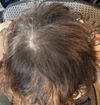
User considers trying AAPE for hair restoration, costing $700 for 6 months. Others discuss its potential effectiveness and mention a study with promising results.
The user experienced significant hair regrowth using a combination of minoxidil, finasteride, various serums, and micro-needling, leading to increased confidence and consideration of a hair transplant. Despite initial baldness due to past health issues, the user is pleased with the progress and continues to use treatments like Pilgrim, Md Hair, Bodywise Roller, and Bouf serums.
The conversation discusses hair regrowth using finasteride, minoxidil, Nizoral, and oral Saw Palmetto. Users share mixed opinions on the effectiveness of these treatments, with some suggesting additional treatments like dutasteride.
The user discusses using dutasteride to stop hair loss and bimatoprost for regrowth. They plan to use VEGF with hydrogels for potentially permanent hair follicle improvement and suggest PRP as an alternative.
The conversation discusses new hair loss treatments like stem cell therapy, exosome treatments, and DHI, with mentions of GT20029, Amp303, and Plated PRP Serum as promising options. It also notes the use of dutasteride, topical finasteride, and minoxidil, but the focus is on non-hormonal innovations.
A 16-year-old started using topical finasteride, minoxidil, and dermapen for hair regrowth, along with natural DHT blockers. Advice given includes being patient and considering waiting until 18-21 to use finasteride.
The user is considering continuing minoxidil and microneedling, possibly adding low-dose topical finasteride, and undergoing a large FUE hair transplant to improve hair appearance. They plan to use hair fibers for added density, aiming for a convincing cosmetic look rather than full density.
The conversation discusses a user's six-month progress in treating hereditary hair loss using a regimen that includes minoxidil, finasteride, dutasteride, and other medications. Opinions vary on the effectiveness and logic of the treatment, with some users suggesting additional methods like microneedling.
Hair cloning is being developed by companies like Kangstem Biotech and Stemson, with potential availability in a few years. Initial costs are expected to be high, but prices may decrease over time.
Scalp hydration may influence hair growth by affecting the signaling pathways that control the hair growth cycle. Users suggest using facial moisturizer, aloe vera, and oils for scalp hydration.
Hair regrowth treatment involving 3aHSD enzyme shows 6% improvement in 18 weeks. Sulforaphane, L-Menthol, and Dexpanthenol are potential ingredients for new hair loss solution.
Hair growth relies on mechanical forces, not just chemicals, with tissue acting like a motor. Minoxidil and finasteride help, but maintaining tissue elasticity and addressing mechanical issues are essential.
The user has been using a combination of finasteride/dutasteride, minoxidil, tretinoin, and hydrocortisone with microneedling and ketoconazole shampoo for hair loss. They are asking if the baby hairs growing will turn into terminal hairs with continued treatment.
A user on finasteride, minoxidil, dermastamp, and Nizoral is seeing baby hairs and asks if it's regrowth. Another user confirms it is regrowth and encourages them to continue.
Temporal peaks are crucial for a natural-looking hair transplant, but they are challenging to achieve due to the need for precise angles and appropriate hair thickness. Many users emphasize the importance of finding a skilled surgeon and using finasteride to maintain hairline stability.
Hair regrowth progress using finasteride, minoxidil, and dermarolling. Visible improvements started around month 6, with initial shedding from minoxidil.
Hair cloning trials by Stempsen Therapeutics and Hairclone have no updates, and it may take at least 15 years for hair cloning to be available. The conversation also mentions treatments like Minoxidil, finasteride, and RU58841.
The post discusses an individual's 11-month hair restoration journey using oral finasteride, topical minoxidil and finasteride, micro-needling, biotin tablets, and ketoconazole shampoo. Despite mixed reactions and skepticism from others, the individual expresses gratitude for support and claims progress in hair growth.
The user is using oral minoxidil, ghk-cu, and HGH for hair regrowth, noticing small vellus hairs on the crown. They avoid traditional DHT blockers like finasteride due to side effects, despite skepticism from others about the effectiveness of ghk-cu.
A 23-year-old plans a hair transplant and uses finasteride, Essengen 6 Plus, ketoconazole shampoo, dermarolling, vitamins, and Foligain capsules. He seeks advice on his regimen and the timing of the procedure, considering family history and potential future hair loss.
Stemson Therapeutics announced a breakthrough in hair growth technology using stem cells. Users discussed the potential high cost and skepticism about the treatment's accessibility.
ABS-201 shows promise for male hair regrowth by blocking the prolactin receptor, with higher expected efficacy than current treatments. The discussion also covers dosing differences between macaques and humans for hmi115, highlighting a significant dosage disparity.
The user started experiencing hair loss at 26 and began treatment with topical minoxidil and oral finasteride. After 8 months, they noticed hair regrowth, especially baby hairs, and remain hopeful for further improvement.
The user observed new tiny white hairs after 12 days of using minoxidil, finasteride, microneedling, and biotin, hoping they will become terminal hairs. Others advise that while some hairs may not fully grow, consistent treatment, patience, and scalp massages could enhance results.
Longitudinal partial follicular unit transplantation involves extracting part of the donor follicular unit, allowing the donor area to be overharvested without noticeable hair loss. The conversation questions if this method is practiced in clinics or if it's theoretical, and whether it relates to hair cloning or multiplication.
Osteopontin, a protein involved in hair growth on moles, may help with hair loss. However, it is also linked to Alzheimer's, cancer, and bone development, so caution is advised.
The conversation discusses hair cloning progress and mentions treatments like Minoxidil, finasteride, and RU58841. Users also talk about hair transplants and their effectiveness.
The conversation discusses identifying permanent hair loss and includes treatments like microneedling and biotin vitamins. The user is unsure whether the reduction in wispy hairs is due to hair revitalization or loss.