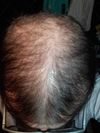
Researching the cause of hair loss and treating it by preventing DHT in the scalp with medication such as finasteride or dutasteride, estrogen, minoxidil, dermarolling, and possible topical antiandrogens.
The conversation is about hair regrowth or miniaturization after two months of using minoxidil and spironolactone. Specific treatments mentioned are minoxidil and spironolactone.
A 34-year-old man is using natural methods like rosemary and peppermint oil, micro-needling, and low-level laser therapy to manage hair thinning, avoiding medications like minoxidil and finasteride. Despite minimal visible progress, he values the non-medicated approach and remains consistent with his routine.
The conversation is about seeking new research on hair loss treatments beyond the commonly known ones like Minoxidil and Finasteride. Additions to the list of treatments include topical caffeine, alfatradiol, fluridil, stemoxydine, and upcoming treatments like TDM-105795 and verteporfin.
Diet changes alone are unlikely to reverse hair loss, as some users report no improvement without medical treatments like finasteride. A disciplined diet high in nutrients may support overall health, but finasteride is noted for effectively reversing hair thinning.
Microneedling's long-term effects on hair loss are uncertain, with concerns about scarring and the need for continued use of minoxidil and finasteride to maintain gains. Finasteride does not sustain minoxidil-regrown hair without ongoing minoxidil use, and microneedling alone shows limited evidence of effectiveness.
A dental technician claims malocclusion causes pattern hair loss due to poor scalp circulation. Users debate this, noting treatments like finasteride, minoxidil, and microneedling focus on DHT and blood flow.
Setipiprant may help with hair maintenance but is not a guaranteed solution for everyone. Other treatments like minoxidil, finasteride, and topical spironolactone are discussed, with varying opinions on their effectiveness.
Hair follicles often go dormant rather than die, and treatments like minoxidil can help revive them. Scalp health and stimulation, such as massages and using products like sulphur soap, are also important for hair regrowth.
The conversation is about a person considering making their own topical finasteride to avoid side effects from oral use. They discuss potential methods and ingredients, including cayenne pepper extract, rosemary, and coconut oil, and seek advice on effectiveness and alternatives like light therapy or dermarolling.
A South Korean company, Therazyne, has developed a promising hair loss treatment using a WNT chain surrogate that binds to Frizzled 7, with human follicle testing expected soon. Current treatments like minoxidil and finasteride are not seen as cures, and while optimism exists for future solutions like PP405, approval processes are lengthy.
The user discusses their experience with diffuse unpatterned alopecia and acquired progressive hair kinkering, noting improvements with treatments including biotin, pantothenic acid, finasteride, ketoconazole, and zinc pyrithione shampoo. They report thicker, healthier hair and improved scalp condition, attributing success mainly to biotin, pantothenic acid, and finasteride.
The conversation discusses the use of microneedling for hair loss, with concerns about potential long-term effects like fibrosis and scarring. Users share experiences and opinions on combining microneedling with treatments like minoxidil and finasteride, but there is uncertainty about the long-term safety and efficacy.
The user has been using finasteride, minoxidil, microneedling, and supplements like biotin, zinc, and D3 for hair regrowth. They shared photos from March 2024 and today to show progress.
In this conversation, 4990 discussed various treatments for hair loss, including oral minoxidil, PRP, transplan, Jak inhibitors, Dutasteride, Finasteride, Olumiant, Ketoconazole, RU58841, microneedling, baricitinib, and CCCA. They recommended scalp biopsies in unclear cases of DUPA, twice weekly to twice daily shampooing for topical minoxidil users, and two sessions spaced one month apart with follow up at month three to determine the effectiveness of PRP treatment.
A user with long-term hair loss has been using topical minoxidil, finasteride, RU58841, ketoconazole, and dermastamping for 8 months. They are unsure if the new hairs are miniaturized or vellus.
A user shared their experience with hair loss treatments, including topical minoxidil, finasteride, RU58841, and microneedling, noting significant hair regrowth except at the hairline. They plan to start oral minoxidil and switch to a combination treatment, while another user mentioned that some miniaturized hairs may not fully recover.
The user is experiencing hair regrowth after 8 months using 1mg finasteride three times a week, topical minoxidil twice a day, and recently started microneedling with a 1mm needle. Optimal results are expected after one year.
Blocking DHT may slow down aging and improve skin, with users reporting positive effects from finasteride. Minoxidil and RU58841 are also mentioned as treatments.
A user is documenting their natural approach to treating a receding hairline using a dermastamp, essential oils (rosemary oil at 3% dilution with pumpkin seed oil), a multivitamin with vitamin D, and daily collagen shakes. They acknowledge the common recommendations of minoxidil and finasteride but prefer to test natural methods and share their results.
The conversation discusses hair regrowth improvement due to zinc, biotin, and D3 supplements, highlighting that hair loss can result from deficiencies, not just androgenetic alopecia. The user emphasizes that treatments like finasteride are not the only solutions.
Hair follicle cloning is claimed to be possible but not widely available due to potential safety issues, such as cancer risks. Current treatments like finasteride and dutasteride are not effective for everyone, and there is frustration over limited access to these medications.
PRP treatments have been effective for the user, with a new recommendation of using a high-quality plasma kit once a year. The user seeks experiences with this specific PRP approach.
Some hair loss may be linked to chromosome 20, which isn't affected by DHT blockers like finasteride. Treatments like minoxidil, microneedling, and genetic testing are suggested, but their effectiveness for this type of hair loss is uncertain.
Minoxidil alone is not effective for significant hair regrowth; combining it with finasteride or dutasteride is necessary. Additional treatments like hair transplants, microneedling, or oral medications are recommended for better results.
A user shared an extensive hair loss treatment regimen including dutasteride, minoxidil, tadalafil, RU58841, microneedling, and various topical and oral supplements. Responses varied, with some suggesting the regimen is excessive and others offering additional advice or expressing skepticism about its practicality and effectiveness.
Hair cloning and injection of dermal papilla cells are discussed, with skepticism about their availability by 2023. Users mention Minoxidil, finasteride, and hair transplants as current treatments.
Hair loss discussion includes treatments like Minoxidil, Finasteride, and RU58841. Users share experiences and support, mentioning that many people face hair thinning.
Natural remedies may improve hair and scalp health but do not stop hair loss related to DHT or other imbalances. Proven treatments like Minoxidil and Finasteride are recommended for effective results.
PP405 shows promise for hair regrowth by manipulating stem cell characteristics and lactate dehydrogenase, with Phase 2a trials pending. Google Ventures' $15M investment suggests confidence, but results and market availability remain uncertain.