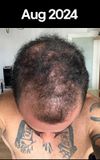
The conversation is about using micro needling and PTD-DBM for hair loss treatment. The user applies PTD-DBM drops on weekdays and performs micro needling weekly.
A 51-year-old man uses 1mg oral finasteride daily, 5% topical minoxidil twice daily, dermarolling, and Nizoral twice a week for hair regrowth. He shows significant progress after two months and is happy with the improvement.
The user stopped using finasteride after two weeks due to gynecomastia symptoms and shared blood work results questioning if they indicate a cause for the side effects. The user is considering restarting finasteride and seeking advice on their blood work levels in relation to gynecomastia.
The user experienced hair shedding after using finasteride and topical minoxidil since August 2024, and briefly adding oral minoxidil in early 2025. They suspect the shedding might be due to the oral minoxidil, a bad batch of finasteride, or a normal shedding cycle, and are also experiencing an itchy scalp and acne.
The user has been using finasteride for 16 months, minoxidil for 11 months, and started microneedling 2 months ago, experiencing shedding phases. They are questioning whether they are experiencing miniaturization or regrowth.
A user's regimen to help with their diffuse thinning, which includes taking Pyrilutamide BID, 1mg finasteride daily, 2.5mg oral minoxidil daily, topical minoxidil since August 2021, LLLT every two days, topical fin, progesterone, melatonin, minoxidil (started one week ago), pumpkin seed oil and not dermarolling; other commenters suggested Nizoral for dandruff control and caution when using pre-mixed products with Pyrilutamide.
The conversation discusses a user's 7-month progress with hair loss treatment using oral Propecia (finasteride), topical Minoxidil, and a weekly use of a Drama Pen. Some users ask for details about the Drama Pen, while others make jokes or congratulate the user on their progress.
This conversation discusses the potential benefits of using oral minoxidil and finasteride to treat hair loss, with some users sharing their own experiences in taking the medications. Others express concerns about the safety of these treatments.
The conversation discusses the potential long-term effects of stopping finasteride after extended use, with differing opinions on the existence and prevalence of post-finasteride syndrome (PFS). Some users report persistent side effects, while others argue that such effects are rare or unrelated to the medication.
The conversation is about comparing the effectiveness of fluridil and clascoterone in preventing hair loss and inquiring about their use as standalone treatments. There is a question about the concentration of the fluridil brand for efficacy.
The conversation discusses a 17-year-old using finasteride to address early hair thinning, expressing pride in taking action to prevent hair loss. The user emphasizes the importance of starting treatment early and shares experiences with the hair loss community.
The user has been using topical 0.3% finasteride, 5% minoxidil, and Nizoral for 5 months and is questioning if they are experiencing hair regrowth. The conversation revolves around identifying potential hair regrowth.
The user is using oral minoxidil for hair growth and is considering adding topical latanoprost, but is concerned about potential eye color change. They are seeking advice on the effectiveness of latanoprost for hair thickening and the risk of eye color change.
A 21-year-old experiencing hair loss and depression is planning to start finasteride treatment and is asking for others' experiences. Another user responds positively, stating that finasteride has helped alleviate their depression caused by hair loss.
The conversation discusses the effectiveness and systemic absorption of Topilutamide/Fluridil/Eucapil and topical Dutasteride for hair loss. Users are sharing their experiences and seeking success stories with these treatments.
Oleic acid and microneedling are being explored for hair regrowth, but results are mixed. Addressing DHT and fibrosis is crucial, with treatments like finasteride, minoxidil, and scalp massage also discussed.
In this conversation, 4990 discussed various treatments for hair loss, including oral minoxidil, PRP, transplan, Jak inhibitors, Dutasteride, Finasteride, Olumiant, Ketoconazole, RU58841, microneedling, baricitinib, and CCCA. They recommended scalp biopsies in unclear cases of DUPA, twice weekly to twice daily shampooing for topical minoxidil users, and two sessions spaced one month apart with follow up at month three to determine the effectiveness of PRP treatment.
The conversation discusses a user experimenting with RU58841 for hair regrowth by ingesting it, which others find concerning. There are mentions of potential side effects and comparisons to other treatments like minoxidil, finasteride, and flutamide.
Microneedling for hair loss causes some bleeding, which is normal. Dermapen is recommended over dermaroller to prevent tissue tearing and adjust depth.
The user switched from Finasteride to topical Dutasteride, Pyrilutamide, and Minoxidil due to hair loss, then decided to switch to oral Dutasteride because of pregnancy concerns. They are considering the frequency of oral Dutasteride use, with suggestions of using it a few times a week for better results and fewer side effects.
RU-58642 is a powerful anti-androgen that was not developed further, possibly due to safety concerns or financial reasons. RU58841 is a topical alternative, but it is less effective than finasteride and dutasteride, and its long-term effects are not well-studied.
The conversation discusses the effectiveness and safety of hair loss treatments, specifically RU58841 and Pyrilutimide (Pyril), with users sharing that Pyril was no more effective than a placebo and expressing concerns about the safety of RU58841 based on personal experiences and the lack of pharmaceutical interest.
A 20-year-old with diffuse hair thinning has been using finasteride daily for 2 years and added topical minoxidil once daily at night for the past 7.5 months, seeing improved results. They are switching to oral minoxidil for convenience and will update on the outcome.
Hot weather can increase hair shedding, possibly due to dehydration and active sebaceous glands. Using shampoos with salicylic acid or zinc pyrithione may help; daily anti-inflammatory use is not recommended.
Finasteride is preferred over dutasteride due to its longer history, more research, and FDA approval, despite dutasteride being more potent. Users report varied side effects, influencing personal treatment choices.
The conversation concludes that finasteride, a 5α-Reductase inhibitor used for hair loss, does not impair cognition either short-term or long-term. It suggests "brain fog" is not caused by the medication.
The conversation is about using alfatradiol (17α-estradiol) as a hair loss treatment. The user is considering adding it to their regimen due to its safety and availability.
Breezula shows promising hair growth results, with up to 539% increase in hair count compared to placebo, and regulatory submissions are planned in the US and EU. Users are cautiously optimistic, noting the potential for Breezula to replace finasteride by targeting DHT without systemic effects.