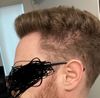
User experienced significant hair regrowth with multiple treatments, but then had a brutal shedding period, losing progress. Others questioned the number of treatments used and potential side effects.
A 30-year-old woman with a history of anemia and low vitamin D experienced hair shedding, which improved after addressing nutrient deficiencies. Despite regrowth of terminal hairs, her dermatologist recommended treatments like minoxidil and spironolactone to prevent future bald spots, but she is cautious due to family history of hormone-related cancers.
The user experienced noticeable hair growth after starting dermarolling with a 1mm device, using minoxidil, and nizoral shampoo. They plan to reduce dermarolling frequency to three times a week and are considering additional treatments like finasteride or a hair transplant for increased hair density.
Switching from topical to oral minoxidil caused heavy shedding and thinner, brighter hair. The user is seeking advice on whether hair can recover to its previous state.
User discusses hair loss treatments, including fluridil, minoxidil, tretinoin, melatonin, stemoxydine, ketoconazole, and piroctone olamine. They suggest that shedding healthy terminal hairs may be bad, while shedding weaker hairs could indicate a beneficial treatment effect.
Switching from oral to topical dutasteride can cause shedding due to changes in DHT levels, and it's recommended to overlap both treatments to minimize this effect. Topical dutasteride may cause scalp irritation, and the user is considering dutasteride mesotherapy as an alternative.
How diffuse unpatterned alopecia (DUPA) is not an invitation to self-diagnose oneself with aggressive AGA and that seeking a specialized dermatologist may help people experiencing hair loss. Treatment options discussed include topical clobetasol propionate, oral minoxidil, and discontinuing finasteride.
A 20-year-old is experiencing severe diffuse thinning and shedding despite using oral minoxidil for 12 months and dutasteride for 8 months, after previously trying finasteride. They are frustrated with the lack of improvement and considering trying RU58841.
The conversation is about a user's 3-month hair loss treatment using topical minoxidil, oral finasteride, a derma roller, ketoconazole shampoo, rosemary oil, and vitamin D supplements, alongside weight loss. Users discuss shedding, vitamin D benefits, and reducing sugar intake.
A 16-year-old female experiencing severe hair loss and sebum buildup, likely due to telogen effluvium and PCOS, is currently using vitamin D3 supplements, Redenser serum, and T follihair supplements. Recommendations include addressing PCOS first and consulting a doctor.
The user experienced initial regrowth with finasteride and minoxidil but is now facing increased hair thinning, possibly due to a second shedding phase. They are considering increasing finasteride dosage or adding dutasteride, despite availability issues, and have started microneedling.
A user with mild psoriasis on the scalp is using finasteride, topical minoxidil, and dermarolling for hair loss but plans to stop minoxidil on the crown due to psoriasis aggravation. Suggestions include switching to a lipid-based minoxidil, using Ketoconazole shampoo, or trying oral minoxidil.
The conversation is about a person experiencing significant hair loss in the donor area after a hair transplant, with others suggesting it might be shock loss. The person is taking oral minoxidil and dutasteride to help with the issue.
The discussion is about using ASCEplus HRLB exosomes for hair loss treatment, which combines 10 billion exosomes with growth factors, nutrients, biotin, and copper tripeptide. The treatment is expensive and typically administered via scalp injections, but in Europe, it's done with microneedling.
The user is treating hair loss with a regimen including Dutasteride, oral and topical Minoxidil, microneedling, and various supplements for overall health. They are considering adding tretinoin, stemoxydine/RU, DIM, Boron, and Fadogia Agretis to their routine.
Diffuse thinning can result in varied regrowth, with some users experiencing better results at the hairline and others at the crown. Treatments mentioned include finasteride, minoxidil (oral and topical), RU58841, microneedling, and dermarolling.
The conversation discusses using topical finasteride with propylene glycol, which causes scalp dryness or dandruff. The user also uses Nizoral, Nioxin, and DHT oil, and considers using a scalp conditioner to alleviate dryness.
The user is experiencing hair regrowth with oral minoxidil and dutasteride but still has fragile hairs that easily pluck out from the front center. Despite improvements, the user is concerned about the persistent fragility and shedding of these hairs.
An 18-year-old is frustrated with a dermatologist who prescribed shampoos and Betnovate instead of Minoxidil and Finasteride for hair loss and seborrheic dermatitis. The user feels misled and is considering giving up on dermatologists.
A user experienced a dry, scaly scalp two weeks after microneedling with a dermapen at 1mm and applying Rogaine foam. They tried moisturizers and coconut oil without success and are seeking advice.
The user experienced significant hair regrowth with topical finasteride, minoxidil, ketoconazole, and dermarolling, but later faced severe hair shedding after stopping dermarolling and reducing ketoconazole use. Suggestions included switching to oral treatments, resuming dermarolling, and considering lifestyle changes.
A new human trial using an FDA-approved treatment for wound healing called Verteporfin, which may potentially be able to reverse scarring and regrow hair in that area. The trial is only lasting one month so far.
Hair transplant recipients are concerned about whether dormant follicles are permanently damaged by incisions, but some believe undamaged follicles could still regrow if a treatment like PP405 is effective. Opinions vary on the impact of transplants on original follicles, with some suggesting treatments like finasteride can help regrow hair.
A 25-year-old male using Dutasteride, oral Minoxidil, and Ketoconazole shampoo is experiencing increased hair shedding and vellus hair growth along the hairline. Concerns are raised about whether this is a seasonal shed or a potential setback.
AMP-303 and AMP-601 are new hair loss treatments targeting dermal papilla cells, with AMP-303 showing early efficacy in transitioning vellus hairs to terminal hairs after one injection. Further clinical trials are planned, and these treatments are seen as promising due to their biologic approach and less frequent application compared to daily treatments.
The conversation discusses a 4-month hair loss treatment progress using RU58841, topical Minoxidil, ketoconazole shampoo, and micro-needling. The user shares progress pictures taken at the start, after 1 month, and the current state, all under the same conditions.
User experienced slow gains with topical fin+min, switched to topical dut+min, and considered adding Eucapil. Another user suggested DUT may be less effective topically due to high molar mass and mentioned Fluridil as a weak anti-androgen that could help.
The user is experiencing hair shedding of different thicknesses/lengths and is using Nizoral, ciclopirox, and pyrithione zinc conditioner. They are concerned whether the shedding is due to these treatments, miniaturization, or their low-calorie diet.
The user started taking 1 mg finasteride daily in September 2024 and began derma stamping twice a week, noticing progress initially but now experiencing increased scalp visibility. They are considering adding oral or topical minoxidil to their routine for further improvement.
The user is experiencing intense hair shedding all over the scalp after applying pyrilutamide to the hairline and taking oral castor oil. They are also using topical finasteride and latanoprost, but are unsure which treatment is causing the shedding.