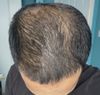
The user experienced improved self-confidence and hair regrowth using finasteride, minoxidil, and dermarolling. Visible results were noted after about three months, with microneedling done once a week.
The conversation is about the progress of verteporfin in hair loss trials, with users expressing curiosity about its effectiveness and updates. Specific treatments mentioned include FUE (Follicular Unit Extraction) combined with verteporfin, with one reported case of donor area regrowth after a year, and three patients being monitored post-treatment by Dr. Bloxham with monthly updates on YouTube.
The user is using a hair loss treatment regimen including Avodart (dutasteride), oral minoxidil, LLLT caps, vitamins, and ketoconazole shampoo, and is considering adding dermarolling and RU58841. They are experiencing unwanted body hair growth from minoxidil and are planning for a future hair transplant.
The user is using topical minoxidil and oral finasteride for hair regrowth, with plans for a future hair transplant. They are considering additional treatments like dermastamping and exploring options for dutasteride, which is unavailable in their country.
A user shared their successful hair regrowth journey using oral minoxidil, dutasteride, and eucapil, with additional benefits from MTF hormone replacement therapy. They advised consulting specialists and considering individual responses to treatments.
The user had a hair transplant 5 years ago and is currently using 1 mg finasteride and topical minoxidil but is not seeing an increase in hair volume. They are considering another transplant to improve hair volume.
The conversation covers aggressive hair regrowth treatments like Dutasteride, Minoxidil (oral and topical), RU58841, microneedling, and ketoconazole shampoo. It also mentions PRP, laser therapy, GHK-Cu injections, and hormone therapy for maximum regrowth.
HairClone aims to rejuvenate miniaturizing hair follicles through follicle banking and cell expansion, with treatments potentially available in the UK by 2022. The process involves extracting, storing, and cloning hair follicles, but full regenerative treatments will take many years to develop.
A 35-year-old man underwent a hair transplant with Dr. Patty at HairTran Clinic in Bangkok, receiving 4,037 grafts primarily for his crown area. The procedure cost 188,700 THB, with an additional 12,000 THB for optional PRP treatment, and he plans to update with progress pictures in a year.
The conversation discusses concerns about getting a buzz cut years after a FUE hair transplant due to an unnatural look and thinning hair. Suggestions include trying a buzz cut and considering scalp micropigmentation (SMP) as an option.
The user regained most of their hair using Minoxidil, Finasteride, and Dermarolling. They found Dermarolling particularly effective, as it promotes growth factors and improves hair thickness.
The user reported hair regrowth progress using minoxidil and dermapen, considering adding finasteride. Others shared experiences with minoxidil, finasteride, and microneedling, recommending finasteride for long-term results but noting potential side effects.
Two twins who used Minoxidil, finasteride and dermarollers to treat their androgenic alopecia over a 10 month time period. The user is providing details on the process they use for dermarolling.
The user is regrowing hair while using steroids by following a regimen that includes Rogaine, RU58841, Dutasteride, Nizoral, PGE2, and occasionally castor oil. Despite using harsh steroids like Tren, Masteron, and Proviron, the user reports successful hair regrowth.
A user shared their experience with hair loss and a hair transplant at the Scandinavian Hair Institute, using finasteride every other day as part of their regimen. They expressed satisfaction with the transplant results and decided against using minoxidil due to its inconvenience and potential side effects.
A breakthrough in hair follicle cultivation using induced pluripotent stem cells (iPSCs) has been achieved, producing large hair follicles suitable for transplantation. Clinical trials for this hair multiplication technology are planned in partnership with Yinguan Biotechnology.
Adipose-derived stem cells with ATP improved hair regrowth in male and female mice with androgenetic alopecia. The most effective treatments were low dose stem cells with ATP for males and medium dose stem cells with non-liposomal ATP for females.
A 24-year-old has been using finasteride, oral minoxidil, and microneedling for hair loss. They reduced minoxidil due to heartburn and are considering a hair transplant.
A user shared their experience with telogen effluvium triggered by a keratin treatment, leading to significant hair loss. They found improvement using aloe vera with rosemary, a protein and iron-rich diet, and patience.
The conversation humorously discusses diverting DHT from head to body hair and explores the idea of transplanting body hair to the scalp. It also mentions the potential for treatments to prevent DHT from affecting hair follicles.
The conversation discusses using daily microneedling at 0.25mm and red light therapy to enhance hair regrowth, especially when traditional treatments like finasteride and minoxidil become less effective. The combination is said to improve hair density and thickness, with red light therapy being more cosmetic, while microneedling is essential for challenging areas.
After 7 months of using topical finasteride/minoxidil, microneedling, and Nizoral shampoo, the user believes they are seeing hair regrowth. They are seeking further advice to improve their results, excluding hair transplant options.
The conversation discusses using minoxidil, finasteride, a dermastamp, and botanical oils like peppermint, rosemary, and pumpkin seed oil for hair growth. The user is considering using Alpha Infuse, which combines microneedling with plant oils, to enhance results.
Some users report significant hair regrowth without microneedling, using treatments like finasteride, minoxidil, and dutasteride. Others believe microneedling enhances results, but opinions vary on its necessity.
A 32-year-old had a hair transplant in Istanbul for 2500€, using 2800-3000 grafts, and is not using finasteride or other medications long-term. The user is satisfied with the results but acknowledges the possibility of needing another transplant in the future.
The user experienced noticeable hair growth after starting dermarolling with a 1mm device, using minoxidil, and nizoral shampoo. They plan to reduce dermarolling frequency to three times a week and are considering additional treatments like finasteride or a hair transplant for increased hair density.
The user experienced hair regrowth using topical finasteride 0.1%, minoxidil 10%, and microneedling over a year, recovering about 5 years of hairline and 3 years of density. The treatment was applied to the temples and frontal area, with some recovery in the coronal area attributed to microneedling.
The conversation discusses concerns about the potential risk of cancer from creating new hair follicles through microneedling, due to stem cell division. Specific treatments mentioned include microneedling, caffeine-containing anti-hair loss shampoos, and other unspecified topicals.
A user's success in hair regrowth after taking oral and topical medications, such as minoxidil and dutasteride, and using microneedling. Other users shared their experiences and advice with treatments used to reverse hair loss.
A user's experiences with hair loss treatments, including finasteride and hair transplants, in relation to another person who has been publicly vocal about their own hair loss struggles. People have shared opinions on this other person's treatment choices and the results of their hair transplant.