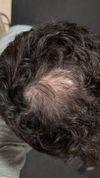
A user claims to have reversed baldness, possibly due to telogen effluvium recovery after weight loss. Others discuss the potential success of using GHK-Cu for hair regrowth.
The user discusses a galenic hair lotion containing progesterone, estradiol, cyproterone, hydrocortisone butyrate, and cetirizine pheniramine, which has effectively stopped their hair loss over two years. They are curious about the compatibility of finasteride with the lotion's components and note that their trichologist has successfully used minoxidil and finasteride in similar treatments for others.
The conversation discusses using tretinoin for hair loss and whether applying SPF on the scalp is necessary if hair covers the treated areas. The user is considering this treatment despite having no completely bald patches.
The conversation discusses that genetic analysis of the Iceman Ötzi shows he had male-pattern baldness and dark skin, with a joke about using beards and tattoos to distract from hair loss. No specific hair loss treatments are mentioned.
A 23-year-old male has been experiencing hair loss since 2022 and has used minoxidil and dutasteride with reduced shedding but no hair regrowth. He is considering PRP with mesotherapy and red light therapy, GFC, or exosomes, with a preference for exosomes due to efficiency and a reputable clinic.
A 17-year-old with AGA is considering Revitacare Haircare Mesotherapy, which includes hyaluronic acid, amino acids, zinc, and B vitamins, injected into the scalp. One reply dismisses it as ineffective.
A user underwent a 5000 graft hair transplant in Istanbul, which included 900 beard grafts, after previously using finasteride with limited success. The procedure cost £4500, including transport and aftercare in both Istanbul and the UK.
Adding tretinoin can enhance the effectiveness of minoxidil by increasing sulfotransferase levels, making it beneficial for hair growth. However, it may not be necessary if using oral minoxidil.
Treatment options for female alopecia androgenetica, discussing the availability of spironolactone online in The Netherlands and other potential treatments like finasteride, minoxidil and RU58841.
A 20-year-old male is frustrated with his dermatologist for refusing to prescribe DHT blockers like finasteride or dutasteride, instead pushing for a hair transplant despite ongoing hair thinning. The user feels dismissed and unreasonably treated, and is advised by another user to find a better dermatologist and consider finasteride or dutasteride for effective treatment.
A new topical treatment, TH07, combining finasteride, latanoprost, and minoxidil, is entering phase III trials with promising early results. Some users express skepticism, noting the treatment uses existing products.
A 24-year-old male has been struggling with hair loss since 2020, trying treatments like minoxidil, finasteride, dutasteride, PRP, vitamins, proteins, and exosomes, but hasn't seen significant improvement. He is considering a hair transplant due to the lack of results from these treatments.
OP asked if Alfatradiol 0.1% can maintain hair after a transplant. Responses suggest using stronger treatments like finasteride or micro-dosing oral finasteride instead.
The user experienced hair thinning on TRT and considered various treatments suggested by an online clinic, including GHK-Cu Scalp Serum and Minoxidil blends. The consensus is that only finasteride or dutasteride effectively stop hair loss, while Minoxidil can thicken hair.
Copper peptides, specifically GHK-Cu, are discussed as a potential addition to hair loss treatments, possibly working synergistically with Minoxidil to convert vellus hair into terminal hair. The effectiveness and credibility of copper peptides are questioned due to the lack of widespread discussion and potential conflict of interest from the product's creator.
User experienced scarring from microneedling at fast speed and paused treatment for 3-4 weeks to recover. Advice given includes waiting a full month for recovery to avoid scars.
PP405 is a safer alternative to JXL069 for hair loss treatment because it penetrates the skin effectively and degrades in the blood, avoiding systemic toxicity. JXL069, when forced into the body, can cause dangerous side effects like lactic acidosis due to its inability to degrade safely.
The conversation discusses scalp itching and tenderness after microneedling, despite using medicated shampoos and proper sanitation. The user plans to see a dermatologist and is concerned about possible infection or allergic reaction.
The conversation discusses the effectiveness of topical tretinoin as a monotherapy for hair loss, with users suggesting it may not be as effective as minoxidil or finasteride. The original poster is considering other options like a phenol peel and is concerned about the risks of derma rolling.
Keratin fusion bonds are discussed as an alternative to clip-on hair patches for men with diffused thinning. The conversation explores different styling options for hair loss.
The conversation discusses the potential of Verteporfin for hair regeneration and improving hair transplant surgery to leave no scars. Specific treatments mentioned include Minoxidil, Finasteride, and RU58841.
The user is using Minoxidil, RU58841, CB-03-01, WAY-316606, Ketoconazole, MK-677, and derma stamping to treat hair loss and has noticed new hair growth, especially around the temples and hairline. They apply different treatments at various times of the day and have seen improvements in skin condition and body hair texture.
The conversation discusses using a 5% Topical Minoxidil with 0.01% Tretinoin serum for hair loss, noting its lack of propylene glycol to avoid itchiness and greasiness. Users share experiences with different Minoxidil formulations and discuss the effectiveness and stability of Tretinoin in various forms.
Tretinoin can cause non-telogen hair loss in some men by inducing catagen-like changes in hair follicles and through retinoid toxicity, especially when used with minoxidil. Some users report hair loss even when using retinoids on the face, while others experience benefits when combined with treatments like finasteride and minoxidil.
Topical finasteride with hydroxypropyl chitosan shows significantly less serum absorption and minimal DHT reduction compared to oral finasteride. Users need the specific chitosan formulation to avoid side effects seen with regular ethanol+PG solutions.
The conversation is about a user who tried dissolving a metformin pill in water for hair treatment but faced issues with hair sticking together. The user is seeking advice on preparing a non-irritating, non-sticky lotion at home, possibly experimenting with metformin and Alpha Keto glutarate.