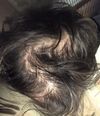
User discusses scalp micropigmentation for denser hair appearance and its benefits compared to lifelong treatments. Special ink is used, which can fade and blur over time but can be topped up.
A new product, a retinoic acid solution (0.3%), is available to enhance minoxidil products like Rogaine and Kirkland by converting them into a tretinoin-containing solution for improved hair loss treatment. One unit of the product is enough for a year's supply.
The conversation discusses using low-dose topical finasteride, specifically 0.005% and 0.01%, for hair regrowth, with some users considering increasing the concentration for better results. Users share experiences with different dosages and combinations, including minoxidil, and discuss the effectiveness and availability of these treatments.
Using Tretinoin every other day with daily Minoxidil may help with hair regrowth, and some users find it more effective than daily use. There are concerns about irritation and absorption, but small amounts seem to minimize harm.
A 33-year-old male experienced initial hair improvement with exosomes, PRP, Regenera, oral minoxidil (2.5mg), and finasteride (1mg), but his condition worsened after stopping treatments. He is considering a hair transplant and seeks advice on its viability.
Tretinoin can increase hair follicles and is used alongside minoxidil and finasteride for hair growth, though it may cause skin peeling. Users report varying results, with some experiencing regrowth and others questioning its efficacy for hair.
PP405 is considered as a potential hair regrowth treatment, but users are skeptical due to past product failures. They compare it to Minoxidil and Finasteride, questioning its effectiveness and the intentions of pharmaceutical companies.
The user has tried finasteride, minoxidil, dutasteride, microneedling, retinol, topical finasteride, and ketoconazole for hair loss but continues to experience hair recession. They are considering adding oral minoxidil or RU58841 and are unsure about the next steps.
A user experienced significant hair regrowth after improving their diet, getting sunlight, taking a multivitamin, and exercising, following a period of extreme calorie restriction and hair shedding. Others in the conversation attribute the hair regrowth to increased calorie intake rather than just vitamins.
The conversation is about seeking updates on the hair loss treatment RCH-01, specifically its next phase and any news from Shiseido. The user recalls someone being in contact with a researcher or company representative.
The conversation is about a person using oral minoxidil, biotin multivitamins, dutasteride lotion, a hair growth serum with redensyl, capixyl, and procapil, ketoconazole with zinc shampoo, and monthly PRP treatments with a derma roller for hair growth. Someone encouraged them to continue with their regimen.
A 27-year-old male is using a minoxidil and finasteride spray for hairline recession and is considering other treatments like oral minoxidil, exosomes, PRP, or a hair transplant. Suggestions include microneedling, possibly with tretinoin, while another user suggests the hairline is fine and mentions body dysmorphia.
The user experienced significant hair regrowth after 7 months using topical minoxidil once a day and 0.5mg dutasteride every other day, with noticeable results in the last two to three months. They reported no side effects and did not use dermarolling.
The user experienced significant hair regrowth using 1mg finasteride every other day and 1ml topical minoxidil daily, with initial shedding but improvement by three months. Microneedling was also used, with adjustments to frequency and needle length for better results.
The conversation discusses the effectiveness of topical Rapamycin for hair regrowth and color restoration. Specific treatments mentioned are Minoxidil, Finasteride, and RU58841.
The user experienced significant hair regrowth using dermarolling, peppermint essential oil, rosemary carrier oil, finasteride, dutasteride, biotin, vitamin E, spirulina, fish oil, and a protein-rich diet. The oral versions of finasteride and dutasteride were noted as more effective.
Hair transplant recipients are concerned about whether dormant follicles are permanently damaged by incisions, but some believe undamaged follicles could still regrow if a treatment like PP405 is effective. Opinions vary on the impact of transplants on original follicles, with some suggesting treatments like finasteride can help regrow hair.
The user is using a hair regrowth treatment plan that includes finasteride, microneedling, minoxidil foam, ketoconazole shampoo, and piroctone olamine shampoo. They are seeking advice on the effectiveness of their regimen and dosage of finasteride, and are curious about others' experiences with piroctone olamine.
The post discusses using microneedling alone for hair regrowth without finasteride or minoxidil due to side effects and dependency concerns. The user is also considering the "Zix" formula, acetic acid, topical zinc solutions, and lithium chloride.
The user experienced hair regrowth using finasteride every other day and topical minoxidil but is currently going through a shedding phase. Despite the shedding, progress is evident, and users suggest patience and possibly adding microneedling to improve results.
The user experienced hair regrowth using a topical solution containing 5% minoxidil and 0.1% finasteride, despite an initial shedding phase. They reported no side effects and noted significant improvement in hair density, particularly around the crown area.
A 32-year-old male is considering options to soften a dense transplanted hairline after experiencing accelerated hair loss and intolerance to finasteride and dutasteride, while using minoxidil. He is exploring partial electrolysis or laser treatments to achieve a natural look with a short buzz cut, avoiding a second transplant or scalp micropigmentation.
The conversation is about hair loss treatment progress using oral finasteride, topical minoxidil, and microneedling. Users discuss experiencing shedding phases and the importance of trusting the process for hair regrowth.
A user who is on a hair loss treatment regimen with Fin, Minoxidil/morning, Stemoxydine/evening, Nizoral 1-2 times per week and Dermarolling once per week. They have experienced some shedding but also think they may be seeing some regrowth around the hairline.
The user is using 5% minoxidil, 1mg finasteride, and a 1.5mm dermaroller 1-2 times a week for hair growth, noting improved growth speed and density. They avoid applying minoxidil immediately after dermarolling due to skin irritation.
Bryan Johnson used a customized hair restoration formula from Roots byGA, which includes Minoxidil, Cetirizine HCl, Latanoprost, Dutasteride, Melatonin, Caffeine, Tretinoin, Vitamin D3, and Vitamin E. Many users are skeptical of the effectiveness and uniqueness of the treatment, suggesting that standard treatments like Minoxidil and Dutasteride are more reliable.
The conversation discusses hair loss treatment using daily topical minoxidil and finasteride, daily 0.5mm dermarolling before application, and 2% ketoconazole shampoo three times a week. Users believe dermarolling enhances the absorption of the treatments and expect significant improvements over time.
Hair fibers impressively cover bald spots, boosting confidence. User started big 3 treatment (0.5mg fin, 1 time minoxidil 5% topical, ketoconazole 2%) for regrowth.
User tried Exosomes for hair loss with no success but experienced healing in other areas. Noticed people with previous hair transplants responded well to Exosomes.