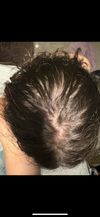
A 23-year-old male is experiencing diffuse hair loss and miniaturization, possibly due to high IGE levels after using tofacitinib. He seeks advice and has not yet consulted a dermatologist.
A user made a 70/30 ethanol/propylene glycol topical finasteride solution but noticed chunks at the bottom. The discussion focuses on this issue with the DIY hair loss treatment.
The conversation discusses potential causes of pigmentation around hair follicles, suggesting sebum buildup, autoimmune conditions, or dermatitis. Treatments mentioned include finasteride, dutasteride, and an anti-inflammatory diet, with a recommendation to consult a doctor for a proper diagnosis.
The conversation is about selling KY19382 powder, a novel activator of Wnt/β-catenin signaling, and Kolliphor EL liquid for vehicle formulation. The seller offers worldwide shipping.
The conversation discusses the best ethanol and propylene glycol ratio for homemade topical finasteride, with a focus on absorption and drying issues. The user shares their experience using a 50% propylene glycol, 30% ethanol, and 20% water solution, and considers adjusting the ethanol content for better results.
A peptide from Japanese water chestnut fruit may help with hair loss by suppressing DHT's effect on hair follicle cell death, potentially serving as a finasteride alternative. The treatment's effectiveness and safety in humans remain uncertain.
Switching from propylene glycol to glycerin in topical finasteride may reduce systemic absorption and side effects while maintaining local scalp DHT suppression. Concerns exist about glycerin's ability to deliver the full dose to hair follicles.
The user experienced new hair growth after switching from oral finasteride to topical RU58841 with minoxidil and undergoing stem cell therapy. They noticed new hairs at the hairline and temples, but are unsure which treatment is responsible.
A user was prescribed Alpicort E, which contains Estradiol Benzoate, Prednisone, and Salicylic Acid, for hair loss and is seeking others' experiences due to concerns about potential side effects.
The conversation discusses using PGE2 as a hair growth stimulant, comparing it to minoxidil, and considering the addition of Setipiprant. Concerns about side effects like skin damage and cost are also mentioned.
PP405 is a topical gel being tested for hair regrowth in adults with androgenetic alopecia. Volunteers aged 18-55 are needed for a 16-week trial in several US locations.
Adipose fat cells and stem cells may help treat hair loss by restoring the scalp's thickness. Treatments like NanoFat injections and Botox are discussed for their potential to promote hair growth.
A female user has experienced severe hair shedding since stopping birth control in late 2022, diagnosed as telogen effluvium with no signs of androgenetic alopecia. Despite healthy living and optimal bloodwork, she continues to shed hair daily but also sees significant regrowth.
The conversation discusses hair thinning and treatments like Minoxidil, finasteride, and RU58841. The user is concerned about distinguishing between natural hair parting and actual thinning.
The user is considering using topical finasteride for thinning hair around the middle part, vertex, and crown, and is unsure if the whole scalp is thinning. Another user suggests oral finasteride is more effective than topical, and recommends consulting a dermatologist for proper treatment.
The user experienced tiny vellus hairs from 0.5mg finasteride and 2.5mg minoxidil over 9 months. Topical minoxidil, alfatradiol, and RU58841 applied twice daily for 1.5 months significantly improved temple hair regrowth.
HairClone is offering a Dermal Papilla Cell Hair Multiplication procedure in Guatemala, raising questions about its effectiveness and regulatory reasons for the location. Users express skepticism and curiosity about the treatment's success and potential costs.
After a second session of Platelet-Rich Plasma (PRP) treatment for hair regrowth, the user is experiencing increased shedding of thick and dark hairs and is concerned about whether this is temporary. They are seeking others' experiences with PRP, specifically regarding the duration of shedding and eventual positive outcomes.
The user is considering making a homemade topical finasteride solution using an ethanol-based carrier. They are inquiring if a solution containing partially denatured ethyl alcohol and benzalkonium chloride is suitable.
User experienced slow gains with topical fin+min, switched to topical dut+min, and considered adding Eucapil. Another user suggested DUT may be less effective topically due to high molar mass and mentioned Fluridil as a weak anti-androgen that could help.
A user ordered Alpha Plus from Anagenica, expecting it to contain specific percentages of Fin, Estradiol, Minoxidil, and CB0301. However, the received product's label showed different percentages, including a surprising 25% CB, leading the user to question its safety and accuracy.
The user is experiencing hair loss and has been using treatments like minoxidil, finasteride, and ciclopirox olamine. Despite these treatments, they are concerned about increased shedding, dandruff, and possible additional hair loss conditions.
OP injured their temple using derma rolling and tretinoin, causing peeling and potential hair follicle damage. Users suggest the injury might be permanent, possibly resulting in scar tissue where hair won't grow.
The conversation discusses hair loss treatments, specifically Setipiprant, finasteride, and bimatoprost. Setipiprant is suggested for maintenance, while bimatoprost is for regrowth, and combining them with dermarolling is recommended for better results.
A user was prescribed betamethasone dipropionate spray for a receding hairline, which caused skin peeling and depigmentation. They stopped using it and are considering alternatives like BPC-157/TB-500 for healing.
The conversation discusses hair regrowth after a health condition, with the appearance of white substance on the scalp. Suggestions include it being sebum or White Piedra, with a recommendation to try Nizoral.
The conversation is about a 21-year-old using finasteride, dermarolling, ketoconazole shampoo, hair growth serums, and exosome therapy to treat early-stage thinning on the crown. They are questioning if these treatments are sufficient to improve hair thickness.
Hair loss without a white bulb may indicate mechanical damage, anagen effluvium, alopecia areata, or traction alopecia. Seeking a specialist is recommended, but access can be difficult in smaller areas.