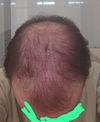
The conversation is about someone's three-year experience with irregular derma rolling, Minoxidil, and Redensyl for hair loss, hoping to thicken areas with fine hair.
The person is experiencing hair regrowth with some hairs falling out after reaching 1.5-3 inches and others growing slowly; they are using finasteride, minoxidil, rosemary-mint oil mask, Nirozal, egg mask, and microneedling as treatments. They stopped using rosemary water due to hair darkening.
User considers trying AAPE for hair restoration, costing $700 for 6 months. Others discuss its potential effectiveness and mention a study with promising results.
A user shared their hair regrowth success using microneedling with a dermaroller every 6 days and minoxidil, recommending betadine (povidone-iodine) before microneedling to sterilize the scalp and enhance results. Another user noted the potential risks of iodine toxicity.
PP405 is a promising experimental topical treatment for alopecia that reactivates dormant hair follicles by targeting cellular energy, with large-scale trials planned for 2026. While it shows potential, it cannot regenerate permanently destroyed follicles, making hair transplants the only guaranteed solution for advanced baldness currently.
The user experienced significant hair regrowth over three years using a combination of dutasteride, oral minoxidil, dermarolling, and Nizoral shampoo. Initial side effects from finasteride subsided after switching to dutasteride, leading to improved hair density and thickness.
A user's progress in hair regrowth after taking finasteride (1mg) every other day, and the replies to the post offering support, advice, and encouragement.
A 25-year-old male experienced noticeable temple regrowth using 1mg finasteride, 2.5mg oral minoxidil, and 2mg GHK-Cu over three months. The user is pleased with the progress, especially on the left temple.
A user reported noticeable hair regrowth using a 272 diode red light therapy hat over 11 months without Minoxidil or Finasteride. Opinions vary on its effectiveness compared to traditional treatments, with some suggesting combining therapies for better results.
The user reports positive progress in hair regrowth using 1mg oral finasteride, 3mg oral minoxidil, biotin, vitamin D, red light therapy, and microneedling. They note thickening at the hairline and some regrowth at the temples.
A woman experienced hair regrowth after using self-prescribed finasteride and dutasteride from online sources, despite doctors' reluctance to prescribe these due to potential birth defects. Her dermatologist acknowledged the effectiveness of these treatments and advised her to continue using them while avoiding pregnancy.
Hair cloning and injection of dermal papilla cells are discussed, with skepticism about their availability by 2023. Users mention Minoxidil, finasteride, and hair transplants as current treatments.
The conversation is about a 21-year-old using finasteride, dermarolling, ketoconazole shampoo, hair growth serums, and exosome therapy to treat early-stage thinning on the crown. They are questioning if these treatments are sufficient to improve hair thickness.
The user is using a hair regrowth treatment plan that includes finasteride, microneedling, minoxidil foam, ketoconazole shampoo, and piroctone olamine shampoo. They are seeking advice on the effectiveness of their regimen and dosage of finasteride, and are curious about others' experiences with piroctone olamine.
A serum containing Centella asiatica extracellular vesicles, IGF-1, FGF-7, and caffeine significantly improved hair thickness, density, length, and reduced hair loss after 56 days. The conversation also discusses how treatments like finasteride, minoxidil, and ketoconazole address different aspects of hair loss by reducing DHT, improving blood flow, and lowering inflammation.
Osteopontin, a protein involved in hair growth on moles, may help with hair loss. However, it is also linked to Alzheimer's, cancer, and bone development, so caution is advised.
A 39-year-old experienced hair regrowth on his temples after switching from finasteride to topical RU58841 combined with 5% minoxidil. He also underwent stem cell treatment and noticed improvements, attributing the regrowth mainly to the change in treatment.
The user has been using topical 0.3% finasteride, 5% minoxidil, and Nizoral for 5 months and is questioning if they are experiencing hair regrowth. The conversation revolves around identifying potential hair regrowth.
The user experienced hair shedding after stopping minoxidil and resumed using minoxidil 5% twice daily, topical finasteride 0.1% twice a week, along with dermarolling, head pinching, deep massaging, and inversion techniques. They are seeking suggestions to maximize hair regrowth efforts and have observed some progress.
PP405 shows promise in hair regrowth, with 31% of participants experiencing over 20% increase in hair density after 8 weeks. Phase 3 trials are expected in 2026, with potential market availability by 2029-2031.
The conversation discusses using GFM Gel, a topical gel with polypeptides that mimic growth factors to promote hair regrowth and strengthen hair. It also mentions treatments like Minoxidil, finasteride, and RU58841 for hair loss.
High frequency ultrasonography and HR-MRI can help identify hair shedding causes like inflammation and fibrosis. The conversation discusses the potential of using these technologies to evaluate treatments like Verteporfin for hair regeneration.
A user reported no success with Minoxidil after a year but observed good regrowth after taking 5000 IU of vitamin D3 daily for 2.5 months. They are seeking opinions on whether they will see full regrowth and if others have had similar experiences.
A user is using topical finasteride, keto shampoo, microneedling, and tretinoin for hair loss and is considering adding pyrilutamide. They notice some improvement at the temples and seek advice on whether to focus on cosmetic results despite daily shedding.
The user shared progress on hair regrowth using oral dutasteride, oral minoxidil, and verteporfin procedures. They reported some regrowth after 6-9 months of treatment.
A hair regrowth journey over the course of one year with treatments including finasteride, minoxidil, micro needling, minimum shampooing and occasional use of Nizoral (2%).
The conversation is about someone using topical finasteride, minoxidil, tretinoin, and caffeine for hair regrowth, particularly near the temple area. They are asking if the new, smaller hairs will grow and thicken to match their existing hair.
The user reported significant hair regrowth after seven months using topical minoxidil 5% combined with 0.1% finasteride and weekly micro needling. The community responded positively, noting visible improvement and discussing the effectiveness of topical versus oral finasteride.