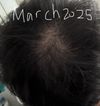
The user resumed finasteride and added 5mg oral minoxidil and biotin, noticing quick progress in hair regrowth. Other users discuss dosages and express surprise at the results.
The user is using oral minoxidil for hair growth and is considering adding topical latanoprost, but is concerned about potential eye color change. They are seeking advice on the effectiveness of latanoprost for hair thickening and the risk of eye color change.
ET-02 is seen as promising for addressing hair loss and graying, but PP405 is more advanced in development and has better publicity. Some users plan to use both treatments alongside minoxidil and dutasteride.
A user plans to create a custom topical solution by adding finasteride, caffeine, cetirizine, and melatonin to a minoxidil bottle, questioning the stability and effectiveness of this mix. Concerns include potential crystallization and solution muddiness with added ingredients.
The user is experiencing irritation from using PG with RU58841 and is seeking alternative solutions like K&B in the UK. They report redness, itchiness, and flaky skin from the current treatment.
PP405 may not need daily use like minoxidil, but finasteride might still be needed to maintain hair regrowth. PP405 reawakens dormant hair follicles, potentially offering a long-term solution, though not a permanent cure.
User experienced bad reaction to minoxidil and asks if anyone tried stemoxydine alone for hair loss. They consider trying stemoxydine with low dose topical finasteride after testing stemoxydine on a small area.
A user shared their positive experience with a clinical trial for a new oral medication, VDPHL01, which is a reformulated version of oral minoxidil taken at a high dose of 17mg daily, showing significant hair regrowth after six months. The user noted that this formulation is believed to be more effective and time-released, with fewer side effects compared to regular oral minoxidil.
A user is seeing good results with RU58841 for hair loss, noting reduced shedding and thicker hair. They plan to use pumpkin seed oil as a solvent to avoid water content, which they believe reduces the effectiveness of anti-androgens.
Creating a topical solution combining finasteride and stemoxydine to treat hair loss, and the discussion of whether 15mg of finasteride would be sufficient for 60ml solvent.
A minoxidil solution with only ethanol and minoxidil may not be properly absorbed without additional ingredients like propylene glycol or vegetable glycerin. It's suggested to use a reputable brand and test the product for authenticity.
FCE 28260 (PNU 156765), an under-explored 5α-reductase inhibitor, showcases promising results in research by Giudici et al., outperforming well-known treatments like Finasteride in reducing the conversion of testosterone to DHT. Its superior efficacy, demonstrated through lower IC50 values in both natural and human recombinant enzyme studies, suggests it could offer more effective management of DHT-related conditions. Additionally, its lower molecular weight hints at better potential for topical application, potentially offering advantages in treating conditions such as androgenic alopecia. Despite its potential, it has not advanced in development, possibly due to financial limitations, leaving its therapeutic prospects and side effect profile largely unexplored.
Mixing tretinoin with minoxidil for hair loss treatment. Some users prefer separate application or professional compounding due to potential solubility issues.
Different minoxidil formulations affect hair growth and side effects. Higher propylene glycol and pH levels improve effectiveness but can cause scalp irritation.
The user added P5P (vitamin B6) to their shampoo to reduce scalp itch, which improved significantly. They have been using finasteride for hair loss but are exploring additional treatments like topical antiandrogens and prolactin inhibitors.
Hair loss discussion involves treatments like Minoxidil, Finasteride, and RU58841. Stemoxydine may be effective, but results may take at least 3 months due to hair cycle.
The solution contains minoxidil, finasteride, azelaic acid, caffeine, retinoic acid, and procapil. Users suggest minoxidil with tretinoin and a 5-alpha reductase inhibitor, while dismissing retinoic and azelaic acids as unnecessary.
The conversation discusses using Rogaine (Minoxidil) and ketoconazole for hair regrowth, with interest in trying a formulation with Azelaic Acid for potentially better results. Concerns about Azelaic Acid's effectiveness and safety, including skin sensitivity to sunburn, are mentioned.
The user cannot handle Minoxidil and is looking for an alternative to dilute topical finasteride. They are considering using Alpecin liquid as a solution.
Veradermics' extended-release oral minoxidil is expected to be commercially available in 2027-2028, while another company, Minx, may release a similar product sooner. VDPHL01 is considered more clinically validated compared to Minx.
The conversation is about a user taking a break from oral minoxidil due to persistent eye puffiness after two years of use. Suggestions include switching to topical minoxidil foam and adjusting the dosage to manage side effects.
The user started using oral minoxidil and estradiol in August 2025, added finasteride in December, and experienced significant hair shedding in February/March. They switched to estradiol injections and are considering their hair washing routine, while another user suggested consulting a dermatologist and possibly trying dutasteride.
The user is using topical minoxidil and finasteride with good results and is considering adding stemoxydine 5% to their regimen. Another user suggests trying it if financially feasible, as results can vary.
The conversation discusses adjusting the isopropyl alcohol, propylene glycol, and water ratios in a topical finasteride solution for better scalp comfort and less dandruff. The user considers using 20ml IPA, 25ml PG, and 15ml water in a 60ml bottle, moving away from mixing finasteride with topical minoxidil.
A 23-year-old male used 1.25mg finasteride every other day for 10 months without minoxidil, noticing results at the 4-month mark and experiencing a minor shed at the 8-month mark. He also added Nizoral to his routine and reported no side effects, maintaining consistent use at 7:00 PM.
The conversation discusses using retinol to enhance minoxidil's effectiveness for hair loss, with a user considering The Ordinary's 0.5% retinol and seeking advice on azelaic acid concentration. Other users suggest using tretinoin instead and consider pre-formulated products combining minoxidil, tretinoin, and azelaic acid, but the original poster has not seen improvement from dermarolling.
The user used Kirkland brand minoxidil foam twice daily for a year and noticed initial progress, but feels they might be losing progress or experiencing shedding. They are considering starting finasteride but prefer to avoid it and are seeking hair styling advice.
Topical pirfenidone is highlighted as an effective anti-inflammatory and anti-fibrotic treatment for hair loss, particularly in addressing perifollicular fibrosis, which may enhance the effectiveness of standard treatments like finasteride and minoxidil. The user also uses calcipotriol, MCT oil, ciclopirox shampoo, and benzoyl peroxide shampoo as part of their regimen.
The conversation discusses the use of Finastopic, a carrier for finasteride solutions by Isdin, and compares it to a standard propylene glycol (PG) solution. The user was prescribed a 1% finasteride solution using Finastopic and has been using a self-compounded 0.025% topical finasteride with minoxidil.
The user is applying topical finasteride with stemoxydine for hair loss and has noticed hair thickening but no regrowth after two months. They also report high SHBG and prolactin levels and a lack of morning erections, even on low doses of medication.