Hair loss treatments like Minoxidil, finasteride, and potential mRNA therapies are discussed. There is skepticism about targeting specific genes due to the complex genetic nature of hair loss.
RT1640, a combination of cyclosporin A, minoxidil, and RT175, is discussed as a potential treatment for hair regrowth and repigmentation. The unique formulation aims to enhance hair follicle growth and restore hair pigment without the negative side effects of immunosuppressants.
A user reported success with RU58841 and a 1mm derma roller for hair regrowth, noting significant improvement in hair density and reduced scalp visibility. They also mentioned using minoxidil and black castor oil in the past, with mixed results.
Topical 2-deoxy-D-ribose (2dDR) regrows hair in mice almost as well as 2% Minoxidil. However, 2dDR may contribute to oxidative stress and hair loss due to the formation of advanced glycation end products (AGEs).
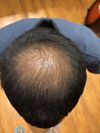
The user is starting a hair loss treatment regimen using Minoxidil, finasteride, and RU58841. They shared a progress picture from the beginning of their treatment.
A user's father experienced hair regrowth and other health improvements after two IV exosome treatments. The user also had four rounds of exosome therapy, noting significant hair regrowth and relief from headaches, but no change in gray hair.
The conversation discusses potential advancements in two hair loss drugs, KX-826 and GT20029, and the interest in whether transitioning from oral finasteride to these drugs would maintain hair growth. One reply expresses skepticism about the compounds' representation.
A 28-year-old male shares his 12-step hair regrowth routine, including finasteride, minoxidil, RU58841, LLLT, dermarolling, various shampoos, supplements, and a healthy diet. He seeks advice on microneedling frequency and mentions experiencing lowered libido and occasional scalp inflammation.
A user is trying 2-deoxy-D-ribose with distilled water for hair growth, observing new hair and skin pigmentation changes. Others compare it to Minoxidil, expressing interest and caution about its effectiveness and safety.
Chime Biologics and Hope Medicine are speeding up the launch of a first-in-class antibody drug, HMI-115, for endometriosis and androgenic alopecia. The treatment involves a series of subcutaneous injections, has shown promising results in phase 1, and continues to promote hair regrowth even after the treatment is stopped.
A 16-year-old is experiencing hair loss and is using minoxidil, finasteride, and plans to add RU58841, while considering other treatments like MK-677 and microneedling. Concerns are raised about the potential impact of these treatments on puberty and development.
FCE 28260 (PNU 156765), an under-explored 5α-reductase inhibitor, showcases promising results in research by Giudici et al., outperforming well-known treatments like Finasteride in reducing the conversion of testosterone to DHT. Its superior efficacy, demonstrated through lower IC50 values in both natural and human recombinant enzyme studies, suggests it could offer more effective management of DHT-related conditions. Additionally, its lower molecular weight hints at better potential for topical application, potentially offering advantages in treating conditions such as androgenic alopecia. Despite its potential, it has not advanced in development, possibly due to financial limitations, leaving its therapeutic prospects and side effect profile largely unexplored.
The conversation is about finding a legitimate online source for 17α-estradiol (Alfatradiol) powder to make a 0.1% solution for hair loss treatment. A user suggests Anagenica as a source.
KX-826 is being discussed for hair loss treatment, with users debating between 0.5% and 0.9% solutions and foam. Some report side effects like headaches, while others see no changes; it blocks androgen receptors without reducing DHT levels.
A user reported noticeable hair regrowth using a 272 diode red light therapy hat over 11 months without Minoxidil or Finasteride. Opinions vary on its effectiveness compared to traditional treatments, with some suggesting combining therapies for better results.
The conversation discusses using 1% cetirizine, an antihistamine, as a potential treatment for androgenetic alopecia (hair loss). One user plans to try cetirizine instead of finasteride, while others are curious or skeptical about its effectiveness, discussing the role of inflammation in hair loss.
A user shared a 2-year hair regrowth progress using 1mg finasteride daily and topical minoxidil twice daily, with noticeable thickening after 7 months. Other users discussed the commitment required and potential side effects, but the original poster experienced no side effects.
A user is interested in Absci's AI-driven antibody platform, ABS-201, for treating androgenetic alopecia, which shows promising preclinical results and potential for hair regrowth and pigmentation restoration. However, concerns are raised about the drug's development timeline and its advantages compared to existing treatments.
A user's experience with microneedling monotherapy and potential treatments such as finasteride, minoxidil, Stemoxydine, rosemary oil, peppermint oil, and RU58841 for reversing hair loss.
Phase II for TDM-105795 for Androgenic Alopecia is set to begin in April 2023. The study aims to evaluate the efficacy and safety of TDM-105795 in male subjects.
A user is experimenting with a homemade solution of WAY-316606 for hair regrowth, combining it with other treatments like minoxidil and dutasteride. The community expresses concern over the safety and mental health implications of such drastic measures, with mixed opinions on the effectiveness of WAY-316606.
A user shared their baseline bloodwork results before starting Finasteride 1mg every other day, seeking comparison with others who have done similar tests. They are interested in any changes observed after beginning the treatment.
A user documented their two-year hair regrowth journey using finasteride, minoxidil, and derma rolling, showing significant improvement. They switched from topical to oral minoxidil after the first year, experiencing some shedding and minor bloating.
The conversation discusses using 0.1% Alfatradiol compounded by a pharmacy for hair loss treatment. It also mentions Minoxidil, finasteride, and RU58841 as other treatments.
Creatine may affect hair loss by reducing PGE2 levels, which could influence hair growth. The discussion highlights the need for more research on this potential mechanism.
Hmi115, a prolactin receptor blocker, showed promise for hair growth, but results from Phase 2 trials have not been published. ABS-201, an AI-based analog, is expected to begin trials in December 2025, while commercialization of treatments like PP-405 is anticipated around 2027.
A user discussed using KeraXL serum for hair loss, which contains Biochanin-A from Red clover extract and Acetyl Tetrapeptide-3. They sought feedback on its safety and effectiveness.