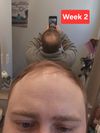
Using finasteride and peptides, including GHK-Cu, improved hair thickness and regrowth. The user also used a KLOW blend and CJC/IPA for better sleep and recovery.
The conversation discusses using topical Calcipotriol and Valproic Acid for hair loss, focusing on their mechanisms involving the VDR receptor and Wnt/beta-catenin pathway. Specific treatments mentioned are Minoxidil, Finasteride, and RU58841.
ABS-201 shows promise for male hair regrowth by blocking the prolactin receptor, with higher expected efficacy than current treatments. The discussion also covers dosing differences between macaques and humans for hmi115, highlighting a significant dosage disparity.
AHK-cu peptides are discussed for hair growth, with users comparing them to GHK-cu peptides and sharing sources to buy. AHK-cu is noted as more expensive, and users express interest in finding cheaper, reliable vendors.
Verteporfin is being discussed for its potential to regrow hair and heal scars, possibly aiding hair transplants or replacing them. Some users are skeptical about its effectiveness, while others suggest combining it with microneedling for better results.
KPV, a peptide patented by L'Oreal, may promote hair growth and reduce hair loss by extending the anagen phase and has anti-inflammatory properties. It could be combined with treatments like minoxidil for enhanced effects.
The conversation discusses using a multimodal approach to treat androgenic alopecia, including substances like gamma-linolenic acid, DHA, sulforaphane, melatonin, cetirizine, astaxanthin, fisetin, apigenin, curcumin, limonene, genistein, and berberine. Users also mention using ketoconazole, minoxidil, and low-level laser therapy (LLLT) as part of their hair loss treatment regimens.
Hair loss theory involves 3alpha-hydroxysteroid reductase (3AHD) converting DHT to androstenol. Discussion explores potential treatments and encourages more research.
Kintor Pharma completed a successful Phase II clinical trial for KX-826, a treatment for androgenetic alopecia. KX-826 is similar to finasteride with minor side effects and is more backed than Cosmerna.
The conversation is about the use of peptide therapies for hair loss, specifically GHK-CU, ZN-Thymulin, and PTD-DBM. The user is seeking feedback on the effectiveness of these treatments from those who have tried them.
Norwood 7 hair loss is often excluded from trials to ensure treatments appear more effective and to reduce costs. Some believe treatments effective for Norwood 5 could work on Norwood 7, but companies prioritize market readiness.
Researching whether pyri and enza, which are stereoisomers of each other, share the same features related to CNS penetration/GABA Inhibition; safety and efficacy when used topically at 0.5-1%; and cost comparison between the two treatments.
A new human trial using an FDA-approved treatment for wound healing called Verteporfin, which may potentially be able to reverse scarring and regrow hair in that area. The trial is only lasting one month so far.
PP405 shows promise in regenerating hair by activating dormant follicles. Other treatments like VDPHL01 and Breezula are also advancing, providing new hope for hair loss solutions.
Pelage Pharmaceuticals is developing PP405, a topical treatment for hair growth, currently in Phase 2a trials. There is skepticism about the company's claims, and no fast-tracking approval timeline has been detailed.
Kintor Pharmaceutical's Phase 2 results with the drug Pyrilutamide, a potential alternative to 5-ARI drugs like Finasteride and Dutasteride but without the side effects. It could be used in combination with other topical treatments such as Minoxidil. The safety of the drug has been demonstrated in 6 months of use, however there are still questions about long term efficacy and systemic absorption.
PP405 from Everychem is likely fake and potentially harmful, with concerns about its stability and the risk of using the wrong MPC inhibitor, which could damage hair follicles. The real PP405 was studied under strict conditions, and DIY attempts are discouraged due to unknown formulation and quality control.
The user is documenting their hair regrowth journey using oral finasteride, topical minoxidil, ketoconazole, dermarolling, biotin shampoo, and rosemary oil. They are committed to maintaining this regimen to track progress.
The conversation is about a user seeking help with hair regrowth treatments, specifically mentioning Setipiprant, Minoxidil, Finasteride, and RU58841. The user is trying to contact forum members for guidance on making and using these treatments.
2 Deoxy D Ribose may promote hair growth and aid wound healing, potentially enhancing microneedling effects. Users discuss its combination with microneedling for better hair growth results.
A peptide from Japanese water chestnut fruit may help with hair loss by suppressing DHT's effect on hair follicle cell death, potentially serving as a finasteride alternative. The treatment's effectiveness and safety in humans remain uncertain.
Adipose-derived stem cells with ATP improved hair regrowth in male and female mice with androgenetic alopecia. The most effective treatments were low dose stem cells with ATP for males and medium dose stem cells with non-liposomal ATP for females.
Users discussed the effectiveness of Everychem's solution, similar to PP405, with some reporting improved hair thickness and new growth. Concerns were raised about safety and the legitimacy of the product, with some users advising against purchasing research chemicals.
ET-02, a PAI-1 inhibitor, is not proven to be more effective than Minoxidil for hair loss. Other treatments like finasteride, dutasteride, PP405, and AMP-303 are also discussed, focusing on cellular senescence and oxidative stress.
Exploring different treatments for hair loss, such as cosmeRNA and HMI-115 which are small interference messenger RNA that inhibits the DHT receptor and an antibody that binds to the prolactin (PRL) receptor respectively; and researching mechanism and environment of hyperresponders.
The user is experiencing irritation from using PG with RU58841 and is seeking alternative solutions like K&B in the UK. They report redness, itchiness, and flaky skin from the current treatment.
Emerging hair loss treatments like PP405, a topical MPC inhibitor, show promise in activating stem cells for hair growth. The conversation seeks information on the development stages and accessibility of these treatments.