Search
for
Sort by
Community Join
870-900 / 1000+ resultscommunity Cure/better treatment options in the future
The conversation is about future hair loss treatments. Current treatments mentioned include finasteride, minoxidil, and RU58841, with potential future treatments like GT20029, TDM-105795, JW0061, and follicle cloning.
community Feels like it’s working. Diffused thinning. 1 month of topical .3% fin and .6% min, .025% tret, and weekly microneedling
A 43-year-old from Thailand shares progress after 1 month using topical finasteride, minoxidil, tretinoin cream, and weekly microneedling for diffused thinning. Users compliment his appearance and suggest he doesn't need treatment.
community Fin for 7 months and my sclap is now transparent
A 24-year-old male has been using finasteride for 7 months and noticed thinning hair, especially when wet, and is concerned about the effectiveness of the treatment. Suggestions include continuing finasteride, considering minoxidil, and possibly trying micro-needling.
community Sustaining minoxidil dependent hairs?
Minoxidil-dependent hairs fall out if minoxidil is stopped. New treatments like GT20029, FOL055, or TDM105795 might help sustain these hairs.
community Having androgen receptor density and sensitivity at wrong f*ing place
The conversation discusses hair loss treatments, focusing on the use of topical minoxidil, microneedling, finasteride, and dutasteride, while debating the role of testosterone and DHT in hair loss. It also touches on the potential liver health impacts of these treatments and the genetic sensitivity of hair follicles to androgens.
community Derm prescribed ketoconazole 2% shampoo, claiming my case “is not bad enough yet” for fin. Second opinion?
A user was prescribed ketoconazole shampoo by their dermatologist for early-stage hair loss, but is unsure if this is the right treatment. Most commenters suggest seeking a second opinion or starting finasteride treatment immediately, while a few caution about potential side effects.
community How to mix topical cetirizine with minoxidil?
The conversation discusses combining topical cetirizine with minoxidil for hair loss treatment and inquires about the safety and absorption through the skin, as well as the possibility of adding melatonin.
community Topical minoxidil and salicylic acid
The user has been using finasteride for 6 months with decent results and recently added topical minoxidil. They are concerned that salicylic acid in their skincare products might reduce minoxidil's effectiveness.
community I need your help - transplant after care
The user is concerned about post-hair transplant care, specifically regarding the use of a bandana, minoxidil, and tretinoin. They are advised to consider finasteride and possibly adjust the minoxidil dosage.
community 18M Diffuse Thinning Progress: 11 Months Oral Minoxidil + 3 Months Vit D3/ K2 (No DHT Blockers)
community 12 months of Fin + minox + microneedling, still shedding, no regrowth
community Thoughts and Opinions on upcoming hairloss treatments?
The conversation is about optimism for new hair loss treatments like Stemson's bioengineering, osteopotin, SCUBE3, GT20029, and Verteprofin, and inquires about other notable treatments.
community 21 months on topical minoxidil and full HRT
The conversation is about a transgender individual's experience with hair regrowth using topical minoxidil and hormone replacement therapy (HRT), expressing concern about the slow growth and thin appearance of their hair. Some responses encourage patience and highlight the variability of results, while others discuss the role of HRT and its effects.
community Am I what you would call a “hyper responder”? Regrowth in 3.5 weeks.
The user is using topical minoxidil, topical finasteride, microneedling, and Nizoral shampoo for hair regrowth. Other users suggest the appearance of regrowth might be due to brushing hair differently.
community Hair Cafe’s Third Update On Verteporfin (Kevin Sees an Endless Supply of Donor Hair)
The conversation discusses Kevin's accurate information on hair loss treatments and highlights Dr. Bloxham's ongoing work with Verteporfin on FUT scars, suggesting people follow Dr. Bloxham's YouTube for updates. It also thanks Haicafe and Melvin from the hair restoration network forum for their contributions.
community HLT Megathread on HMI-115 (key takeaways in comments)
HMI-115, a newly discovered hair loss treatment that could potentially be effective for those with diffuse thinning and telogen effluvium. It is based on prolactin receptor antagonist signaling and has already undergone Phase I trials in women, with potential commercialization by 2027.
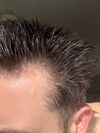
community “Mature Hairline” or Genuine AGA?
A 33-year-old male is experiencing thinning at the temples and hairline, with increased shedding over the past year. The user suspects androgenetic alopecia (AGA) despite AI suggesting a maturing hairline.
community What’s the go with verteporfin?
The conversation discusses using verteporfin for hair regrowth and minimizing scarring after hair transplants. Some individuals plan to self-administer verteporfin, potentially in combination with microneedling, as an alternative to hair transplants.
community Starting MV Supplements topical RU+Min with Copper Peptides added.
The conversation is about starting a hair loss treatment using a topical solution containing RU58841, Minoxidil, and Copper Peptides. The user plans to test the product and share updates on its effectiveness.
community Stem cell feat may lead to fix for baldness
community Where are the so called novel topical anti androgens
community The Theory of BURN THE SCALP. !! PHOTOS ¡¡
The conversation discusses a user's experiment of "burning the scalp" to treat hair loss, with mixed opinions on its effectiveness. Some suggest returning to proven treatments like finasteride and minoxidil, while others note slight improvements in hair density.
community clascoterone powder to topical diy
The conversation is about making a topical solution from clascoterone powder, with references to using a RU58841 mixing guide for guidance. Concerns about product authenticity and bulk purchase requirements are also discussed.
community Pyrilutamide +Alfatradiol 0.1% , no Hairloss anymore
OP experienced diffuse thinning for 11 years and used Minoxidil and Finasteride previously. They now use Pyrilutamide 0.5% and Alfatradiol 0.1%, resulting in significantly reduced hair loss.
community Bimatoprost vs Latanoprost for scalp hair growth
Bimatoprost and latanoprost are being considered for scalp hair growth, with concerns about side effects like skin darkening and fat loss. A user warns about potential chemical burns from latanoprost.
community 5 montsh of treatment with min-fin
community 16 month update post hair transplant and meds
The user is generally happy with their hair transplant results but has concerns about graft density and placement, particularly on the left temple and hairline. They are using finasteride and minoxidil inconsistently, plan to add Priorin, and are considering microneedling and PRP sessions for future care.
community thoughts on dutasteride mesotherapy?
community Betacaroten and hairloss? Make it better or Worse?
Betacarotene's effect on hair loss is discussed, with concerns about excessive vitamin A. The user also questions if 15mg melatonin impacts vitamin A levels.