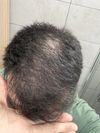
People's experiences with Pyrilutamide as a hair loss treatment, including anecdotal evidence of regrowth and reduced scalp itch when used in conjunction with Finasteride and Minoxidil.
Two different experiences of using Pyrilutamide, a hair loss treatment, which caused headaches that took around a week to subside in both cases. Other users offered insight into their own experiences with the treatment or suggested alternate treatments such as RU58841 and Minoxidil.
A user's regimen to help with their diffuse thinning, which includes taking Pyrilutamide BID, 1mg finasteride daily, 2.5mg oral minoxidil daily, topical minoxidil since August 2021, LLLT every two days, topical fin, progesterone, melatonin, minoxidil (started one week ago), pumpkin seed oil and not dermarolling; other commenters suggested Nizoral for dandruff control and caution when using pre-mixed products with Pyrilutamide.
Minoxidilmax offering a 0.5% Pyrilutamide solution and debating the cost, effectiveness, and safety of using it alone or with other treatments such as Finasteride and Minoxidil.
The conversation is about a group of people trying KX-826 for hair loss, with no serious side effects reported after 25 days of use. Some participants are experiencing less scalp itch and shedding, but it's too early for definitive results.
Hair density improved using topical dutasteride, minox, keto, and 3.5% fluridil for 6 months. Better results when hair is dry, but still unsatisfied when wet.
RU58841 hasn't stopped shedding for the user after three weeks, despite being stable on dutasteride for six years. Suggestions include continuing RU58841 for 4-6 months, considering minoxidil, and addressing stress and sleep issues.
The user experienced significant hair regrowth using a nightly topical spray with 0.3% finasteride and 6% minoxidil, without side effects. Noticeable improvements were seen within three months, with continued progress over time.
People are discussing their supplies of hair loss treatments like Minoxidil, finasteride, and dutasteride, with concerns about availability and cost. Many users mention sourcing these medications from India due to lower prices, while others discuss the challenges of obtaining them in Europe.
Switching from finasteride to dutasteride can lead to varied results, with some experiencing better hair regrowth and fewer side effects, while others continue to lose hair. Dutasteride is generally seen as more effective but has a longer half-life, potentially extending side effects.
Inconsistent minoxidil use led to hair loss, prompting a plan to resume consistent application with derma stamping, red light therapy, and DHT blockers like clascoterone or RU58841. The user avoids finasteride and dutasteride due to past side effects.
Genetics play a major role in hair loss, with some people keeping a full head of hair into old age without using treatments like minoxidil or finasteride. Many express frustration over their own hair loss and the perceived unfairness of genetic differences.
Clascoterone 5% topical solution is effective and safe for long-term use in treating male pattern hair loss. Cosmo Pharma aims for EU and US approval, with a potential US release in late 2027 or early 2028.
Oral minoxidil can cause side effects like heart issues, increased body hair, and facial puffiness, but these are often dose-dependent and temporary. Users report varying experiences, with some combining it with finasteride or RU58841 for better results, while others experience minimal or no side effects.
Finasteride is a controversial hair loss treatment, with some users experiencing positive results and others facing side effects like erectile dysfunction. The discussion emphasizes the importance of personal choice and informed decision-making.
KX-826 shows promising results for hair growth with fewer side effects, offering an alternative to finasteride and minoxidil. Users discuss combining it with minoxidil, dermarolling, and Nizoral for improved results.
A 21-year-old is using oral finasteride, minoxidil, and vitamins to address hair loss, showing some progress after two months. Many suggest shaving his head for a better appearance and easier progress tracking, while continuing the treatment and considering additional options like microneedling and Nizoral shampoo.
Clascoterone is a topical treatment for androgenetic alopecia, showing modest to moderate hair regrowth, and may be available by 2027-2028. It is considered safer than finasteride, with discussions on its effectiveness compared to RU58841 and pyrilutamide.
Topical dutasteride 0.05% is more effective for hair growth than oral finasteride 1mg, with minimal DHT reduction. The formulation uses castor oil and MCTs for better absorption but is not widely available until 2028.
A user shared their 6-month update on hair loss treatment, using daily Dutasteride, oral and topical Minoxidil, Ketoconazole shampoo, topical Finasteride, dermastamping, and PRP treatments. They reported improved hair quality but no significant regrowth or density increase, and plan to continue the regimen for another year before considering a hair transplant.
PP405 is being discussed as a potential hair loss treatment, possibly more effective than minoxidil. There are concerns about its effectiveness and product contamination, but some users report early signs of hair regrowth.
Counterfeit Kirkland minoxidil is being sold online, leading to ineffective hair loss treatment. Users are advised to purchase from reputable sources like Costco to avoid fake products.
The user regrets their hair transplant after 5 months due to patchy and thin hair, despite starting finasteride at the same time. Many recommend waiting 12-18 months for results and using finasteride and minoxidil before and after the transplant.
Significant hair regrowth was achieved after 8 months on oral finasteride (1mg) and 5 months on oral minoxidil (5mg) without side effects. The user stressed the importance of patience and consistency, despite initial shedding.
Users discuss alternatives to DHT blockers for hair loss, suggesting minoxidil, microneedling, natural DHT blockers, and scalp massages. Some explore RU58841, ketoconazole, hair transplants, and hair systems due to side effects from finasteride and dutasteride.
A 42-year-old man achieved significant hair regrowth in seven months using oral minoxidil, oral dutasteride, topical minoxidil, microneedling, and supplements. He experienced minimal side effects and noted dramatic improvements in hair thickness and health.
In Austria, finasteride prescriptions are restricted due to suicide risk concerns, with new prescriptions only for current users. Alternatives like topical finasteride, dutasteride, and online purchases face legal challenges.
Significant hair regrowth was achieved using EssenGen 6-Plus with 6% minoxidil and 0.05% finasteride, along with Nizoral shampoo, over 12 weeks. No side effects were experienced, highlighting the benefits of a low dose.
A 35-year-old is seeking advice on hair loss treatments, considering minoxidil, finasteride, and possibly a hair transplant in Turkey. They have previously tried microneedling for a year.
Concerns about finasteride affecting sperm quality and embryo abnormalities during IVF. The user plans to stop finasteride for 6 months and use minoxidil, microneedling, a red light cap, and saw palmetto shampoo to manage hair loss.