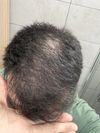
User experienced hair thickening and slight regrowth using RU58841, Fin, DUT, and Minoxidil. They plan to get a hair transplant in Turkey for further improvement.
KX-826 shows promising results for hair growth with fewer side effects, offering an alternative to finasteride and minoxidil. Users discuss combining it with minoxidil, dermarolling, and Nizoral for improved results.
User "Mostuls" shared their 4-month hair loss treatment routine, which includes daily oral finasteride, twice-daily topical minoxidil, and microneedling twice a week with no side effects. Other users discussed the specifics of the treatment and expressed positive reactions to the results.
Minoxidil and finasteride are discussed for hair loss, with concerns about minoxidil's heart-related side effects. New treatments like PP405 are met with skepticism, often humorously noted as always being "five years away."
A user is using oral finasteride, oral dutasteride, and drinking topical minoxidil for hair loss, despite health warnings. Switching from finasteride to dutasteride did not improve hair density.
A 35-year-old is seeking advice on hair loss treatments, considering minoxidil, finasteride, and possibly a hair transplant in Turkey. They have previously tried microneedling for a year.
The user experienced hair regrowth and thickening after using minoxidil for three months and finasteride for two months, along with vitamin D and iron supplements. They reported softer erections as a side effect of finasteride but found the hair improvements worth it.
Cyclosporine A is discussed as a powerful hair growth stimulant, potentially more effective than minoxidil, but concerns about safety and side effects, including cancer risk, limit its use. The conversation highlights the need for further research and experimentation with topical application, despite its risks.
A product that makes hair look thicker and healthier without promoting regrowth. Discussions include treatments like minoxidil, finasteride, red light therapy, and a serum with caffeine and peptides, with mixed effectiveness opinions.
People are discussing JXL-069 (PP405) for hair loss, with some experimenting with a 0.05% topical gel. Concerns about safety and efficacy persist due to limited testing and lack of official approval.
Effective treatments for hair loss include finasteride, dutasteride, RU58841, and minoxidil. Starting treatment early is important, and users discuss different brands, forms, and side effects.
ET-02, a new hair loss treatment, shows promising results with a 6-fold increase in hair count, potentially outperforming minoxidil by activating stem cells in hair follicles. Further trials are ongoing to confirm its efficacy and safety, with potential market release in the future.
A user created oral minoxidil sugar cubes due to lack of prescription access, leading to a humorous discussion about unconventional and potentially unsafe methods of using minoxidil. The conversation highlights the lengths people go to for hair growth.
The user is considering adding RU58841 to their current hair loss treatment of finasteride and minoxidil, but is concerned about potential side effects like hairline recession and shedding. Some users report positive results with RU58841, while others experience side effects such as chest pain and dizziness.
Bryan Johnson uses topical dutasteride, minoxidil, and microneedling for hair loss. Users discuss treatment effectiveness and side effects, debating topical versus oral dutasteride efficacy.
Topical finasteride is less popular due to inconvenience, cost, and availability, while oral finasteride is favored for ease and safety. Some users experience side effects with topical use, but find it effective with minoxidil, though opinions on its efficacy vary.
People are not using RU58841 for hair loss because it's not FDA approved, lacks long-term safety data, and is difficult to obtain and verify. They prefer FDA-approved treatments like minoxidil, finasteride, ketoconazole shampoo, and microneedling.
A user experienced significant hair regrowth using Minoxidil but started shedding hair after switching brands and adding treatments like Topical Finasteride and microneedling. They also faced increased hair loss after using Ketoconazole shampoo and are seeking advice on whether brand switching or the shampoo could be the cause.
A user shared a nine-month hair regrowth progress using 5mg oral Minoxidil and 1.25mg oral Finasteride daily, with noticeable improvement and no side effects, despite a high-protein diet, occasional smoking, and regular exercise. They also mentioned using keto shampoo and having naturally increased body hair by about 10%.
The post and conversation discuss the link between DHT (a hormone), scalp itchiness, and hair loss. Some users share their experiences and treatments, including the use of fluconazole, corticosteroids, and ketoconazole shampoo, with one user suspecting minoxidil as a potential cause of their symptoms.
A user's one-year progress in hair loss treatment using finasteride and minoxidil. The user shared their experience and advice, including adjusting the amount of sprays used based on individual needs and the importance of patience and positivity in the process.
The conclusion of the conversation is that the user has experienced significant hair regrowth using a combination of medications, including dutasteride, RU58841, and minoxidil. They have not experienced any noticeable side effects and are considering a hair transplant in the future.
User experienced hair regrowth after eliminating scalp itch with RU58841. Others discussed itch and hair loss connection, and effectiveness of combining RU58841 with 5AR inhibitors.
Female with aga tried minoxidil 5% and spironolactone, no success yet. Gladyator96 suggests waiting 6 months, adding tretinoin or dermarolling with minoxidil.
This user "ateaninja" has been using finasteride and minoxidil for 14 months along with weekly micro-needling for the last 5 months to treat hair loss. They also have a trusted barber to make their existing hair look fuller.
Two different experiences of using Pyrilutamide, a hair loss treatment, which caused headaches that took around a week to subside in both cases. Other users offered insight into their own experiences with the treatment or suggested alternate treatments such as RU58841 and Minoxidil.
A user's experience using topical finasteride and melatonin to regrow hair, as well as their use of dermaroller versus dr. Pen for microneedling. People discussed the benefits of oral minoxidil and questioned if melatonin could help with hair regrowth.
Pyrilutamide, a nonsteroidal antiandrogen drug under development for the potential treatment of androgenic alopecia. The conversation discusses its binding affinity to the androgen receptor and the timeline for possible availability after trials are completed in the United States and China.