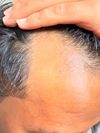
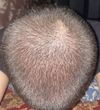
The conversation discusses a product called Rexagain Mixprocapil, which includes topical finasteride. Users express skepticism about the product's legitimacy and caution about its use.
The conversation discusses using peptides BPC-157 and TB-500, combined with microneedling, to potentially enhance hair regrowth. The user plans to try BPC-157 due to its lower cost and reports of hair growth, despite limited human trials and concerns about side effects from other treatments like minoxidil and finasteride.
PP405 shows promising results for hair growth, potentially outperforming finasteride without side effects like erectile dysfunction. Users discuss using treatments like minoxidil, pyrilutamide, nizoral, and alfatradiol while waiting for PP405's availability.
The user is pleased with their hair transplant results but is concerned about the vertex area. They use Minoxidil and finasteride daily and had the procedure at a clinic in Athens.
The post and conversation are about a user experiencing hair regrowth after using Minoxidil 5% twice daily, topical finasteride 0.05% once daily, weekly microneedling, and ketoconazole shampoo. Other users noted visible progress and shared their own treatment experiences.
Minoxidil and finasteride are being considered for hair loss due to seborrheic dermatitis and male pattern baldness. The user is also using ketoconazole and zinc pyrithione shampoo.
Prostaglandin balance affects hair loss, particularly in conditions like Lichen Planopilaris, where an imbalance can lead to hair follicle damage. Treatments mentioned include prostaglandin analogs and Pioglitazone HCL, with a focus on maintaining prostaglandin equilibrium for potential hair regrowth.
PP405 is a promising new treatment for hair loss that activates dormant stem cells in hair follicles, potentially bypassing the effects of DHT. It is currently in phase 2 trials and could be available between 2027 and 2030, but it is not considered a definitive cure.
The user started using 5% topical Minoxidil in early November and noticed some hair growth, especially on the crown, and has just begun taking 1mg oral Finasteride. They plan to continue treatment and share progress updates.
PTD-DBM therapy for hair loss is being developed by Dr. Kang-Yell Choi, with human testing planned in South Korea. Some clinics in the U.S. offer PTD-DBM/valproic acid therapy, but it hasn't completed trials yet.
An 18-year-old noticed hair thinning at 17, started finasteride 5 months ago, and saw shedding stop but no regrowth. They suspect male pattern baldness due to family history and are concerned about thinning on the back and sides, possibly due to inflammation.
GHK-Cu injections led to unexpected temple hair growth for someone who had been using minoxidil and finasteride for over a decade. The user plans to continue using GHK-Cu and experiment with a DIY AHK-Cu serum.
The conversation discusses hair loss treatments, focusing on vitamin D and B12 deficiencies, and mentions using finasteride. It also suggests getting a biopsy to differentiate between MPB and other conditions.
The conversation is about a user trying a new hair loss treatment, Ruxolitinib, alongside their existing regimen of finasteride, minoxidil, ketoconazole shampoo, and microneedling. They plan to apply Ruxolitinib to their temples daily for 1-2 months.
New hair loss treatments include Breezula, PP405, ET-02, KX-826, GT20029, VDPHL01, and CosmeRNA, with some showing promise in reactivating stem cells and reversing greying. Breezula and VDPHL01 are highlighted as potential add-ons or alternatives to current treatments like finasteride and minoxidil.
A 26-year-old is using Minoxidil, Saw Palmetto, and dermarolling for hair loss and is considering switching to topical Finasteride. They are self-conscious about hair thinning and are seeking advice on whether to continue treatment or shave their head.
The user is experiencing increased hair shedding after using oral minoxidil and is considering topical dutasteride but is concerned about potential worsening. They are also exploring other topical treatments like latanoprost, caffeine, and melatonin, and seeking advice on application methods without pulling out existing hair.
The user experiences scalp itchiness despite using ketoconazole shampoo and is also taking oral finasteride and minoxidil. Suggestions include trying different shampoos like Head & Shoulders, using salicylic acid products, considering allergies, and consulting a dermatologist for alternatives like Ciclopirox.
PP405 is a potential new hair loss treatment that works through metabolic pathways rather than hormonal ones, with an estimated market release between late 2027 and 2029. Current alternatives to finasteride include minoxidil, pyralutamide, fluridil, and RU58841, with hair transplants also being a viable option.
Scalp micropigmentation as a treatment for hair loss, and the importance of choosing a reputable practitioner to get a natural look. Different treatments such as laser removal were also discussed in relation to long-term maintenance.
The user is considering adding a topical treatment to their current regimen of finasteride and oral minoxidil to protect their temple area, with options like piro, RU58841, or topical finasteride or dutasteride. They are advised against overcomplicating their treatment, but another user suggests a topical with 8% minoxidil/dutasteride for better results.
CB-03-01 is considered a failed treatment for hair loss, with future hopes pinned on PP-405 and GT-20029, expected by 2030. Alternatives like hair transplants and SMP are discussed, while some users express frustration over the slow progress of treatments like Breezula.
A user had a bad experience with a dermatologist who prescribed saw palmetto and biotin shampoo for hair loss, which was ineffective. The dermatologist then suggested minoxidil and dismissed the user's interest in finasteride, leading the user to consider seeking a new dermatologist and possibly starting minoxidil in the meantime.
Exploring the potential of using verteporfin during hair transplants to minimize scarring and regenerate follicles, as well as discussing a possible standardized protocol for this treatment.
Excessive use of topical minoxidil led to unwanted facial changes and side effects. The user plans to switch to oral minoxidil with microneedling for hair regrowth.
The user experienced hair growth using 5% topical Minoxidil foam twice daily from October 2024 to February 2025, without using finasteride due to family history of side effects. The user is considering other treatments like topical finasteride and received positive feedback on their progress.
Users discussed hair loss treatments, specifically 0.1% latanoprost with melatonin, caffeine, and biotin. Other treatments mentioned include minoxidil, finasteride, RU58841, and microneedling.