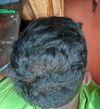
A 24-year-old male experienced unexpected hair growth and improved skin and nails after adding daily vegetable juices, including carrot, spinach, celery, and beet, to his diet. He is not using any other treatments like minoxidil, finasteride, or RU58841.
A user with long-term hair loss has been using topical minoxidil, finasteride, RU58841, ketoconazole, and dermastamping for 8 months. They are unsure if the new hairs are miniaturized or vellus.
GHK-Cu injections led to unexpected temple hair growth for someone who had been using minoxidil and finasteride for over a decade. The user plans to continue using GHK-Cu and experiment with a DIY AHK-Cu serum.
User hoodoomoovoo discusses their interest in stem cell research and its potential for hair loss treatment. They share links to studies and mention ongoing trials, expressing optimism for a future solution to hair loss.
The user is experiencing hair shedding despite using finasteride, minoxidil, and microneedling, and is concerned about the non-linear progress. Other users share similar experiences, suggesting shedding is normal and cyclical, with some recommending less frequent microneedling.
Hair follicle stem cells remain in bald individuals, but progenitor cells do not, raising questions about hair regrowth claims by Pelage. PP405 is discussed as a potential treatment, with skepticism about its effectiveness compared to existing treatments like Minoxidil and Finasteride.
The user experienced hair thinning in the middle of their head despite using finasteride and minoxidil and having a hair transplant. They are concerned about the thinning and considering shaving their head, while being advised to continue treatment and manage stress.
The user experienced increased hair loss and scalp itchiness despite using finasteride and plans to resume minoxidil and start microneedling. They are considering using clay, Aveda thickening tonic, and a beanie to manage the appearance of thinning hair.
A user experiencing diffuse thinning since age 18 describes their hair as unhealthy, dry, thin, and hard, with texture changes cycling between good and bad every few weeks. They are not on any medication, only taking vitamins and supplements.
The conversation is about individuals noticing others with full hair while experiencing their own hair loss. Some use treatments like Minoxidil and Finasteride, while others joke about noticing receding hairlines or suggest that hats and wigs are used to hide baldness.
The user discusses their experience with diffuse unpatterned alopecia and acquired progressive hair kinkering, noting improvements with treatments including biotin, pantothenic acid, finasteride, ketoconazole, and zinc pyrithione shampoo. They report thicker, healthier hair and improved scalp condition, attributing success mainly to biotin, pantothenic acid, and finasteride.
A user is concerned about hair shedding despite noticeable regrowth after 7 months of using finasteride. The dermatologist confirmed positive results, but the user remains skeptical and confused.
The conversation is about a user experiencing hair shedding after starting a treatment with oral minoxidil, topical minoxidil, and finasteride. Other users reassure that shedding is normal and part of the process, suggesting it will lead to stronger hair growth.
Hair transplants and hair loss treatments like oral Fin and Min are discussed, with some humor about public figures' hair. Missing a single day of these treatments typically has little impact, but longer gaps can affect results.
An 18-year-old experiencing diffuse hair thinning since 8th grade seeks advice. They are concerned about having less hair than their 52-year-old father and are looking for treatment options.
Some individuals experience hair loss despite using treatments like 2.5 mg dutasteride, finasteride, and minoxidil, suggesting sensitivity to DHT or other factors. Various treatments and lifestyle changes are discussed, but results vary, and some consider hair transplants or other solutions.
Tiny blond hairs on the vertex may indicate early hair regrowth from using dutasteride and minoxidil. Consistent treatment is advised, with potential for thicker hair over time, but a hair transplant might be needed for significant results.
If treatments like finasteride, minoxidil, PRP, microneedling, and exosomes fail, opinions differ on using a hair system or shaving. Some choose shaving for simplicity, while others consider hair systems despite maintenance concerns.
The conversation discusses hair loss where only short, thin hairs are being shed after 16 weeks of using dutasteride, with no visible regrowth. One response suggests that shedding short hairs is a positive sign, indicating that the hair follicles are still active and responding to treatment.
People discussed hair loss treatments, including finasteride, minoxidil, and microneedling, with varying results and concerns about genetics and hormone levels. Some users shared personal experiences with medication dosages and side effects, while others mentioned the impact of stress on hair loss.
The user is experiencing severe hair loss and color change despite low testosterone levels and healthy lifestyle changes. They have tried ketoconazole shampoo and consulted a dermatologist, who found no scalp issues but suggested using Toppik for coverage.
A user's journey with hair loss and their use of topical finasteride, minoxidil and pyri/minoxidil ratio treatments to attempt hair regrowth. Replies focused on offering support and advice while sharing personal experiences with different treatments.
User tried cheap hair fibers from Amazon, significantly improved appearance of thinning hair. Fixing spray recommended to prevent fibers from blowing off.
A 15-year-old is experiencing hair loss and is considering treatment options. They are aware they cannot use DHT blockers like finasteride due to their age and are exploring other causes like Telogen Effluvium.
The conversation is about a 21-year-old using finasteride, dermarolling, ketoconazole shampoo, hair growth serums, and exosome therapy to treat early-stage thinning on the crown. They are questioning if these treatments are sufficient to improve hair thickness.
A 28-year-old woman with genetic hair loss has tried various treatments, including oral minoxidil, finasteride, dutasteride, vitamins, ketoconazole shampoo, exosome needling, and hair extensions. She plans to pause treatments for pregnancy and is concerned about potential hair loss during that time.
A 22-year-old male is experiencing hair loss due to seborrheic dermatitis, not male pattern baldness, and is seeking advice. Suggestions include using Nizoral, sulfate-free and ketoconazole shampoos, cutting hair short, using cold water, avoiding picking scabs, and trying selenium sulfide shampoo or finasteride.