Search
for
Sort by
Community Join
270-300 / 1000+ resultscommunity Progress: 6 months 1.5 Fin - 1month 3.5 MIN and 0.5 DUT
community 1y finasteride 3m dutasteride no real progress
community been on fin nearly 3 years. i think it’s working decently, what do you think?
The user has been using finasteride for nearly three years and believes it is working well, with others noting denser hair and some regrowth, especially around the temples. The user experienced slight shedding around month six but overall reports thicker hair and stabilization.
community Very agressive protection / regrowth stack on steroids
A 24-year-old with hair thinning is using a regimen including dutasteride, RU58841, HGH, GHK-cu, and other compounds to protect and regrow hair. They are also incorporating a mild cutting cycle with testosterone propionate, anavar, and tirzepatide.
community 7 Months of Fin Min Dermastamp
community Fin long term user for 7 years
community 10 month progress. I feel stalled at the very least.
community Still receding on dutasteride after 18 months
community 2 month progress update on fin + Cécred edge drops
The user has been using finasteride for years with little regrowth and recently started using Cécred edge drops, which have significantly improved their scalp condition. Another user mentioned combining Cécred with derma stamping for better results.
community 10 months on dutasteride. Maintaining or still losing?
community Long term results are real: 11 years on fin. then dut. + min. then oral min. - first pic at 18 with massive miniaturization and the others last night at 29
The conclusion of the conversation is that the user, who has been using finasteride for 11 years and then switched to dutasteride and minoxidil, has experienced minimal side effects and significant hair regrowth. They also mention that side effects are rare and often related to other factors such as poor diet and low testosterone levels.
community finasteride progress… feels like I’m losing ground
The user is using finasteride and minoxidil for hair loss but feels progress is slow and is considering switching to dutasteride after 12 months. They notice minor shedding but are unsure if the medication is stabilizing their hair loss.
community Long-term finasteride users: Have you noticed phases of improvement and worsening?
The conversation is about long-term finasteride use for hair loss, with users discussing periods of improvement and worsening, and considering switching to dutasteride. Other treatments mentioned include minoxidil, red light therapy, microneedling, and scalp massaging.
community after 6 month of treatment, good enough regrowth or is it underwhelming?
community Thinning again after solid results
community Finally jumped on Fin after decent regrowth using all natural regime (mechanical stimulation)
The user experienced good hair regrowth using natural methods and mechanical stimulation but decided to add finasteride to their regimen for better results. They are optimistic about further regrowth and plan to update on the effects of finasteride, noting no significant side effects so far.
community 3.5 year (December 2022 - March 2026) difference after much prior struggle. Winning the war?
The user shared their successful hair regrowth journey using a combination of oral Dutasteride and a topical mix of Finasteride, Minoxidil, Tretinoin, and Ketoconazole. They experienced no side effects and noted significant improvement, except for one persistent thinning area.
community 6 Month update NOT a super responder. Realistic results.
community 1+ year oral dut and oral min. 2023 → 2025. No regrowth or stability, loss continues. I'm completely cooked and demoralized.
The user has been using oral dutasteride and minoxidil for over a year without regrowth or stability, and hair loss continues. Suggestions include checking for inflammation, considering a scalp biopsy, and trying microneedling, topical anti-androgens, or a hair transplant.
community 6 months Fin 1.25 mg Everyday. Dermastamp every 2 weeks 0.6mm. Very happy. Click the picture to see the full regrowth.
A user shared their positive experience with hair regrowth using finasteride 1.25 mg daily and dermastamping every two weeks. They reported no side effects and noticed regrowth after about three months.
community Experience with Strut topicals?
A user has been using a topical hair loss treatment with finasteride, minoxidil, and tretinoin for 4 years without satisfactory results and is considering switching to a different product due to concerns about effectiveness and company reliability. They are seeking others' experiences with Strut and alternative products before making a change.
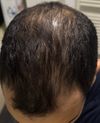
community Hair loss stable for 8+ years – is it still possible to regrow, or should I just accept it?
A user is considering starting treatments like Finasteride, Minoxidil, and Microneedling for hair thinning, despite stable hair loss for over 8 years. They are unsure if the presence of miniaturized hairs indicates potential for regrowth or if they should accept the current state.
community 18 month apart - been on Fin for 3 years, feel like in the last 18 months I’ve lost some ground. Black top is today.
The user has been using finasteride for three years and topical minoxidil, and while they feel they've lost some ground in the last 18 months, most responses suggest their hair looks the same or even fuller. The general consensus is that the treatments have maintained the hair well, with some users suggesting additional treatments like derma stamping or dutasteride for further improvement.
community Fragile Regrowth Despite Oral Min and Dut After 1 Year; Diffuse Thinner Concerns
The user is experiencing hair regrowth with oral minoxidil and dutasteride but still has fragile hairs that easily pluck out from the front center. Despite improvements, the user is concerned about the persistent fragility and shedding of these hairs.
community 6 year update on finasteride only
community PP405 mechanism question - looking for discussion
PP405 may promote short-term hair growth by pushing follicles into the growth phase, but concerns exist about long-term effects due to lack of rest phases. Users discuss various treatments like finasteride, minoxidil, spironolactone, alfatradiol, and investigational drugs like KX-826 and GT20029 for hair maintenance and regrowth.
community M34- 1 year Progress- I Was reluctant at first but then went for it and got good results. I'm more than satisfied.
community (30M) 6 months in and seeing some progress.
community 6 months fin, min, dermastamp, RLT
The user has been using finasteride, minoxidil, a dermastamp, and red light therapy for six months with no visible improvement since the three-month mark. Other users noted improvement, particularly in the left temple area, and encouraged the user to continue.