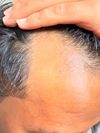
The conversation is about someone's three-year experience with irregular derma rolling, Minoxidil, and Redensyl for hair loss, hoping to thicken areas with fine hair.
Epibiotech will offer off-the-shelf allogeneic hair multiplication treatment in South Korea, using dermal papilla cells from donors to grow hair in balding areas. This method is cheaper and less invasive than traditional hair transplants.
A user is considering switching from regular 5% minoxidil foam to a compounded 5% minoxidil spray with added caffeine, melatonin, and tretinoin for easier application and potentially better results. Another user mentions that tretinoin can enhance minoxidil's effectiveness by converting it to its active form.
The conversation is about recommendations for Copper Tripeptide-1 solutions to enhance hair loss treatment, with a focus on using Reviv Hair Serum alongside LLLT therapy. The user also discusses using Minoxidil, RU58841, and other compounds to manage hair shedding and improve hair thickness.
The conversation is about a 24-year-old using microneedling and essential oils, specifically neo hair lotion, to promote hair growth on the temples. The user reports seeing hair growth without using medications, using a 0.5 mm needle roller and planning to switch to a 1.0 mm needle.
A user's progress pictures showing visible hair growth results from taking Finast and Minoxidil, as well as using microneedling, Nizoral, and a multi peptide serum for hair density. The conversation also discussed how DHT is the cause of diffuse thinning.
The user is exploring KX-826 as a potential hair loss treatment due to intolerance to FDA-approved drugs like Minoxidil and finasteride. They seek fundamental help and information about KX-826.
Significant hair regrowth was achieved using RU58841, minoxidil, and microneedling during a high-dose steroid cycle. The user reported no side effects from RU58841 and plans to continue the regimen.
A user is seeking advice on the efficacy and side effects of homemade topical solutions for hair loss, specifically bicalutamide, estradiol, cyproterone acetate, and spironolactone, as they cannot access RU58841 or pyrilutamide.
The conversation discusses Peptonix microneedling, a copper peptide serum, as a potential hair loss treatment. Users compare it to finasteride and minoxidil, noting side effects and personal experiences with these treatments.
Exosome treatment for hair loss is being considered, but its effectiveness is questioned. The user is already using finasteride and minoxidil and is contemplating a hair transplant.
A user is frustrated with slow and thin hair regrowth at the temples despite using Minoxidil for six months, along with dermastamping, oiling, vitamins, and exercise. They are seeking advice on why vellus hairs are not thickening.
The user is considering adding tretinoin cream to their hair treatment routine, which currently includes minoxidil and finasteride, to enhance results. They seek advice on its effectiveness, usage frequency, side effects, and whether it complements microneedling.
The user is using 0.1% dutasteride, 1% minoxidil with 2% procapil and 0.005% caffeine in the morning, and 1% minoxidil with 2% procapil and 0.01% tretinoin at night. They are concerned about the solution vehicle's effectiveness in preventing systemic absorption and ensuring the products stay around the hair follicles.
The conversation discusses hair regrowth using finasteride, minoxidil, RU58841, tretinoin, castor oil, and microneedling over three months. There are signs of early hair regrowth, with expectations of fuller hair in a year.
The user is using a solution of 5% minoxidil and 0.1% finasteride with micro-needling and is considering adding 1mg oral finasteride. They notice small hairs on their forehead and are questioning if these indicate potential regrowth.
The conversation discusses the theory that scalp fibrosis contributes to male pattern baldness (MPB) by increasing DHT concentration, and mentions treatments like Minoxidil. The user seeks opinions on the theory and the effectiveness of scalp massages.
A user is using 1ml/day of Dualgen-15 (15% Minoxidil, caffeine, retinol, azaleic acid, Adenosine, biotin, niacin) on their temples and asks if Minoxidil alone can completely regrow their temples.
The user improved hair density from 45% to 70% using dutasteride and minoxidil, but still uses hair fibers for a fuller look. They added a topical mix of minoxidil, finasteride, and bimatoprost, but doubt further significant improvement.
The conversation discusses using a TCA 35% chemical peel on the scalp to potentially improve hair growth by addressing fibrosis and enhancing the effectiveness of topical treatments. The user also mentions trying microneedling and other methods like topical metformin and dutasteride for hair regrowth.
A user shared that taking vitamin E, specifically tocotrienols, seemed to reduce their hair shedding, and they are also using finasteride, minoxidil, and derma rolling for hair loss. Another user cautioned against high doses of vitamin E due to potential health risks.
The user successfully regrew hair using Finasteride, Minoxidil, and microneedling, achieving thicker hair and a fuller hairline. They recommend this method over hair transplants, highlighting the importance of patience and consistency.
The conversation is about the struggles of dealing with diffuse thinning at a young age and the lack of significant improvement after using treatments like finasteride and minoxidil. Some suggest additional methods like derma rolling, microneedling, and hair fibers, while others share their own experiences and encourage persistence with treatment.
Hair loss involves more than just DHT, with genetic factors like TRPS affecting hair follicles. Treatments such as Amplifica's AMP-601 and AMP-303 target stem cells for potential hair growth solutions.
Hair loss is linked to scalp fibrosis and tension, which result from chronic mechanical stress and androgenic signaling. Treatments include blocking androgens with finasteride, promoting hair growth with topical minoxidil, and improving scalp mobility through exercises.
A male in his 30s is using 1.25 mg finasteride daily, 5% minoxidil foam twice daily, collagen/biotin supplements, and weekly .5mm rolling. After six weeks, he notices his crown appears thicker and feels better, possibly due to placebo.
The conversation discusses concerns that Minoxidil may cause skin aging, like collagen depletion and puffier faces. Some users suggest that a good skincare routine or collagen supplements might prevent these effects.
The user is considering another hair transplant or scalp micropigmentation (SMP) for a congenital bald spot, but previous transplants were less effective due to scar tissue. Suggestions include using hair fibers, changing hairstyles, or doing nothing, as the spot is not very noticeable.
The post discusses skepticism about a "miracle hair cream" claiming to reverse hair loss, with the user already using finasteride, minoxidil, and dermastamping. The cream's ingredients include various oils and acids, but the user seeks confirmation of its effectiveness.
Finasteride and minoxidil do not negatively interact with multivitamins, omega-3 fish oils, biotin, magnesium glycinate, or collagen peptides. Users report no issues taking these supplements alongside their hair loss treatments.