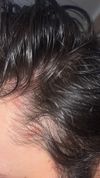
The user experienced hair thinning despite using finasteride and switched to a ketoconazole shampoo without sulfates to address scalp itching and dandruff. They hope this will stop further hair thinning.
The user experienced significant hair regrowth after switching from fake to genuine minoxidil, alongside continued use of finasteride. They advise caution when purchasing minoxidil from Amazon due to the risk of counterfeit products.
The user noticed hair thinning and has been using a treatment with minoxidil 2%, hydrocortisone butyrate, and 17 alpha estradiol for three months, seeing some regrowth. The user had dermatitis, now cured, which worsened the hair loss.
The user experienced increased hair shedding after using RU58841 for two months, but found relief from scalp itchiness. Other users shared similar shedding experiences and discussed side effects like joint pain, while also mentioning the use of finasteride and minoxidil.
The user is experiencing scalp irritation from a compounded treatment of finasteride, minoxidil, and tretinoin. They are considering switching to a non-alcohol, propylene glycol-free formula with a lower tretinoin percentage to reduce irritation.
The conversation is about experiencing hyper-trichosis from taking oral Castor Oil. The user reports increased hair growth on the stomach and legs but is not concerned as it is harmless and will stop when the treatment stops.
A woman has been struggling with hair loss for over 12 years and is frustrated with doctors refusing to prescribe finasteride due to potential birth defects and unproven breast cancer risk. She's considering self-treatment or permanent birth control, after being offered only minoxidil, PRP therapy, and weaker natural supplements like Saw Palmetto.
8 months post hair transplant, OP experiences asymmetrical shedding despite using finasteride and starting minoxidil. The doctor suggests it might correct itself or be due to transplant trauma, recommending a wait-and-see approach.
User experienced itching, redness, and hives from Minoxidil foam and is questioning if they are allergic to Minoxidil or another ingredient. They have switched to oral Finasteride.
The user has been using topical 5% Minoxidil, 0.1% Finasteride, dermastamping, 2% ketoconazole, and a DHT-blocking shampoo with saw palmetto, caffeine, biotin, and argan oil for hair loss. Despite some baby hair growth on one side, the user is experiencing continued hairline recession and shedding, leading to distress.
The conversation is about a user making a homemade topical dutasteride solution to use alongside testosterone replacement therapy (TRT) and oral dutasteride. The user aims to reduce DHT locally at the testosterone injection site and on the scalp.
The user is stressed about hair loss and is using a HIMS topical treatment containing finasteride, ketoconazole, minoxidil, and biotin, but is concerned about the oily appearance it causes. They are considering switching to Rogaine (minoxidil) due to budget constraints and side effect concerns with oral finasteride.
A 26-year-old is experiencing hair thinning and has received conflicting diagnoses of androgenetic alopecia and telogen effluvium. They are considering treatments like dutasteride, oral and topical minoxidil, and are unsure whether to start treatment or pursue further diagnosis like a scalp biopsy.
The conversation discusses a user's experiment with using hot water and a dermastamp to reduce hair loss, improve dandruff, and promote new hair growth. The user advises caution and mentions not sharing photos until more progress is visible.
User deciding between oral and topical minoxidil, concerned about hypertrichosis and myocarditis interaction. They're using topical finasteride, LLLT, natural oils, dermastamping, and scalp massage, and considering adding oral minoxidil.
The conversation is about a user experiencing increased hair loss after altering their treatment routine of oral dutasteride and topical minoxidil. The dermatologist emphasized the importance of diet and vitamins, but the user is skeptical given their healthy lifestyle.
A user is concerned that prolonged use of valisone (betamethasone) and clotrimazole solution for scalp dermatitis may be causing hair thinning and loss. They noticed thinning in the area where the solution was applied.
RU58841, oral and topical minoxidil, finasteride, and ketoconazole shampoo led to significant hair regrowth, though some suspect a hair transplant. Concerns about RU58841's side effects, like anxiety and heart issues, were discussed.
A woman with AGA is using spironolactone, dutasteride, finasteride, oral minoxidil, bicalutamide, and anti-androgenic birth control but still experiences worsening hair loss. Steroid shots temporarily stop her hair shedding, leading her to question her biopsy results.
A Spanish dermatologist suggests sulforaphane for androgenetic alopecia (AGA) due to its potential to remove DHT metabolites, though high dosages are needed. A topical formulation might be possible.
The user has been using minoxidil and finasteride for 8 months and is questioning if new baby hairs are growing. Opinions vary, with some suggesting the hairs are signs of regrowth and others suggesting delusion.
User experienced severe allergic reactions and liver issues after a hair transplant, likely due to antibiotics and medications. Despite trying Minoxidil, the user faced further complications and is now seeking medical advice for potential future transplants.
The user is using minoxidil, finasteride, dermarolling, and other treatments for hair regrowth, showing promising results in the temple area. Despite some skepticism, there is optimism about potential improvement.
The user has been using a treatment of 0.1% topical finasteride, 5% minoxidil, dermastamping, and vitamin D3 supplements for 85 days and is seeing good progress. Other users note the effectiveness of topical finasteride despite it being less potent.
The user is experiencing white flakes on their scalp despite using anti-dandruff shampoos and oils for six weeks. A suggestion was made to try ketoconazole at higher concentrations, as it might be seborrheic dermatitis, which can lead to hair loss if untreated.
The post discusses a hair loss treatment regime using Nizoral, a laser helmet, dermaroller, bentonite clay mask with essential oils, and ketoconazole shampoo. The user avoids finasteride and minoxidil due to concerns about side effects and pet safety.
After jaw surgery caused intense hair shedding and scalp itch, using pyrilutamide significantly reduced these symptoms. It's suggested to test pyrilutamide for authenticity before use, despite positive personal experience with the product from MV Supplements.
Hair loss treatments discussed include microneedling, minoxidil, tretinoin, finasteride, dutasteride, pumpkin seeds, saw palmetto, and scalp massage. The consensus is that finasteride or dutasteride is necessary for significant regrowth, while other methods may only slow hair loss.
The user treated androgenic alopecia with topical minoxidil, finasteride, vitamin D, and biotin, while also using ketoconazole shampoo for dandruff. They focus on weight training and take daily vitamin D tablets.