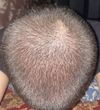
OP is experiencing significant hair loss despite GFC and PRP treatments and has abnormal lab results. They are advised to consult a hair-focused dermatologist for further evaluation.
SCUBE3 and GT20029 are potential treatments for hair loss, with SCUBE3 stimulating hair growth and GT20029 protecting against DHT. A combined approach using SCUBE3, finasteride or dutasteride, and later GT20029 could provide a comprehensive treatment for androgenetic alopecia.
An 18-year-old noticed hair thinning at 17, started finasteride 5 months ago, and saw shedding stop but no regrowth. They suspect male pattern baldness due to family history and are concerned about thinning on the back and sides, possibly due to inflammation.
Alfatradiol (0.025%) is an effective and safe treatment for androgenetic alopecia in both men and women, increasing anagen hair rates with minimal side effects. Users discuss its cost-effectiveness and ease of use compared to other treatments like finasteride and RU58841, with some combining it with stemoxydine and Minoxidil.
OP experienced diffuse thinning for 11 years and used Minoxidil and Finasteride previously. They now use Pyrilutamide 0.5% and Alfatradiol 0.1%, resulting in significantly reduced hair loss.
A discount code for 20% off at Anageninc is shared, valid for purchasing RU58841 or Pyri from May 10-11, 2025. The conversation focuses on hair loss treatments using RU58841.
Dutasteride significantly improved hair health and reduced shedding for a woman with PCOS and hyperandrogenism, without causing depression or anxiety, unlike finasteride. Dutasteride also helped with PMDD symptoms and had no side effects, though it changed hair texture.
GT20029 is a topical treatment that degrades androgen receptors to prevent hair thinning and loss, potentially offering fewer side effects than systemic treatments like finasteride. Concerns include its impact on hair texture and potential systemic effects, with market availability speculated in 3 to 5 years.
A 32-year-old male has been dealing with hair loss since 2010 and started treatment 11 months ago. He used dutasteride, finasteride, minoxidil, multivitamins, vitamin D3, PRP, and a laser cap, resulting in improved hair density despite ongoing shedding.
A 21-year-old male with a thyroid condition noticed his hair thinning uniformly without a receding hairline. He is considering using a 5ARI to prevent further baldness if he starts TRT.
A 22-year-old male experiencing hair thinning is considering starting finasteride but is concerned about potential side effects and hereditary factors. While waiting to access finasteride, he plans to use pumpkin seed oil, saw palmetto, biotin, and vitamins, and is advised to check blood levels before starting treatment.
The user is seeking alternatives to propylene glycol and glycerin for mixing with RU58841 due to allergies and greasiness. Suggestions include reducing glycerin and considering stemoxydine as a solvent.
The conversation discusses organizing group buys and tracking progress for Kx-826 Pyrilutamide, a hair loss treatment. Participants express optimism about upcoming results and concerns about self-reporting bias.
A 21-year-old experiencing itchy and burning scalp with hair loss was diagnosed with MPB and scalp inflammation. They were prescribed Ketoconazole, Prednisone, Clindamycin, and Finasteride, and are considering trying antihistamines, dietary changes, and "nopoo" to alleviate symptoms.
The conversation discusses interest in participating in PP405 trials for hair loss treatment, with users expressing uncertainty about eligibility due to location. Participants are eager for updates and willing to pay for shipping if trials are limited to America.
User discusses group buy for finerenone, a third-gen mineralocorticoid antagonist for hair loss treatment. Finerenone inhibits TGFb, NOX, and ROS, and improves renal and cardiac function; topical dose should be no more than 10mg per day.
A 28-year-old woman with genetic hair loss has tried various treatments, including oral minoxidil, finasteride, dutasteride, vitamins, ketoconazole shampoo, exosome needling, and hair extensions. She plans to pause treatments for pregnancy and is concerned about potential hair loss during that time.
Amplifica's new injectable treatment for androgenetic alopecia shows a 15% increase in hair thickness and coarseness in 60 days. The treatment is in early human trials and offers a promising alternative to hormone-related hair loss treatments.
An 80-year-old man and his 99-year-old father have more hair than many younger people, sparking discussions about hair loss and genetics. The suggested treatment for maintaining hair is simply eating oysters.
A user experienced hair loss due to a folic acid deficiency and saw hair regrowth after taking a folic acid supplement. They advise checking for a folic acid deficiency before spending money on other treatments.
GHK-Cu injections led to unexpected temple hair growth for someone who had been using minoxidil and finasteride for over a decade. The user plans to continue using GHK-Cu and experiment with a DIY AHK-Cu serum.
The conversation discusses GT20029, a compound by Kintor Pharma that degrades androgen receptors and is in trials, with potential as a hair loss cure. Another promising treatment mentioned is an antibody that blocks prolactin and has shown positive results in macaques.
DUPA is considered more treatable than FAPD, as FAPD involves scarring that prevents hair regrowth. The user has started treatment with oral dutasteride and minoxidil, hoping for better results than previous treatments.
The user experienced sexual side effects after starting finasteride and later switched to dutasteride, noticing hormonal changes. They are considering using P5P and possibly aromatase inhibitors to manage high prolactin and estradiol levels.