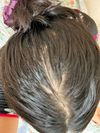
Hair loss journey of a 24-year-old man who tried Finasteride, RU58841, Dutasteride, and Minoxidil. Significant hairline recovery achieved after 18 months of various treatments.
.
CumsOnYourFeet69 has been discussing a new treatment called CosmeRNA which claims to target the root cause of male pattern baldness, and is considering using it in conjunction with Minoxidil instead of Finasteride due to possible side effects. Replies have highlighted that the efficacy of this treatment is still unknown, but it could be used as an effective maintenance option if successful.
Minoxidil and finasteride can help regrow hair, especially in thinning areas, but restoring completely receded temples is challenging and may require a hair transplant. Some users report success with these treatments, particularly when combined with microneedling.
User tried dutasteride, topical finasteride, oral minox, dermawounding, saw palmetto, pumpkin seed oil, and ketacozonole for hair loss. Improvement was temporary, now trying RU58841 and seeking help.
The user is treating hair loss with topical Minoxidil, Finasteride, RU58841, microneedling, and Ketoconazole. For grey hair, they use L-Cysteine, L-Methionine, and PABA, and have noticed some re-pigmentation.
A 21-year-old male shares progress pictures showing improvement in hair growth using daily topical minoxidil 5%, microneedling 1.25mm, and 500mg of saw palmetto. He reports new and healthy hair growth, indicating success in managing androgenic alopecia.
The conversation is about someone using topical finasteride, minoxidil, tretinoin, and caffeine for hair regrowth, particularly near the temple area. They are asking if the new, smaller hairs will grow and thicken to match their existing hair.
The user shares a 3-month hair loss treatment progress using finasteride, minoxidil, and ketoconazole shampoo. They plan to add a dermatologist pen to their routine for the next 3-6 months.
Minoxidil, alfatradiol, nizoral, and pyrilutamide can maintain hair for those who can't tolerate finasteride. Consistent use of these treatments can help prevent further hair loss.
Minoxidil 0.5% MMP® showed better results in parietal-vertex regions for less advanced female pattern hair loss compared to Minoxidil 5%. MMP® with Minoxidil can improve the quality of life for these patients.
A 17-year-old is addressing hair loss with finasteride, topical minoxidil, and microneedling. They are considering adding GHK-Cu to their regimen, but others advise caution with finasteride due to age.
The conversation is about the mental toll of hair loss and seeking alternatives to finasteride. Suggestions include using minoxidil, considering pumpkin seed oil, and possibly seeking counseling for body dysmorphic disorder.
A 19-year-old is experiencing hair thinning and recession above the temples, causing stress and consideration of starting finasteride despite financial constraints. They are unsure whether to begin treatment immediately or wait to assess the situation further.
FCE 28260 (PNU 156765), an under-explored 5α-reductase inhibitor, showcases promising results in research by Giudici et al., outperforming well-known treatments like Finasteride in reducing the conversion of testosterone to DHT. Its superior efficacy, demonstrated through lower IC50 values in both natural and human recombinant enzyme studies, suggests it could offer more effective management of DHT-related conditions. Additionally, its lower molecular weight hints at better potential for topical application, potentially offering advantages in treating conditions such as androgenic alopecia. Despite its potential, it has not advanced in development, possibly due to financial limitations, leaving its therapeutic prospects and side effect profile largely unexplored.
A 25-year-old noticed thinning hair at the temples and started using finasteride (1mg/day) for two months, along with keto shampoo twice a week and vitamins like vitamin D, biotin, and zinc. They are seeing some results and are hopeful about regaining lost hair.
The user is experimenting with GHK-Cu and AHK-Cu to stop hair loss and promote hair growth, using a serum from Etsy and injectable GHK-Cu. They supplement this with dermastamping and ketoconazole shampoo.
30 y/o male started balding at 22, began treatment at 29 using oral dut, oral min, derma rolling, nizoral shampoo, and considering low level light therapy. Plans to monitor progress for 1-2 years and may get hair transplant or use hair system if needed.
The user visited a trichologist due to ineffective topical finasteride treatment for hair loss. The trichologist recommended a new regimen including a two-month course of locoidon (cortisone 0.1%), followed by a solution containing minoxidil, hydrocortisone butirrate, estrone, progesterone, tocopherol acetate, trichosol, and transcutol.
The conversation discusses a 4-month hair loss treatment progress using RU58841, topical Minoxidil, ketoconazole shampoo, and micro-needling. The user shares progress pictures taken at the start, after 1 month, and the current state, all under the same conditions.
The conversation is about a hair loss treatment protocol involving microneedling, finasteride, RU58841, minoxidil, ketoconazole shampoo, and a scalp massager with oils. Some users advise starting with fewer treatments like finasteride, minoxidil, and microneedling to avoid potential side effects.
A 29-year-old female is experiencing severe hair loss and bald patches, seeking advice on shampoos, conditioners, hair masks, or topical medications. A user suggests starting an oral supplement.
The user has been using finasteride for years with little regrowth and recently started using Cécred edge drops, which have significantly improved their scalp condition. Another user mentioned combining Cécred with derma stamping for better results.
Exploring hair loss treatments beyond DHT, including Minoxidil, pyruvate, Gt20029 targeting androgen receptors, and vasodilators. Other options like Kx826, adenosine signaling, growth factor topicals, and microneedling are also discussed.
The conversation discusses scalp issues and hair loss, with treatments like Accutane, Nizoral, and H&S being used. Suggestions include considering finasteride, minoxidil, and jojoba oil, with caution advised for the latter.
Hair transplants can initially yield good results, but native hair is more reliable, and transplanted hair may still be lost over time. Early intervention with treatments like topical finasteride and minoxidil is recommended, but it's important to start with lower doses and manage expectations realistically.
The user has been experiencing severe scalp itching and red spots after using finasteride for two years, suspecting possible allergies or a fungal infection. Despite trying ketoconazole shampoo and stopping saw palmetto supplements, the symptoms persist, leading to increased hair loss.
A 17-year-old is frustrated with hair thinning and receding temples, seeking advice after a dermatologist dismissed concerns. Suggestions include starting Minoxidil for regrowth and considering Finasteride if androgenetic alopecia is suspected.


![[GHK-Cu+AHK-Cu experiment] Stopping hair loss and promoting hair growth](/images/research/a2fe9e48-31eb-4e92-a763-614a7d32f7cd/small/20559.jpg)