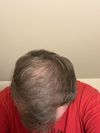
The conversation discusses patient updates on hair loss treatment with Verteporfin after five months, as reported by Dr. Blake Bloxham. Patients voluntarily sent their progress pictures to Dr. Bloxham.
The conversation discusses the use of Verteporfin in hair loss treatment. It suggests that Verteporfin could potentially regenerate hair follicles instead of forming scars, providing an unlimited donor supply for hair transplants.
The conversation discusses the potential of Verteporfin for hair regeneration and improving hair transplant surgery to leave no scars. Specific treatments mentioned include Minoxidil, Finasteride, and RU58841.
The conversation discusses Verteporfin as a potential hair loss treatment, with trials by Dr. Bargouthi and Dr. Bloxham mentioned, and a suggestion to follow updates on the Hair Restoration Network site or YouTube. Preliminary results are positive, but one user is skeptical, calling it "snake oil."
A user is considering a hair transplant with Hasson & Wong but found alarming malpractice claims. Other users suggest researching other reputable surgeons like Dr. Zarev, Dr. Pittella, and Dr. Couto.
A bodybuilder's hair transplant appears unnatural with a straight hairline and low density, possibly worsened by not using finasteride. The Turkish clinic is criticized for poor design, and the transplant may have been free for promotion.
A user who had FUT surgery for 2877 grafts with Dr Jerry Wong of Hasson & Wong that resulted in low growth and an abnormally wide scar, suggesting negligence by the doctor and possibly illegal behaviour by an unqualified technician. The post sparked discussion about seeking legal action, as well as criticism of the clinic's high cost.
The conversation discusses the appearance of hair transplants immediately after surgery, noting that scars will be covered as hair grows. The original poster underwent both FUT and FUE procedures.
Users discuss making topical finasteride solutions by dissolving crushed tablets in ethanol and propylene glycol, with concerns about residue affecting effectiveness. They also mention using minoxidil and oral finasteride, noting some hair regrowth and no side effects from topical use.
The conversation discusses "Hair bloom" hair filler, which contains biotin, collagen, and various peptides, as a potential alternative to PRP or mesotherapy for hair loss. Opinions vary, with some suggesting it may be a cash grab or ineffective, while others believe it could complement topical minoxidil for early hair loss.
The user is planning a hair transplant with a budget of £3,800–£4,000 and is considering 2,500–2,700 grafts for a natural hairline and fuller temples. They have been using finasteride and minoxidil for a year and are seeking recommendations for surgeons or clinics in affordable European destinations.
The user is using topical finasteride, Bioscalin, Omega 3, and hair filler therapy for hair loss. There is some progress noted, but varying photo angles and lighting make it hard to assess fully.
The user experienced significant hair regrowth using oral minoxidil, finasteride, and topical dutasteride, with no side effects. They plan to continue these treatments long-term to maintain results.
OP noticed fuller and thicker hair after almost 4 months of using GHK-Cu, a copper-binding peptide, through subcutaneous injections. Some users were skeptical, questioning the authenticity and potential commercial intent behind the post.
People noticed fuller hair after using 1mg oral finasteride, 1ml topical minoxidil daily, microneedling, and Nizoral shampoo. Users shared their experiences and were generally open about their treatments.
The conversation discusses hair regrowth, with the user using finasteride (1 mg), topical minoxidil, and microneedling. A reply suggests the user's hair appears fuller and healthier.
The user reports thicker and fuller hair after using finasteride, topical minoxidil, RU58841, and dermarolling for two years. Consistent lighting is noted as important for progress pictures.
The user has been using finasteride for three years and topical minoxidil, and while they feel they've lost some ground in the last 18 months, most responses suggest their hair looks the same or even fuller. The general consensus is that the treatments have maintained the hair well, with some users suggesting additional treatments like derma stamping or dutasteride for further improvement.
Zinc supplements can make existing hair thicker and fuller but do not cure or slow hair loss. Long-term zinc use requires copper supplementation to avoid deficiencies.
After 2 months of using Minoxidil and finasteride, OP noticed fuller hair, confirmed by their wife's observation. OP is pleased with the progress, though the change isn't drastic.
A user shared their positive experience with topical Minoxidil for hair regrowth, noting thicker and fuller hair without using Finasteride due to concerns about side effects. Many commenters advised adding Finasteride to maintain gains, warning that Minoxidil alone might not prevent future hair loss.
A 28-year-old male shared his 75-day progress using 2.5mg oral minoxidil daily, 1mg oral finasteride every other day, a weekly 1.5mm dermastamp, and daily scalp massages, reporting fuller hair without side effects. He plans a hair transplant in February and is considering adjusting his finasteride dosage.
A 27-year-old male has been using oral minoxidil and topical finasteride for 3 months, noticing fuller, thicker hair with no side effects. Users discuss the effectiveness and side effects of oral versus topical treatments, with some recommending higher doses or additional treatments like topical minoxidil.
Finasteride and dutasteride may increase estrogen levels, leading to water retention and a fuller face. Users discuss managing these effects with lifestyle changes and supplements like zinc and DIM.
A user shared their one-year progress on dutasteride, noting fuller hair but persistent thinning at the crown. They sought advice on whether to resume minoxidil and in which form, while others inquired about their choice of dutasteride and its effects.
The user has been on finasteride for 7 months, seeing darker, fuller hair but experiencing significant shedding. They are considering adding minoxidil to their treatment to address the shedding.
The user experienced increased hair density and improved hairline definition after 8 months of using 1mg finasteride and 5mg minoxidil (both oral and topical) daily, though the hairline recession hasn't reversed. They noticed fuller eyelashes and increased shedding, but overall hair growth is outpacing the loss.
A trans woman experiencing male pattern baldness has been using Minoxidil and microneedling for 3.5 months, noticing visible hair regrowth. Despite initial skepticism, progress is evident, though a hair transplant might be needed for fuller coverage.
A 48-year-old male experienced hair regrowth after using oral finasteride for 3 years, despite stopping due to side effects like depression and low energy. He achieved a fuller look with styling techniques and reported using organic shampoo and herbal treatments.