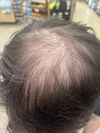
Hair regrowth treatments for cis-males include Minoxidil, Finasteride, and RU58841. Estrogen and testosterone blockers can help restore hair loss but may not suit everyone.
A user struggled with hair loss and ineffective vitamin treatments from their doctor. They eventually obtained a finasteride prescription through a telemedicine service and felt relieved.
Topical tretinoin can increase the absorption of minoxidil by three times, which may enhance its effectiveness for hair loss treatment. Tretinoin causes increased skin turnover, making the skin more permeable and potentially improving minoxidil's efficacy.
Celery juice is discussed as a potential treatment for crown balding, with skepticism from users. The conversation highlights differences between alopecia areata and male pattern baldness.
Low-Level Laser Therapy (LLLT) is seen as a safe and effective method for maintaining hair and promoting regrowth in androgenetic alopecia (AGA) and male pattern baldness (MPB), with devices like the HairMax LaserComb® and iRestore helmet being popular. Some users and professionals are skeptical about its long-term effectiveness and cost.
People worrying about hair loss and the effects of Finasteride on erections, which a transgirl has experienced no change from taking it with other medications. The discussion suggests that people should stop worrying so much.
A user shared their 12-month update after a 1600-graft hair transplant in Korea, with mixed reactions about the necessity and results. The user is not currently using minoxidil or finasteride but plans to consult a doctor about it.
Using estrogen for hair regrowth is considered ineffective and risky, with potential side effects like breast growth and hormonal changes. Alternatives like finasteride, dutasteride, and minoxidil are suggested, but estrogen is not recommended unless transitioning.
ABS-201 shows promise for male hair regrowth by blocking the prolactin receptor, with higher expected efficacy than current treatments. The discussion also covers dosing differences between macaques and humans for hmi115, highlighting a significant dosage disparity.
George Clooney likely had a hair transplant, as many Hollywood actors do to maintain their appearance. Treatments like finasteride and hair transplants are common among celebrities to combat hair loss.
Iron supplementation may be more effective than Minoxidil for hair loss. Checking ferritin levels is important, as both low and high levels can affect health.
A 21-year-old male is experiencing hair loss and plans to see a dermatologist and take hair growth pills to prevent further balding and possibly aid facial hair growth. Another user suggests using minoxidil, which has shown results for them after four months.
Adam Scott and Rob Lowe have used finasteride for over 20 years to maintain their hair without significant negative effects. Many Hollywood celebrities use finasteride, minoxidil, and other treatments for hair loss, despite some concerns about side effects.
The conversation is about a user experiencing positive hair regrowth results using 1mg of dutasteride, 10% minoxidil, and occasional microneedling, after unsatisfactory results with finasteride. Other users express interest in switching to dutasteride and share similar sentiments about finasteride.
Melatonin, gingko biloba, and biotin are effective for treating hair loss with good tolerability. Alternatives like dutasteride, minoxidil, and other peptides are also discussed.
A user is trying 2-deoxy-D-ribose with distilled water for hair growth, observing new hair and skin pigmentation changes. Others compare it to Minoxidil, expressing interest and caution about its effectiveness and safety.
The conversation is about the effectiveness of the Laduora duo massage brush for hair regrowth using vibration and red light, and whether the vitamin gel pods make sense. Specific treatments like Minoxidil, finasteride, and RU58841 are not mentioned.
A user shared their 12-month progress after a 3500-graft hair transplant at Heva Clinic in Istanbul, choosing not to use minoxidil or finasteride. The results were praised, with comments noting the natural look and significant improvement.
A user shared their experience with hair loss, initially using Minoxidil, saw palmetto, pumpkin seed oil, and a derma roller with good results, but relapsed after stopping. They later started a more aggressive protocol including Minoxidil, Finasteride, a derma stamp, and ketoconazole shampoo, achieving great hair regrowth but experiencing side effects from Finasteride.
The user has been using finasteride and minoxidil for hair loss for 2 years and started microneedling, now considering a hair transplant in Mexico. Suggestions include trying dutasteride, oral minoxidil, and various opinions on hair transplant locations and the user's current hair condition.
High prolactin levels can cause hair loss, and finasteride may increase prolactin. Cabergoline or Vitamin B6 might lower prolactin, but combining them with finasteride requires caution.
The conversation discusses the potential for Verteporfin to reduce scarring, making hairline lowering surgeries more viable for men with mild hair loss. The user suggests that if scarring can be minimized, men might opt for hairline lowering instead of using grafts for other areas.
Dutasteride might be better for hairline due to varying levels of 5AR activity in scalps. Genetic tests can determine if finasteride is enough or if dutasteride is needed.
User discusses a 98-year-old man with amazing hair and a better hairline than someone 80 years younger. Conversation includes various treatments like Minoxidil, Finasteride, and genetics as factors for hair quality.
Hair regrowth in transfems is more effective due to hormonal changes, specifically estrogen, which keeps hair in growth phase longer. Treatments mentioned include anti-androgens, sex hormones, and DHT blockers like finasteride.
The conversation is about using topical melatonin for hair loss treatment. Users discuss their experiences and results with topical melatonin, Minoxidil, finasteride, and RU58841.
A user is concerned about taking evening primrose oil alongside finasteride and minoxidil due to its potential effects on hormonal balance and DHT inhibition. They seek advice on whether to continue the supplement or if their worries are unfounded.
User reports being on finasteride for 3 months, experiencing initial shedding but noticing new hair growth and increased density. They also started using castor oil daily and considered trimming their long hair to improve visual thickness.
Alfatradiol is discussed as a weak 5ARI and estrogen, not as effective as minoxidil, RU58841, or CB-03-01, but a safe alternative for those who can't use finasteride. Users express frustration over the lack of strong FDA-approved topical antiandrogens for hair loss.
Using Megatek with minoxidil significantly increases hair growth, especially vellus hairs, but is less effective alone. Biotin and ketoconazole shampoo are also used to support hair health.