Collagen, chondroitin sulfate, hyaluronic acid, and MSM are used to improve hair appearance, making it fuller, thicker, and shinier. The user noticed significant hair improvement after resuming these supplements.
The conversation discusses using Tribulus Terrestris and Zinc to boost libido while on finasteride, with some users reporting success in increasing libido despite no testosterone boost. The original poster also considers reducing finasteride dosage and using Cialis for libido and bodybuilding purposes.
High sugar diets may worsen hair loss by increasing 5α-reductase activity and androgen levels, especially in women with PCOS. A low sugar diet might reduce scalp DHT levels, similar to finasteride, but genetics also significantly influence hair loss.
The conversation is about choosing between RU58841 and topical spironolactone for hair loss treatment. The user is currently using a topical solution with minoxidil, alfatradiol, and progesterone, and is concerned about side effects and effectiveness of both RU58841 and spironolactone.
A user wants to dilute a melatonin sublingual spray to 0.0033% for use as a topical hair loss treatment. They ask if distilled water can be used for dilution and how much is needed for stability over months.
RU58841 is used for hair loss, with some users reporting decreased shedding and preserved hairlines. Concerns about safety and side effects like heart issues are noted, and some combine it with finasteride and minoxidil for better results.
The user reports progress in hair regrowth using topical finasteride/minoxidil, microneedling, topical dutasteride, latanoprost, and MSM supplements. They express frustration over the lack of interaction on progress posts compared to trivial topics.
The user is experiencing continued hair loss despite using finasteride, dutasteride, and minoxidil, and is advised to improve diet, check for deficiencies, and consider other treatments like microneedling. Suggestions include sticking with the current regimen, considering a hair transplant, or accepting hair loss and shaving.
Saw palmetto, a 5-alpha reductase inhibitor, caused unexpected side effects like breast changes and altered semen consistency, which resolved after stopping its use. Concerns about similar side effects with finasteride or dutasteride were expressed, and another user reported low libido and depression from saw palmetto.
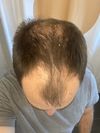
A 39-year-old is starting a hair loss treatment with 1.25mg finasteride and 2.5mg oral minoxidil twice daily, sharing baseline pictures and hoping for significant results. Progress updates will follow.
The conversation is about using finasteride for hair loss and considering supplements like ginseng or ashwagandha to boost testosterone levels. Concerns are raised about potential negative effects on hair due to increased DHT conversion, and it's suggested that natural testosterone boosters may not significantly impact those with already high testosterone levels.
A user reported that Procerin, containing Saw Palmetto and Pumpkin seed oil, provided similar hair thickening results as finasteride but with milder side effects. They experienced reduced libido and watery ejaculations but are adjusting the dose to minimize these effects.
The conversation discusses using green tea, saw palmetto, horsetail, and zinc supplements for hair regrowth. One user criticizes the avoidance of finasteride.
Verteporfin is being explored for its potential to improve hair transplant outcomes by reducing scarring and increasing donor hair follicles. There is skepticism about the results, with some claiming misleading presentation of evidence.
Using Vitamin C serum after dermarolling may help with healing and hair health. The safety of additional ingredients like Glycerin, Propylene Glycol, Phenoxyethanol, Sodium Benzoate, and Sodium Metabisulfite in hair regrowth is questioned.
OP has been using daily oral finasteride 1.25mg for 5 months with noticeable progress and no side effects. They chose this dosage by cutting 5mg pills into quarters due to cost.
The conversation discusses various hair loss treatments, including Minoxidil, finasteride, tretinoin, latanoprost, and GHK-Cu, with skepticism about expensive branded products like Zeus. Users suggest that similar results can be achieved with cheaper alternatives.
The conversation discusses whether RU58841, if FDA approved and safe, would be recommended over finasteride for hair loss. Specific treatments mentioned include RU58841, finasteride, and minoxidil.
Switching from finasteride to dutasteride can lead to varied results, with some experiencing better hair regrowth and fewer side effects, while others continue to lose hair. Dutasteride is generally seen as more effective but has a longer half-life, potentially extending side effects.
User tried topical fin, dut, min, tret, hydrocortisone, microneedling, nizoral, collagen, propidren supplements, and laser helmet for hair loss with slow progress. They ask if topical spironolactone is a safer, effective alternative to RU for suppressing testosterone and treating hair loss in men.
A user humorously shared that someone at their high school gave out finasteride pills, which introduced them to the drug for their receding hairline. The conversation also touched on the high school's location and appearance, with some users joking about their own hair loss and treatments like minoxidil and finasteride.
A user's successful hair regrowth journey using a cocktail of finasteride, minoxidil, and ketoconazole. The user started seeing noticeable results after 8 months and also incorporated saw palmetto, biotin, keratin, and dermarolling into their routine.
Mixing minoxidil and stemoxydine is not recommended due to potential dilution and reduced effectiveness. Applying them separately with a time gap is suggested.
The conversation is about finding a source for sterile dutasteride for mesotherapy to avoid side effects from oral 5AR blockers. The user is currently using microneedling and 0.01% topical dutasteride and plans to use transplants.