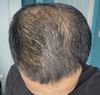
User considers trying AAPE for hair restoration, costing $700 for 6 months. Others discuss its potential effectiveness and mention a study with promising results.
The user experienced improved hair density and some regrowth after 100 days of using oral finasteride (1mg) and oral minoxidil (2.5mg), with plans to add microneedling and ketoconazole shampoo. Despite some initial side effects, they report no current issues and intend to continue the treatment.
The conversation is about a user experiencing hair thinning potentially due to excessive microneedling while using finasteride and minoxidil. Many suggest reducing microneedling frequency and considering alternative treatments like dutasteride or a hair transplant.
Microneedling at 1.5 mm should be done every 4 to 6 weeks, not weekly, to prevent scalp trauma and improve hair growth. The user is also using 0.5 mg dutasteride daily, 5 mg minoxidil daily, and started RU58841 two months ago.
A 19-year-old with rapid hair loss since 16 is considering a hair transplant but refuses to take finasteride or any 5α-Reductase inhibitors. They are currently using minoxidil, tretinoin, and microneedling with a Derminator 2, and only want hair until age 27.
AMP-303, a new injectable treatment for androgenetic alopecia, showed promising results in increasing hair count and density with minimal side effects. The treatment demonstrated significant hair regrowth and durability, offering new hope for those with hair loss.
The user had a hair transplant 5 years ago and is currently using 1 mg finasteride and topical minoxidil but is not seeing an increase in hair volume. They are considering another transplant to improve hair volume.
A 22-year-old has been using minoxidil for 2 years and started finasteride a week ago to improve hairline density. They are advised to continue both treatments for potential improvement over time and consider styling or hair concealers for immediate visual changes.
The user experienced significant hair regrowth using finasteride, minoxidil, and a 4,000-graft hair transplant performed by Dr. Nader in Reynosa, Mexico. The results were natural-looking, and the user plans a second transplant for additional density if needed.
The use of tropoelastin injections and verteporfin for hair transplant recipients to help regrow donor area hairs, as well as research done on tropoelastin injections restoring elastin in scarred heart tissue and skin. There are discussions about why it is taking so long to get cosmetic mass produced tropoelastin injectables on the market.
A user shared their 9-month post-hair transplant results with 4600 grafts, using only Nourkin hair vitamins, Vitamin D, and B12, and expressed satisfaction. The replies debated the necessity of medications like finasteride and minoxidil for maintaining hair health.
Follistatin, known for inhibiting myostatin and promoting muscle growth in mice, is being discussed as a potential treatment for hair loss. Specific treatments mentioned include Minoxidil, Finasteride, and RU58841.
The user has been using minoxidil and finasteride for 3.5 months and has seen a 20% improvement in hair density. They are advised to continue treatment and consider switching agents or adjusting dosages if needed.
A 21-year-old has been using 1mg finasteride and 2.5% minoxidil for 9 months with some improvement in hair density. They plan to add collagen, 1% ketoconazole shampoo, and biweekly microneedling to their routine.
The conversation is about the proper frequency and needle length for microneedling to treat hair loss, with a user asking if they should use a 0.5 mm derma stamp daily and a 1.5 mm stamp once a week.
The conversation discusses HMI 115, a new hair loss treatment with promising results, showing a significant increase in hair density after two months. Some users are skeptical, while others are hopeful for its release and potential affordability.
Adipose fat cells and stem cells may help treat hair loss by restoring the scalp's thickness. Treatments like NanoFat injections and Botox are discussed for their potential to promote hair growth.
A 25-year-old male has been treating hair loss for six months using 5% minoxidil once daily, 0.02% DIY topical finasteride once daily, and microneedling every two weeks. He reports increased hair density and some regrowth, particularly vellus hairs, and plans to continue the regimen, possibly adding oral finasteride in the future.
A 30-year-old female with telogen effluvium and androgenetic alopecia is using spironolactone, oral minoxidil, vitamin D, iron sulfate, and a hairmax laser band. She seeks recommendations for a dermastamp or derma roller, advised to use no higher than 0.5 mm.
A user shared their 6-month hair loss treatment progress, which included 3200 FUE grafts, oral finasteride and minoxidil, keto shampoo, and biotin. The user also mentioned micro needling their temples for further growth and plans to observe the effects of finasteride and minoxidil over the next 6-12 months.
The user is using topical finasteride, Bioscalin, Omega 3, and hair filler therapy for hair loss. There is some progress noted, but varying photo angles and lighting make it hard to assess fully.
The user reported noticeable improvement in hair density after one year using topical 0.1% finasteride and 5% minoxidil once daily. Suggestions included considering hair transplant, microneedling, and possibly switching to oral treatments for better results.
The user experienced hair improvement over a year using finasteride, topical minoxidil, tretinoin, ketoconazole, and microneedling. The hair density and hairline have strengthened with this routine.
A 26-year-old male with high testosterone is experiencing diffuse hair thinning despite using a comprehensive treatment regimen including dutasteride, oral minoxidil, RU58841, ketoconazole shampoo, microneedling, and low-level laser therapy. Suggestions include adjusting dutasteride dosage, monitoring iron levels, and consulting a dermatologist for further evaluation.
The conversation discusses hair loss treatments, specifically Regenera stem cells and exosomes from 'Cellgenic' umbilical cord donors. The user has been using topical minoxidil 5% and 0.001% estradiol for a year without seeing effects, and another user mentions the importance of microneedling.
A user shared their initial experiences with The Ordinary hair density serum, which contains Redensyl (taxifolin). They observed increased hair volume but also developed pimples, likely due to the serum stimulating sebaceous glands.
PP405 shows promise as a hair loss treatment, with 31% experiencing increased hair density in a short trial. It may complement treatments like finasteride and minoxidil, but long-term effectiveness and safety need confirmation.
The user is optimistic about hair regrowth after 3 months of using 1mg oral finasteride daily, topical minoxidil twice daily, and microneedling once a week. They report improvements in hair density and color, particularly at the crown and fringe.
Hair transplant results after 1 year discussed, with mostly positive feedback on density and appearance. User considers another surgery for hairline, but overall improvement noted.
The conversation is about the impressive hair density and hairline of a person, with users attributing it to good genetics and joking about the lack of hair loss despite stress. Specific hair loss treatments like Minoxidil, Finasteride, or RU58841 are not discussed.