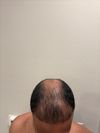
Hair follicles usually go dormant rather than die, and treatments like finasteride, minoxidil, and hormone therapy can sometimes reactivate them, though results vary. Complete regrowth is rare, especially in long-term bald areas, but some individuals see significant improvement with these treatments.
A user's successful hair regrowth after 7 months of using 5% minoxidil, 1mg finasteride, and adding micro needling 4 months ago. The user also took biotin, fish oil, and collagen supplements, and reduced finasteride intake to once every 3 days due to minor libido decay.
A 21-year-old experienced significant hair regrowth using finasteride, Procapil, and microneedling over 8 months. The barber was amazed by the progress, and the user no longer sees their scalp during haircuts.
Body hair transplants may look better if kept very short. People with limited donor regions or waiting for Verteporfin or FAK Inhibitors could consider this option.
Exosomes are being considered for hair regrowth after using finasteride and minoxidil, with skepticism about their effectiveness and high cost. Users discuss administration methods like injections and microneedling, but concerns about pricing and potential scams are prevalent.
User experienced hair regrowth and no side effects after 10 weeks on 0.25mg finasteride daily, along with biotin, collagen, micro-needling, and hair oil. They stopped minoxidil due to inconvenience and noticed initial shedding but now see more fullness.
A user shared their positive experience using Fleava (copper peptides), minoxidil, and micro needling for hair regrowth, noting significant improvement in their hairline. Other users believe the success is primarily due to micro needling and minoxidil.
Hypoxia may enhance hair growth by stimulating stem cells, but it could also risk fibrosis. Some users humorously discuss extreme methods like choking while using minoxidil, highlighting the need for new treatments.
A user shared their successful hair loss treatment using 1.25mg finasteride daily, 2.5mm microneedling every 1-3 weeks, zinc pyrithione shampoo, occasional scalp massages, and 40% glycolic acid on temples. They reported significant progress over 21 months.
The user is currently using finasteride and minoxidil and is considering adding microneedling and either RU58841 or Pyrilutamide for potential hair regrowth. They previously used microneedling, RU58841, and oral minoxidil before their hair transplant.
A user's father experienced hair regrowth and other health improvements after two IV exosome treatments. The user also had four rounds of exosome therapy, noting significant hair regrowth and relief from headaches, but no change in gray hair.
Follicium XR™ is a topical treatment for hair loss containing RU58841, AHK-Cu, GHK-Cu Peptide, caffeine, D-Biotin, methylene blue, keratin, and spermidine. RU58841 is considered the most effective ingredient, but concerns exist about its stability in water.
The discussion is about using ASCEplus HRLB exosomes for hair loss treatment, which combines 10 billion exosomes with growth factors, nutrients, biotin, and copper tripeptide. The treatment is expensive and typically administered via scalp injections, but in Europe, it's done with microneedling.
The user underwent a hair transplant in Boston, initially dissatisfied with the results, but later achieved significant improvement in hair density and natural appearance after consulting a different surgeon. They used finasteride, minoxidil, and low-level laser therapy as part of their treatment.
Hair loss treatments include finasteride, minoxidil, microneedling, dutasteride, CB-03-01, RU-58841, and experimental options like KY-19382 and stem cell therapy. Some treatments are considered ineffective or risky, such as ketoconazole, PRP, and low-level laser therapy.
User tried oral finasteride, topical finasteride, topical dutasteride, and RU58841 but experienced side effects. They discuss upcoming treatments like clascoterone, pyrilutamide, gt20029, and KY19382 as potential options.
The conversation discusses the potential use of verteporfin for hair loss treatment, with one user mentioning their surgeon's interest in trying it and another noting its research status and clinical use as a YAP inhibitor. Some users debate the market size, availability of generics, and the optimism in the hair loss community regarding new treatments.
A user shared their positive experience with a 4200-graft hair transplant performed by Dr. Heena Kudyar, noting significant improvement in hairline and density by month 9. The user did not mention using medications like Minoxidil, Finasteride, or RU58841.
The conversation is about a hair loss product that claims to use stem cells and ingredients like Capixyl, Redensyl, and Baicapil, with the user asking if anyone has looked into it. No specific treatments were discussed.
A 24-year-old had an FUE hair transplant in Liverpool at age 23, after starting finasteride at 20 to halt hair loss. The transplant involved 3000 grafts, and the user is satisfied with the results, noting increased confidence and no further hairline recession.
The user shared progress pictures showing significant improvement in hair loss after using finasteride, RU58841, and undergoing a 3000 graft hair transplant. They plan to get another transplant due to remaining thin areas.
Hair fibers can effectively cover thinning hair when used with minoxidil and hairspray but require daily application and can be inconvenient in certain conditions. Some users prefer treatments like finasteride, dutasteride, microneedling, or wigs due to the maintenance and limitations of hair fibers.
The hair transplant at Eugenix in New Delhi resulted in poor density and texture, with only about 2,500 grafts surviving out of 4,500. The user is considering holding the clinic accountable and exploring options like shaving, using hair fibers, or seeking another transplant.
Hair loss discussion includes using hair fibers to improve appearance and boost confidence. Some users find it effective, while others mention drawbacks like moisture affecting the look.
Cyclosporine A is discussed as a powerful hair growth stimulant, potentially more effective than minoxidil, but concerns about safety and side effects, including cancer risk, limit its use. The conversation highlights the need for further research and experimentation with topical application, despite its risks.
Botox injections may be more effective than finasteride for hair growth by reducing scalp tension. The discussion also suggests choosing FUE over FUT due to potential loss of scalp elasticity with FUT.
Microneedling with needle lengths of 1.5mm to 2.5mm to stimulate hair follicle stem cells for potential hair growth. Using needles longer than 2.5mm is not recommended due to risk of puncturing veins in the scalp. A dermastamp is suggested over a roller.
The conversation is about a user interested in participating in hair cloning clinical trials due to their fine hair and previous positive experience with clinical trials. They are seeking information on how to volunteer for such trials.
The conversation discusses an interview with Dr. Tsuji about hair follicle stem cell multiplication and the financial challenges of starting human clinical trials. It also mentions the need for funding to secure a patent for a protein that promotes hair growth.