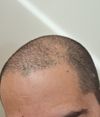
Hair loss is influenced by multiple genetic factors, not just maternal lineage. Treatments like finasteride, minoxidil, and nizoral are suggested if male pattern baldness progresses.
The user is using a treatment of topical minoxidil 7% and finasteride 0.1% twice daily, along with a low-level laser therapy cap, biotin, and collagen supplements, and is seeing good progress on the hairline and temples but not the midscalp. They experienced initial shedding, saw results by month three, and are happy with the progress, though some users express concern about using finasteride at a young age.
The user is treating hair loss with a regimen including Dutasteride, oral and topical Minoxidil, microneedling, and various supplements for overall health. They are considering adding tretinoin, stemoxydine/RU, DIM, Boron, and Fadogia Agretis to their routine.
The conversation discusses androgenetic alopecia (AGA) and questions why treatments focus on lowering DHT levels instead of building resistance to it. It also touches on hair transplantation techniques using body hair.
The user experienced significant hair regrowth over 8 months using finasteride, minoxidil, and a custom topical mix including progesterone, cortisone, and alpha 5 estradiol. They reported no side effects and noticed improvement around the third month.
The conversation discusses the frustration of having excessive body hair while experiencing scalp hair loss, with mentions of treatments like finasteride, minoxidil, and hair transplants using body hair. Users share experiences and advice, noting the role of genetics and DHT in hair growth patterns.
People are hopeful about future hair loss treatments like PP405, GT20029, and VDPHL01, while some are currently using finasteride and minoxidil. There is skepticism about the effectiveness of new treatments, and some advise against hair transplants until more promising drugs are available.
A clinical trial for Verteporfin as a hair loss treatment, and the potential for greater progress in treatments for hair loss in the future. Common treatments such as Minoxidil, Finasteride and RU58841 were discussed.
A 22-year-old male experiencing hair thinning has been using topical finasteride and minoxidil since September 2024, with improvement except in the frontal/middle scalp area. He seeks advice on additional treatments and has started scalp massages.
A user created a web app called TrichoMetrics to track hair loss using photos and metrics like density and thinning. The app supports tracking treatments like Minoxidil and finasteride, with features for setting baselines, comparing progress, and logging treatment adherence.
A user is exploring VEGF gene therapy to enhance hair transplant results, considering measuring hair shaft diameter and growth rate. Suggestions include using phototrichograms and possibly adding PRP, though its effectiveness is uncertain.
PP405 shows promise in stimulating new terminal hair growth by activating dormant follicles, with no systemic adverse effects observed in a short-term trial. However, long-term efficacy remains unproven, and further trials are needed to confirm its potential as a hair loss treatment.
The conversation discusses the difference between the commercially available Pyrilutamide and the version in clinical trials. It also mentions treatments like Minoxidil, finasteride, and RU58841 for hair loss.
Ultrasound imaging can predict hair shedding and assess hair growth stages by analyzing hair follicle characteristics. The conversation also discusses using ultrasound for personal hair analysis and mentions the potential use of infrared emission for hair treatment.
A user shared their positive experience with a hair transplant of 3500 grafts, showing significant improvement in appearance after 5 months. They underwent the procedure at Heva Clinic in Istanbul for $2,300 USD, which included aftercare, and attributed their hair loss to both genetics and traction alopecia from tight hairstyles.
The conversation discusses hair regrowth progress using topical dutasteride with cetirizine, laser therapy, and growth serum. The user observes miniaturized, vellus hairs on the scalp.
A human trial involving verteporfin for hair regeneration, with the results showing some regrowth of 1-2 hairs in an area where a follicular unit was extracted. The conversation also suggested that future studies should involve higher doses and more frequent injections.
A 24-year-old male has been using finasteride for 7 months and noticed thinning hair, especially when wet, and is concerned about the effectiveness of the treatment. Suggestions include continuing finasteride, considering minoxidil, and possibly trying micro-needling.
Prostaglandin balance affects hair loss, particularly in conditions like Lichen Planopilaris, where an imbalance can lead to hair follicle damage. Treatments mentioned include prostaglandin analogs and Pioglitazone HCL, with a focus on maintaining prostaglandin equilibrium for potential hair regrowth.
The user experienced significant hair thinning and scalp irritation after three months of using topical finasteride. Suggestions include that shedding is normal before regrowth and switching to oral finasteride or addressing scalp inflammation might help.
A user is using topical finasteride, keto shampoo, microneedling, and tretinoin for hair loss and is considering adding pyrilutamide. They notice some improvement at the temples and seek advice on whether to focus on cosmetic results despite daily shedding.
A breakthrough in hair follicle cultivation using induced pluripotent stem cells (iPSCs) has been achieved, producing large hair follicles suitable for transplantation. Clinical trials for this hair multiplication technology are planned in partnership with Yinguan Biotechnology.
Folligenz liposomal minoxidil sulfate is being discussed for its effectiveness and cost, with users comparing it to regular minoxidil and tretinoin. One user found no difference with the 10% version and noted that a lower tretinoin percentage reduced side effects like skin peeling.
The user experienced significant hair improvement after one year using topical finasteride and minoxidil, combined with a hair transplant at the front. They switched from oral to topical finasteride due to side effects and are satisfied with the results, especially at the temples.
A peptide from Japanese water chestnut fruit may help with hair loss by suppressing DHT's effect on hair follicle cell death, potentially serving as a finasteride alternative. The treatment's effectiveness and safety in humans remain uncertain.
A user is considering switching from oral to topical finasteride to reduce systemic DHT impact and is exploring ethossomal finasteride for better skin penetration and potential hair regrowth. They found ethossomal finasteride in Brazil and are seeking opinions on its effectiveness compared to other topical delivery methods.
A 36-year-old had a hair transplant with 6,500 grafts 7 months ago, took 1.25mg of finasteride every other day for 5 months, and recently switched to 1mg daily along with 5% minoxidil spray. They are considering a touch-up transplant and are seeking advice on their progress and future expectations.
A user who had FUT surgery for 2877 grafts with Dr Jerry Wong of Hasson & Wong that resulted in low growth and an abnormally wide scar, suggesting negligence by the doctor and possibly illegal behaviour by an unqualified technician. The post sparked discussion about seeking legal action, as well as criticism of the clinic's high cost.
The user experienced hair regrowth with oral minoxidil and finasteride but faced aggressive hair loss after developing IBS, questioning if the condition affects medication absorption. They are considering switching to topical treatments.
A 28-year-old man shared his experience with a 2990 graft FUE hair transplant at HDC Clinic in Cyprus, praising the professionalism and care received. He has been using topical Minoxidil, Biotin, Dermarolling, and recently started Finasteride and oral Minoxidil.