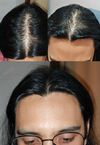
A 25-year-old is considering starting Minoxidil and finasteride for hair loss. Another user suggests it's hard to advise without knowing the person's hair history.
A 21-year-old shared progress pictures showing hair regrowth after using finasteride (1mg daily) for 4 months and minoxidil (topical, 1ml daily) for 6 months, with no significant side effects. The user experienced initial shedding but now reports no hair loss when running fingers through hair.
A user shared their 3-month progress using Hims topical spray containing minoxidil and finasteride for hair loss, noting some improvement and stopping dermarolling. They hope for continued growth despite noticing some hair shedding.
The user experiences severe headaches from 5% minoxidil and is considering mixing finasteride with a 2% minoxidil solution or diluting a 5% minoxidil + 0.1% finasteride solution. They seek advice on the appropriate method and dilutant composition.
The user has been using 1mg finasteride daily for 10 months and minoxidil once a day for 7 months to treat hair loss, but has seen minimal improvement. They recently started applying 0.05% tretinoin before minoxidil and incorporated dutasteride twice a week into their regimen.
The conclusion of the conversation is that the user, PirateBeastBaby, had good results with microneedling for hair loss after using oral finasteride and topical minoxidil 20 years ago. They believe that microneedling was the gamechanger for their hair growth.
The conversation discusses the long-term results of using finasteride, RU58841, and minoxidil for hair loss, with some skepticism about the truthfulness of the results and a reference to a scam involving RU58841.
An 18-year-old male with a family history of baldness started using 5% minoxidil and 0.01% finasteridespray for hair loss. Suggestions included getting a blood test, considering oral dutasteride, and trying oral minoxidil.
The user shared a 5-month update on hair regrowth using Minoxidil twice daily and Finasteride every other day, noting significant progress and initial shedding. The user started treatment at age 33 after experiencing hair loss since their early 20s.
A 17-year-old is experiencing hair loss despite using 5% topical minoxidil, 0.05% tretinoin, and oral minoxidil, and is considering starting oral finasteride after a dermatologist suggested a hair growth spray with Capixyl, Redensyl, Anagain, and Saw Palmetto. Users advise caution with finasteride at a young age, suggesting starting with topical finasteride and consulting an endocrinologist.
A user shared their 3.5-month progress using 1 mg oral finasteride daily, 5% topical minoxidil nightly, and a dermaroller weekly, reporting no side effects. Others congratulated the user on their progress and inquired about side effects, to which the user confirmed experiencing none.
Minoxidil alone can work for some people, but it may not address DHT-related hair loss. Adding a derma roller and using ketoconazole shampoo might improve results.
A 20-year-old user shared progress on hair regrowth after using Minoxidil 5% and 1mg Finasteride for four months, noting improvements in hairline thickness, especially at the temples, with no side effects. The user also started using a derma roller recently and plans to update progress every few months.
The user has been using finasteride since November 2024, topical minoxidil since January 2025, and oral minoxidil since December 2025, with some experimentation with microneedling and RU58841. Despite initial progress, the user experienced accelerated hairline recession and loss of density in recent months.
The user experienced significant hair regrowth using 2.5 mg minoxidil and 1 mg finasteride prescribed by a dermatologist, with no negative side effects reported. The progress has inspired others to try similar treatments for hair loss.
The conversation discusses two methods for making topical finasteride: using ethanol and propylene glycol or mixing it with topical minoxidil. The focus is on solubility and absorption, with a suggestion to crush pills finely and possibly mix with minoxidil at a slightly elevated temperature.
A user is experiencing diffuse thinning and is using oral minoxidil, dutasteride, and plans to add finasteride temporarily. They express frustration with local dermatologists' lack of knowledge on hair loss treatments.
The user has been taking Finasteride for almost 2 months and using Minoxidil 5% spray daily since March. They feel Minoxidil hasn't helped after 7 months, and Finasteride has increased hair loss.
The conversation discusses a hair loss treatment routine using Minoxidil twice daily, Finasteride once daily, and ketoconazole shampoo twice a week. Users are supportive and curious about the start date of the routine.
A 24-year-old male shares his 5-month progress using 1mg finasteride daily, biotin supplements, multivitamins, 3ml minoxidil daily, and derma rolling twice a week. A user inquires about hair shedding and the type of minoxidil used.
The conversation is about using 5mg oral minoxidil, 1mg oral finasteride, and Keto shampoo for hair loss, with additional supplements like Biotin, multivitamins, and Vitamin D3 with K2. Suggestions include possibly switching to 2.5mg dutasteride instead of finasteride.
The user has been using finasteride for 10 months and minoxidil for 5 months to treat hair loss. They are seeking feedback on their progress and wondering if a hair transplant is necessary.
The user experienced significant hair regrowth after switching from finasteride to dutasteride and from topical to oral minoxidil, despite some patchiness along the hairline. The user reduced the oral minoxidil dose due to low blood pressure concerns.
The user experienced sexual side effects from finasteride and switched to using only topical minoxidil without side effects. They are seeking alternatives to finasteride, such as topical finasteride, to maintain hair without adverse effects.
The conversation discusses using 2.5mg minoxidil and 1mg finasteride capsules daily for hair loss, with the addition of Nizoral shampoo for dandruff. It suggests switching to Selsun Blue if Nizoral worsens the condition.
Using a microdose of finasteride on the scalp with minoxidil as a carrier may have positive effects with minimal side effects. The user is also considering the effects of sulforaphane or broccoli sprouts on hair loss.
Minoxidil does not maintain efficacy indefinitely when used alone, but its effectiveness may be prolonged when used with finasteride. Finasteride can maintain some degree of efficacy indefinitely.
The user achieved significant hair regrowth using oral and topical minoxidil, finasteride, microneedling, ashwagandha, and amla powder. They experienced some side effects like low libido from finasteride but reported no major issues with minoxidil.
A person treated their diffuse alopecia with oral minoxidil (10mg daily), oral finasteride (reduced to 0.25mg daily due to side effects), castor oil, vitamins, and ashwagandha, and plans a hair transplant in Turkey. They stopped using topical minoxidil, have seen improved hair density, but are still experiencing hair loss.