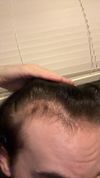
The user "StrummerBummer" has been taking finasteride for 25 years without sideeffects, but is now switching to dutasteride. Other users congratulate and support the decision.
User started finasteride in Oct 2021 and experienced reduced shedding and sideeffects. Saw improvements in months 3-5, but worsening in months 11-13, and asks for advice on next steps.
User is scared to start finasteride for hair loss due to potential sideeffects and personal concerns. Another user suggests trying a low dose for 6 months and avoiding online groups to reduce anxiety.
Oral minoxidil is considered unsafe due to severe sideeffects and requires close medical supervision, while oral finasteride is viewed as safe and effective. There is debate over the fear-mongering around finasteride and the downplaying of minoxidil's risks, with some users advocating for proper health screenings before use.
The user experienced sideeffects from daily 1 mg Finasteride and switched to 0.5 mg every other day, supplemented with creatine, tongkat ali, tribulus terrestris, vitamin D3, bromantane, l-tyrosine, and caffeine. They also use weekly 1.5 mm microneedling and daily 50 mg RU58841, except on microneedling days, to manage hair loss.
The conversation discusses using zinc and iron supplements to mitigate sideeffects of finasteride. It also mentions that shedding is a normal part of the process and suggests a healthy diet, exercise, and sleep to support hair health.
Minoxidil and finasterideeffectively improve hairlines and reduce balding, though some users report sideeffects like reduced libido. Consistent use over 1-2 years leads to significant hair regrowth, with some users also using skincare and biotin for added benefits.
A user stopped finasteride after 15 years due to severe sideeffects, which improved after quitting. They maintained most of their hair and are considering alternatives like topical treatments or RU58841.
The conversation discusses the effectiveness of finasteride and dutasteride in treating hair loss, emphasizing that significant results often take 12-18 months or more. Dutasteride is generally considered superior, with similar or fewer sideeffects than finasteride, but patience is required for noticeable improvement.
This conversation is about the effectiveness of Finasteride and Minoxidil as treatments for hair loss, with SnooBooks5080 claiming positive results from using both medications. However, other participants in the conversation caution that there are potential sideeffects to be aware of when taking Finasteride and advise people to do their research before making a decision.
A user experienced hair loss and sideeffects from oral finasteride, leading them to consider switching to topical finasteride to reduce sideeffects while maintaining hair. Another user suggested trying dutasteride under medical supervision, noting individual differences in sideeffects.
The user plans to stop using finasteride due to sideeffects but will continue using minoxidil. They are concerned about hair regrowth without finasteride.
The user is anxious about potential sideeffects of finasteride, particularly PFS, and is considering reinstating it for hair loss treatment. They experienced anxiety-induced sideeffects previously and are seeking advice on overcoming their fear of restarting finasteride.
Dutasteride reduces DHT more effectively than finasteride, but finasteride is more commonly used and approved for hair loss. Users have mixed opinions on dutasteride's effectiveness, with some experiencing better results and others facing sideeffects or no improvement.
Dutasteride is generally considered more effective than finasteride for hair regrowth, with some users experiencing better results, especially at higher doses. However, individual responses vary, and some users report sideeffects or no response to either treatment.
Finasteride and minoxidil are praised for effectively treating hair loss, with users sharing positive experiences and some discussing sideeffects. Others express concerns about limited treatment options and the need for more research and alternatives.
Begin with finasteride to evaluate its effectiveness before adding minoxidil. Combining treatments may enhance results but could also increase sideeffects; individual responses differ.
Some users choose finasteride over dutasteride due to fewer sideeffects and cost, while others find dutasteride more effective despite its sideeffects. Many combine treatments like minoxidil, finasteride, and dutasteride, adjusting based on personal experiences and sideeffects.
Finasteride is favored for hair loss due to FDA approval, accessibility, and manageable sideeffects. Dutasteride, though more effective in reducing DHT, is used off-label and may have more sideeffects.
The conversation discusses the effectiveness of finasteride and dutasteride for hair loss, with some users finding no improvement and experiencing sideeffects. It also mentions the use of RU58841 and topical minoxidil, highlighting that hair sensitivity to DHT varies among individuals.
Many are unaware of effective male pattern baldness treatments like finasteride and minoxidil, often opting for ineffective remedies. Educating others on proven treatments and potential sideeffects is crucial.
User experienced hair regrowth and no sideeffects after 10 weeks on 0.25mg finasteride daily, along with biotin, collagen, micro-needling, and hair oil. They stopped minoxidil due to inconvenience and noticed initial shedding but now see more fullness.
Finasteride and Dutasteride are effective treatments for hair loss, with Dutasteride being superior based on long-term data. Sideeffects are minimal, and concerns should not deter treatment.
A 35-year-old man shows 4-month hair regrowth using Minoxidil, Finasteride, Biotin, a derma stamp, Mane Root Activating Shampoo, and Nizoral Shampoo. He has no sideeffects from the treatment.
The conversation discusses the effectiveness of Dutasteride (DUT) and Finasteride (FIN) for hair loss. Users share varied experiences, with some finding DUT more effective and others experiencing sideeffects or no change, highlighting that individual responses can vary.
A 21-year-old male experienced sideeffects from topical finasteride and is seeking alternative treatments to maintain hair until Breezula is available. He is considering using minoxidil, Nizoral, micro-needling, and vitamin D supplementation, and may try CB or RU58841 if necessary.
The effects of Finasteride, a drug used to treat hair loss, prostate problems and other conditions. The post by iaskedadoctor describes the conversations they had with a Urologist about the effects of the drug on DHT levels throughout the body, how lower doses are beneficial in reducing sideeffects, how erectile dysfunction can be psychological as well as physiological, how morning erections are not necessarily important, and how persistent sideeffects appear to be rare. People also shared their experiences with taking Finasteride for hair loss, including potential sideeffects such as reduced ejaculate force and development of man boobs.
The user regrets stopping finasteride and minoxidil due to sideeffects but plans to resume treatment. They consider using finasteride every other day and continuing topical minoxidil to manage sideeffects while maintaining hair.
Topical finasteride is considered a safer option for hair regrowth with fewer systemic sideeffects compared to oral finasteride. Some users report similar efficacy and sideeffects between topical and oral treatments, while others prefer topical due to reduced systemic exposure.
The conversation is about differing experiences with finasteride for hair loss, with some users reporting sideeffects and others not, and the debate over the drug's safety and effectiveness. Specific treatments mentioned include finasteride, dutasteride, and topical finasteride.