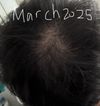
The conversation discusses using both oral and topical forms of finasteride and minoxidil for hair loss. Concerns about potential overkill and side effects are raised, but no side effects are reported from using oral finasteride and topical minoxidil.
A user shared their 20-week progress using oral finasteride (1mg) and oral minoxidil (3.3mg) for hair loss, noting significant improvement in hair thickness and coverage. Another user complimented the progress.
The user is experiencing positive results with hair regrowth using Minoxidil 5% topical twice daily and Finasteride 0.625mg daily, noting thin white hairs covering a bald spot. They are hopeful for further improvement and considering whether these hairs will darken with continued treatment.
User "burlysnurt" shares 1.5-year progress using Finasteride and Minoxidil for hair loss. Others congratulate and ask questions about the treatment, with "burlysnurt" sharing their routine and positive results.
User reports using topical minoxidil, oral finasteride, dermarolling, and recently started oral minoxidil for hair loss. They noticed improvement after 6 months and are curious about further progress.
The conversation is about a user's 5-month progress using topical Minoxidil (5%) and Finasteride (0.1%) twice daily, along with derma stamping, improved Vitamin D levels, and increased protein intake for hair regrowth. The user is considering dutasteride if progress plateaus and uses a sulfate and paraben-free shampoo.
The user increased their steroid dosage and noticed hair shedding, so they adjusted their regimen by reducing steroid doses and adding oral dutasteride. They are also experimenting with combining RU-58841 and KX-826/pyrilutamide in minoxidil to address hair loss.
A user's progress with treating hair loss over 3.5 months, which involves taking finasteride MWF, minoxidil daily and microneedling once a week. There was positive feedback from other users regarding the results.
User shared progress pictures showing hair growth from January to March using 1mg finasteride, topical minoxidil with peppermint oil, derma stamping twice a week, and biotin. Commenters are impressed with the quick and significant improvement.
Finasteride and oral minoxidil significantly improved hair texture and thickness over 8 months. The user also experienced increased hair growth on the beard and eyebrows.
A 25-year-old experienced significant hair regrowth after 5 months using a combination of topical minoxidil and finasteride, along with vitamin D supplements. They advise against stopping minoxidil to prevent hair loss recurrence.
Setipiprant and bimatoprost are being discussed as potential future treatments for hair loss. Some individuals have started testing setipiprant before FDA approval, but no progress updates are available yet.
The user experienced significant hair regrowth using topical finasteride/minoxidil and oral minoxidil/dutasteride, with some mild side effects that diminished over time. They plan to add microneedling to their regimen and have seen hair shedding cycles every six months, followed by thicker regrowth.
The user has been using 1mg oral finasteride daily for four years, experiencing significant hair regrowth and increased testosterone levels without negative side effects. They advise patience and monitoring for side effects, noting that their hair continues to improve with this treatment.
A user with diffuse hair loss for a decade tried various treatments, including LLLT Helmet, supplements, topicals, and hair transplants. They found relief from scalp inflammation and itching using a topical solution made from crushed Xeljanz pills mixed with ethyl alcohol.
The user has been using minoxidil for 2 months and finasteride for 1 month, applying minoxidil once nightly due to routine constraints. They switched to a shampoo with menthol, caffeine, and saw palmetto, and reported no side effects.
The user reports using topical minoxidil 6% and finasteride 0.05% once daily, along with microneedling, vitamins, biotin, and nizoral shampoo. They recently increased minoxidil and finasteride to twice daily and feel their hair is thicker but are unsure about regrowth.
The user is experiencing hair regrowth after using 1mg finasteride and 5% minoxidil twice daily, along with weekly dermarolling. They are considering switching to a combination spray due to reduced libido from finasteride.
PP405 and GT20029 are new hair loss treatments with different mechanisms from traditional options like Minoxidil and Finasteride. PP405 targets hair follicle stem cells to reactivate growth, while GT20029 works as an androgen receptor deleter, both requiring ongoing use for effectiveness.
The conversation discusses maintaining hair regrowth using minoxidil and finasteride and whether using gt20029, which degrades androgen receptors, would affect this. Fluridil, a similar treatment, can disable over 90% of active androgen receptors.
The conversation discusses an individual's 11-month hair regrowth progress using 1mg of finasteride daily. People are curious about the user's age, whether they used minoxidil, and if there were any side effects.
A 42-year-old male shared his 1.5-year hair regrowth progress using 1.25mg finasteride daily and regular doses of minoxidil twice a day, and recently started using the Derminator 2. He also mentioned his battle with cancer and Cushing's syndrome, which affected his weight and hair.
A 20-year-old user shared progress on hair regrowth after using Minoxidil 5% and 1mg Finasteride for four months, noting improvements in hairline thickness, especially at the temples, with no side effects. The user also started using a derma roller recently and plans to update progress every few months.
The post and conversation are about a user's 4-month hair regrowth progress using 3mg minoxidil, 2.5mg biotin, 1.1mg finasteride daily, and occasional dermarolling. The user reports significant improvement without using topical treatments.
User shared progress pictures of hair density improvement using 1mg finasteride and topical minoxidil, but expressed concern about recent hairline miniaturization and treatment effectiveness. Another user complimented the results and inquired about initial shedding.
RU58841 was the only treatment that slowed hair loss and reduced irritation for a DUPA sufferer after trying finasteride, minoxidil, and dutasteride with no success. The user continues using 6mg oral minoxidil, 0.5mg dutasteride, and an 8% RU58841 solution.
Significant hair regrowth was achieved using 1mg finasteride daily, 5% minoxidil nightly, and weekly 1.5mm microneedling, with no side effects. Topical minoxidil and microneedling are recommended for similar results.
The user is using topical Minoxidil 5% and Finasteride 0.1% for hair loss and is concerned about potential side effects of oral treatments due to a history of depression and testosterone replacement therapy. Other users suggest that oral Finasteride may be more effective, but results typically take several months to a year to become noticeable.
The user "_Mad_Jack_" shared their progress pictures of using topical finasteride and minoxidil for 11 months. They experienced good hair retention and increased overall hair count, but no regrowth of the hairline. They are considering switching to oral finasteride and microneedling for better results. Testicular pain was a side effect experienced during the treatment. Another user mentioned getting a hair transplant to cover their crown.