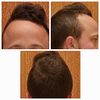
The user reports significant hair regrowth after 90 days using oral finasteride, minoxidil, and biotin. Another user comments on the impressive progress and predicts even thicker hair in a year.
The user is using a mixture of crushed finasteride tablets and alfatradiol as a topical treatment for hair loss, applying 1 ml daily, and is asking if this is an effective method or if alfatradiol is a suitable solvent. They mention that others often mix finasteride with minoxidil, but they want to try without it.
AH-001 is a new topical treatment designed to degrade androgen receptors, targeting the root cause of androgenetic alopecia without the side effects of oral treatments like finasteride. It has shown a strong safety profile and good local tolerability in early trials.
The user is seeking recommendations for scalp-friendly minoxidil and RU58841 products available in the UK, as previous products caused scalp inflammation. They mention issues with RUDirect and MinoxidilMax products.
The user is seeking a topical minoxidil and finasteride combination without propylene glycol due to scalp irritation. They are looking for a supplier in the US.
The user is considering two hair loss treatments: Minoxidilmax Maxogen-x, which contains Minoxidil, Finasteride, Azelaic Acid, ABN Complex, Retinoic Acid, Fluocinolone, and Caffeine, and Morr-F, which contains only Minoxidil and Finasteride. They are asking for others' experiences with these brands.
Liposomal carriers for topical finasteride offer better targeting, reduced side effects, and less irritation compared to alcohol-based solutions, but availability and cost may limit their use. Minoxidil can dissolve in liposomal carriers, enhancing delivery and stability.
A 31-year-old individual started taking finasteride 24 days ago to address hair thinning and loss, which has worsened their mood and stress. They have not yet added minoxidil and are experiencing significant shedding, contributing to sleep issues and insecurity about their hairline.
The conversation discusses a topical finasteride therapy with hydrocortisone butyrate, estrone base, and breviline. A user suggests oral finasteride as a superior option.
People with diffuse thinning and retrograde hair loss are discussing treatments like finasteride, minoxidil, and dutasteride, with some reporting improvements and others experiencing issues like scalp inflammation and increased sebum. Suggestions include addressing scalp inflammation, considering gut health, and possibly using topical antiandrogens or micro-needling.
The user is experiencing hair loss and is using finasteride while addressing low ferritin and copper levels. They are concerned about continued hair shedding and are advised to correct vitamin deficiencies and wait for finasteride results after 12 months.
The user started using topical Minoxidil and Procapil, then added oral Minoxidil and Finasteride, seeing some hair thickening but no improvement in the frontal hairline. They believe nutrition, sleep, and lifestyle impact hair health and are seeking ways to track hairline and medication use.
The user is considering adding RU58841 to liquid minoxidil without propylene glycol (PG) due to an allergy and is asking if this combination is effective and if PG is necessary. They have been using finasteride and minoxidil foam, plan to use RU58841 with liquid minoxidil in the evening, and continue finasteride.
Oleic acid and ethanol are being considered for hair regrowth, with some users planning to self-experiment. There is skepticism about their effectiveness, and ongoing use of treatments like finasteride and minoxidil is mentioned.
The user experienced positive results with hair growth using topical minoxidil and finasteride, along with dermarolling and biotin gummies. Noticeable results appeared after 3 months, with stabilization around 1 year.
Clascoterone, a topical anti-androgen, is generating interest for potentially fewer systemic side effects. Users are curious about its effectiveness and details like concentration and duration of use.
The user has been using finasteride and minoxidil for hair regrowth, with positive results, and recently added daily broccoli consumption, noticing improved hair thickness. Another user suggests that leg exercise, not broccoli, might be contributing to the hair improvement.
The user shared their hair loss journey, trying various methods like a hair system and scalp micropigmentation, and recently started using finasteride and minoxidil with supplements like biotin, zinc, and ketoconazole shampoo. Another user mentioned starting dutasteride and minoxidil with biotin and zinc.
Switching from 1mg to 5mg finasteride cut into four pieces led to increased hair shedding, from 3 hairs to 10-30 hairs a day. The user also takes multivitamins, biotin, and fish oil.
Hair follicle stem cells remain in bald individuals, but progenitor cells do not, raising questions about hair regrowth claims by Pelage. PP405 is discussed as a potential treatment, with skepticism about its effectiveness compared to existing treatments like Minoxidil and Finasteride.
A 37-year-old male resolved scalp folliculitis by adopting a low-histamine diet and taking Vitamin A, Zinc, and Fish Oil, leading to better skin health and thicker hair. He warns about the potential toxicity of excessive Vitamin A intake.
User is experiencing hair thinning and sebum overproduction after starting finasteride and a hair growth supplement containing biotin, iron, zinc, and calcium. They suspect the finasteride might be fake but have noticed a side effect of watery semen.
OP has been using finasteride for almost 2 years and is asking if it's okay to take it with vitamins like vitamin C, multivitamins, and fish oils. Another user mentions taking all vitamins together, usually with a small meal.
The conversation discusses a hair loss and scalp care routine involving ciclopirox shampoo, benzoyl peroxide, clindamycin gel, clobetasol propionate, and calcipotriol to manage seborrheic dermatitis, folliculitis, and inflammation. It also touches on the role of diet and other treatments like oral minoxidil and pioglitazone for scalp health.
TDM-105795 showed promising hair growth results, with higher efficacy than placebo and minimal side effects. It activates dormant hair follicle stem cells and may maintain gains without immediate loss, unlike minoxidil.
The user experienced side effects with both oral and topical finasteride and is considering making their own hair loss treatment using CB-03-01 (Breezula) mixed with minoxidil due to fewer reported side effects. They plan to use a lower concentration than what was used in trials.
Clascoterone (Breezula) shows a potential 500% increase in hair growth, possibly outperforming minoxidil and finasteride. It is in advanced trials, with hopes for FDA approval, but cost and side effects are concerns.
The conversation discusses using ecklonia cava as a natural alternative to finasteride for hair loss. Users share their experiences and opinions on its effectiveness.
The user shared impressive hair growth results after 100 days using finasteride, minoxidil, biotin, and saw palmetto, and plans to get a hair transplant. The conversation includes suggestions for additional treatments like ketoconazole and derma stamping, and discussions about potential side effects of finasteride.