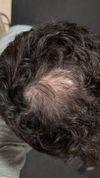
Cbum's hair transplant is criticized for looking unnatural and not blending well, with some suggesting better results were expected given his resources. Discussions also cover the effects of steroids and finasteride on hair loss and muscle growth.
The post discusses a successful hair loss treatment involving a hair transplant, finasteride, and minoxidil. The user underwent a 2000 graft hair transplant at the hairline in a clinic in Sweden.
Addressing hair loss by focusing on posture, blood flow, and craniofacial development. Methods include improving posture, cardiovascular activity, scalp massages, healthy diet, meditation, using minoxidil, and addressing craniofacial issues.
The user completed a Clascoterone study with no observable changes in hair loss and plans to try microneedling and Minoxidil next. They will microneedle weekly and apply Minoxidil twice daily, except on the night of microneedling, and compare results after six months.
A young female diagnosed with Lichen planopilaris (LPP) experienced years of misdiagnosis and ineffective treatments, including a hair transplant and other procedures. She is considering litigation due to the misdiagnosis and has learned that LPP is chronic, hair loss can be stopped with ongoing medication, but lost hair cannot regrow.
The conversation discusses hair loss treatments, specifically using topical minoxidil, oral finasteride, ketoconazole, and derma stamping. Users share their experiences, with one noting improved scalp health and slight regrowth, while another considers switching treatments due to lack of progress.
A user humorously shared their appearance three days after a hair transplant, sparking jokes and memes about their head shape. They remained positive, acknowledging the swelling and hoping for improvement.
A 42-year-old had 2,100 grafts transplanted to the frontal third of the scalp, using treatments like Dutasteride, oral Minoxidil, ketoconazole shampoo, dermarolling, and PRP. They plan to add RU58841 and have scheduled SMP to improve cosmetic results.
A user's progress in treating their hair loss with Finasteride, Minoxidil and Dermarolling; they discussed details of their routine and others congratulated them on their success.
The user has been using Minoxidil, finasteride, and a dermaroller for a year with little effect on hair loss. They are considering a hair transplant and are questioning the number of grafts needed and the feasibility of transplanting onto a partially bald scalp.
Pelage Pharmaceuticals received $120 million in Series B funding for hair loss treatment development. The conversation expresses excitement and anticipation for the release and effectiveness of the treatment.
User celebrates 2-year anniversary of 2500 FUE hair transplant procedure and worries about future hair loss. Others compliment the results and suggest using Dut and Min to maintain hair.
User had a 5000-hair FUT procedure in South Korea in 2014 and is satisfied with results. Uses Minoxidil, dermarolling, and Toppik hair fibers for crown area, and considering Finasteride.
HMI-115, a newly discovered hair loss treatment that could potentially be effective for those with diffuse thinning and telogen effluvium. It is based on prolactin receptor antagonist signaling and has already undergone Phase I trials in women, with potential commercialization by 2027.
The user experienced significant hair regrowth using 7% minoxidil, 0.3% finasteride, and derma stamping over nine months. They reported no side effects and noticed results around 3-4 months, with faster progress when using derma stamping 2-3 times a week.
AMP-303 and AMP-601 are new hair loss treatments targeting dermal papilla cells, with AMP-303 showing early efficacy in transitioning vellus hairs to terminal hairs after one injection. Further clinical trials are planned, and these treatments are seen as promising due to their biologic approach and less frequent application compared to daily treatments.
The user is experiencing severe hair shedding despite using minoxidil, finasteride, ketoconazole shampoo, and dermarolling. They are considering changing treatments after stopping dermarolling and switching finasteride brands worsened the shedding.
Significant hair regrowth was achieved using oral finasteride and topical minoxidil over five months, with noticeable improvements in hairline and temple areas. The user experienced minimal side effects, mainly increased eyebrow and eyelash growth, and attributes additional physical improvements to weight loss and exercise.
A 31-year-old male considering returning to finasteride at a lower dose or using topical finasteride to assess his Norwood scale for a potential future hair transplant. He previously stopped finasteride due to side effects and has been shaving his head.
User shared 1.5-year progress using 1mg finasteride, 15% minoxidil daily, and derma rolling weekly. Experienced initial shedding but achieved significant hair regrowth and improvement.
The conversation discusses using ecklonia cava as a natural alternative to finasteride for hair loss. Users share their experiences and opinions on its effectiveness.
A user shared their 6-month progress using finasteride, minoxidil, and dermarolling for hair loss. They reported positive results but noted ongoing shedding.
A user shared their experience with a second hair transplant by Dr. Gokhan Gur, focusing on the midscalp and crown with 1849 grafts. Their current treatment includes dutasteride, finasteride, oral and topical minoxidil, and Nizoral shampoo.
A user shared a 10-month update on their hair transplant (HT), expressing significant confidence gain and recommending the procedure to others. They had the transplant in Turkey for $2300 and are very satisfied with the results.
The user experienced hair shedding after increasing minoxidil from 5% to 7% with latanoprost, possibly causing telogen effluvium. They are on HRT with Lupron, Estradiol, and Raloxifene, and are concerned about the shedding's duration.
The user is using oral minoxidil for hair growth and is considering adding topical latanoprost, but is concerned about potential eye color change. They are seeking advice on the effectiveness of latanoprost for hair thickening and the risk of eye color change.