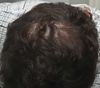
A 28 year old male experiencing diffuse thinning, chronic dandruff and scalp crust (seborrheic dermatitis), with replies discussing the use of topical fin for hormone imbalances and Nizoral for seb derm.
The user experienced significant hair loss on the scalp, eyebrows, eyelashes, and pubic area, along with itchy, flaky skin and red patches. They have a history of eczema and dermatitis and suspect that stopping shampoo use and taking Ritalin may have contributed to the issue.
The conversation discusses hair thinning potentially caused by seborrheic dermatitis, with the user considering over-the-counter treatments like Head and Shoulders, Selsun Blue, and Nizoral, while maintaining keratin-treated hair. A suggestion is made to use raw organic honey as a hair mask to treat seborrheic dermatitis without affecting keratin treatments.
The user has been using dutasteride, lymecycline, betamethasone, and minoxidil for hair loss but struggles with eczema and dry skin. They feel hopeless as no treatments or moisturizers have helped, and they are concerned about their appearance due to their soft facial features.
Topical tretinoin applied to the face may exacerbate hair loss in some individuals, potentially triggering conditions like frontal fibrosing alopecia. Experiences vary, with some users reporting no impact on hair, while others experience significant hair loss.
Excess Vitamin A and topical retinoids can cause diffuse hair shedding. The user suspects their chronic telogen effluvium may be linked to using adapalene, a topical retinoid.
The conversation is about hair regrowth using high-dose dutasteride, oral minoxidil, and microneedling. Users discuss seeing tiny hairs and hope they will become terminal, with advice to use derma rolling weekly for better results.
User is using minoxidil with tretinoin 0.025% and experiencing peeling and burning on the scalp. They are unsure if it's effective or if they are using it too frequently.
The user experienced hair shedding and follicle shrinkage when using retinoic acid, despite trying different concentrations and frequencies. The hair loss persisted for six months but regrew after stopping the treatment.
The conversation discusses preventing infection from derma stamping for hair loss treatment, with suggestions to reduce needle depth and consider alternatives like tretinoin. The user experienced irritation possibly from zinc chloride and stopped using the shampoo and derma stamping.
The user is experiencing white flakes and a greasy look from using a topical solution containing 0.025% finasteride, 8% minoxidil, 0.01% retinoic acid, and 1% hydrocortisone. Suggestions include reducing application frequency, using a brush to clean the scalp, and considering alcohol-free alternatives.
The conversation discusses using scalp antiandrogens like RU58841, pyrilutamide, or fluridil on the face to reduce sebum production, noting that clascoterone (winlevi) is an approved facial antiandrogen with underwhelming reviews.
The conversation discusses whether a longtime NW7 scalp has vellus hairs under a microscope or is completely smooth. Treatments mentioned include Minoxidil, finasteride, and RU58841.
User noticed beard and sideburn hair loss, and thinning eyebrows, diagnosed with alopecia barbae and male pattern baldness, and prescribed Desonide cream. User seeks feedback on Desonide cream.
Balding scalps have more androgen receptors, leading to increased TGF-beta, which causes blood vessel loss and hair follicle miniaturization. Blocking androgen signaling and TGF-beta may help prevent hair loss.
The reduction in scalp oiliness is likely due to finasteride reducing DHT levels and the use of ketoconazole shampoo. The combination of these treatments may have decreased sebum production.
The user experienced hair thinning from chromium and alpha lipoic acid supplements, which stopped after discontinuing them. Someone mentioned this could be telogen effluvium, a temporary condition.
Switching from 2% liquid minoxidil to 5% foam minoxidil reduced scalp irritation but increased eyebrow flakiness and thinning. The user speculates that propylene glycol in the liquid formulation might have been protecting against seborrheic dermatitis while causing contact dermatitis.
A 17-year-old is experiencing diffuse thinning, dandruff, body hair shedding, and other symptoms, possibly linked to seborrheic dermatitis or telogen effluvium. They are using ketoconazole shampoo and considering blood tests to check for thyroid issues or deficiencies.
A user shared their experience with telogen effluvium triggered by a keratin treatment, leading to significant hair loss. They found improvement using aloe vera with rosemary, a protein and iron-rich diet, and patience.
User discusses tight scalp causing hair loss and suggests treatments like scalp massages, PRP, saw palmetto, and eucapil. They share their experience with saw palmetto and eucapil and consider adding PRP and scalp massages for better results.
A 25-year-old male is experiencing hair thinning at the hairline and vertex, considering using a dermapen or dermastamp, and seeking advice on whether to continue with natural remedies like onion juice and rosemary oil or start using minoxidil or finasteride. He is also looking for recommendations on microneedling devices.
The user is experiencing excessive hair thinning and is unsure of the cause. They are seeking opinions on treatments like Minoxidil, finasteride, and RU58841.
Hair loss treatment should target dermal white adipose tissue (DWAT) to restore hair follicles. Potential remedies include tocopherol (vitamin E), botox, rosiglitazone, niacin, kojyl cinnamate esters, and ADP355.
A 23-year-old is experiencing hair that is thick at the ends but thin at the roots despite using minoxidil and finasteride for 10 months. They are concerned about whether this is normal or a sign of miniaturization and seek advice on reversing or improving the condition.
A 22-year-old male experiencing hair thinning and loss, possibly due to seborrheic dermatitis or low vitamin D, is cautious about using minoxidil or finasteride due to heart palpitations and high blood pressure. Suggestions include using ketoconazole shampoo to control inflammation and focusing on treating the dermatitis first.
A 15-year-old experiencing severe diffuse thinning plans to use minoxidil, dermarolling, and possibly ketoconazole, with hopes to later incorporate finasteride. Concerns about starting finasteride too young and the need for a dermatologist consultation are discussed.
The user is experiencing hair loss after a hair transplant and is considering using fluridil (Eucapil) and possibly alfatradiol as treatments, as they couldn't tolerate finasteride or minoxidil. The manufacturer of Eucapil confirmed they won't produce higher concentrations due to lack of efficacy.