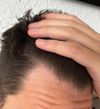
User tried dutasteride, topical finasteride, oral minox, dermawounding, saw palmetto, pumpkin seed oil, and ketacozonole for hair loss. Improvement was temporary, now trying RU58841 and seeking help.
A user's six month progress with Pyrilutamide, a hair loss treatment; they experienced positive results such as stopped itching and shedding, as well as regrowth, without any side effects.
The conversation is about a person's hair improvement after 14.5 months using RU58841 and Minoxidil topically at 50 mg each day, with noticeable hairline improvement but incomplete crown area recovery. The person struggles to take good pictures of their crown area.
A 36-year-old started using finasteride (0.3-0.5mg daily), 5% minoxidil foam, and weekly dermarolling/dermapen treatments to address hair loss. They also began taking supplements for low ferritin and vitamin D, hoping to improve hair thickness and cover a bald spot.
RU58841 is discussed as a treatment that stops scalp itching when used with finasteride or dutasteride. The user is considering trying RU58841 due to persistent itching despite using the "big 3" treatments.
The user has been using dutasteride, oral minoxidil, and vitamin D for 8 months with no improvement in hair loss. They are considering trying RU58841 or a hair transplant due to the ineffectiveness of current treatments.
RU58841 users report mixed results, with some experiencing no benefits and others noting regrowth but potential side effects. Many prefer finasteride and minoxidil due to better-studied safety profiles.
The conversation discusses whether RU58841, if FDA approved and safe, would be recommended over finasteride for hair loss. Specific treatments mentioned include RU58841, finasteride, and minoxidil.
Pyrilutamide, a potential hair loss treatment, and how it compares to existing treatments such as Minoxidil, Finasteride and RU58841. Real-world results are being discussed to determine its effectiveness.
The experiences of users who have used RU58841 to treat hair loss, including both positive and negative effects. Some side effects reported include chest pain, joint pain in the hands, tinnitus, and increased heartbeat.
The user is considering adding an anti-androgen, RU58841, to their current hair loss treatment routine due to receding hair. They are also contemplating waiting for Breezula or Pyrilutamide to become more affordable.
The user is experiencing hair loss and has been using RU58841 but is considering pyrilutamide and minoxidil, avoiding finasteride due to side effects. Another user suggests finasteride or dutasteride as essential, possibly in topical form, while dismissing saw palmetto as ineffective.
GT20029 and PP405 are discussed as potential alternatives or complements to finasteride for hair loss treatment. GT20029 is entering phase 3 trials, while PP405 is seen as promising for regrowing hair and possibly eliminating the need for other treatments.
Fluridil degrades androgen receptors, which are prevalent in the scalp and other tissues. People with androgenetic alopecia (AGA) may have higher expression of these receptors and 5AR activity in affected scalp areas.
The conversation is about a user's hair loss treatment routine, which includes RU58841 for 9 months and Dutasteride for 6 months, with other unspecified treatments considered extra. One user inquired about the source of RU58841.
L. reuteri, a probiotic, is being explored for its potential benefits in treating androgenic alopecia, possibly enhancing finasteride's effects and reducing inflammation. The user combines this with finasteride, oral minoxidil, and other supplements, noting some improvement in hair loss.
A user discussed their hair transplant progress and mentioned using 1mg Finasteride, 5% Topical Minoxidil, and recently starting 5% RU58841. They are seeking advice on whether to use RU58841 at month 4 post-transplant.
The conversation discusses the use of 5-alpha-reductase inhibitors like finasteride and dutasteride for hair loss in transgender women, particularly in relation to testosterone suppression. The original poster has been using dutasteride and is considering stopping it due to undetectable testosterone levels.
The user has been using a combination of finasteride/dutasteride, minoxidil, tretinoin, and hydrocortisone with microneedling and ketoconazole shampoo for hair loss. They are asking if the baby hairs growing will turn into terminal hairs with continued treatment.
The conversation is about hair loss treatments, specifically Pyrludimide (KX-826) and Breezula (clascoterone), with the user unable to tolerate finasteride and dutasteride. The user plans to use these treatments alongside minoxidil, considering the efficacy and availability of each option.
Using a combination of finasteride, minoxidil, dermarolling, and RU58841 to treat hair loss. Participants discussed the time commitment required for treatment and the effectiveness of different dosages.
The conversation is about using topical finasteride for hair loss and concerns about its application, side effects, and practicality. Users suggest switching to oral finasteride for convenience, despite potential side effects.
Pyrilutamide is being used effectively for hair loss with no side effects, and the user is seeking a cheaper bulk supplier. Users discuss the difficulty of finding affordable, trustworthy sources, with some suggesting potential suppliers.
The user experienced significant hair shedding after long-term use of finasteride and dutasteride and is now considering trying RU58841 as a last resort. They have checked health factors and suspect stress and poor sleep may contribute to the shedding, but they are determined to try RU58841 to see if it helps with androgenetic alopecia.