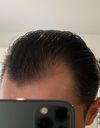
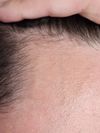
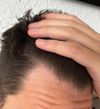
A 21-year-old with a family history of early balding is advised to see a dermatologist to confirm androgenetic alopecia (AGA) and consider treatments like finasteride or dutasteride to prevent further hair loss, and minoxidil, possibly with tretinoin, to regrow hair. Caution is advised with oral minoxidil, and a cardiologist should be consulted before use.
The user is experiencing hair improvement in the central and back areas after using finasteride, minoxidil, and a galenic lotion, but the temple area is worsening. They suspect the lotion might be causing the issue and are considering stopping its use.
Finasteride is key for hair regrowth, supported by oral/topical minoxidil, Folexin, Nizoral/Head & Shoulders, and vitamin D. No side effects experienced; early intervention and patience are crucial.
A user experienced hair loss due to a folic acid deficiency and saw hair regrowth after taking a folic acid supplement. They advise checking for a folic acid deficiency before spending money on other treatments.
Small hairs around the hairline may regrow with continued use of minoxidil, finasteride, and ketoconazole. The user is hopeful about hairline improvement.
The user is experiencing hair thinning and has a vitamin D deficiency, which they suspect might be causing the issue, but they are also considering androgenic alopecia (AGA) as a cause. They are currently using minoxidil and are unable to get finasteride prescribed, while others suggest addressing the vitamin D deficiency and consulting a dermatologist.
The user is experiencing hair thinning and bald spots, using Nizoral, rosemary oil, fluocinolone, and receiving PRP treatments. They are considering oral minoxidil and finasteride but are hesitant due to age and financial constraints.
A 19-year-old is using keto shampoo, topical Minoxidil 5% for 3 months, and topical finasteride 0.1% for 1.5 months to address hair loss. They are noticing baby hairs and shedding, questioning if the hairs will thicken and if more time is needed for finasteride to work.
The user is experiencing aggressive diffuse thinning despite using 1mg oral finasteride daily, topical minoxidil twice, microneedling, and Nizoral for seborrheic dermatitis. They are considering switching to dutasteride or RU58841 but are advised to seek a second opinion to determine the cause of hair loss.
The mechanism of Androgenic Alopecia and practical applications of treatments like Minoxidil, Finasteride, RU58841, dermarolling, scalp massages, anti-fungals, progesterone, estrogen, PPAR-γ activators, reducing oxidative stress, and scalp exercises. It explains why DHT is important in AA and how other factors might be involved such as hypoxia, increased DKK-1 expression, morphological changes to the scalp, skull growth during childhood/puberty, and blood flow.
The user is experiencing hair loss without a family history and suspects stress or telogen effluvium (TE) as the cause, despite using finasteride without results. Others suggest stress, vitamin deficiencies, or other conditions could be factors, and some mention that balding can occur without a family history.
User "hemantch" shares 5 months progress using topical Fin, Min, topical Dut, and a laser cap for hair loss. Significant regrowth was noticed after 1 month, and the treatments worked well despite being bald for 10 years.
Hair loss and potential treatments, primarily focusing on Finasteride and Minoxidil. Other solutions discussed include PRP, dermarolling, LLP, and scalp tension relief.
A 24-year-old male started using finasteride and minoxidil for hair loss, noticing reduced hair fall but continued temple and frontal recession. He uses both oral and topical minoxidil, biotin, vitamin D, and coal tar shampoo, and experiences rare heart palpitations.
A user is experiencing hair loss and is using Morr F 5% Minoxidil, Finasteride Lipid Solution, ketoconazole shampoo, and biotin tablets. They seek advice on the correct application method and hair partitioning.
A 24-year-old male started using 1 mg finasteride and topical minoxidil for hair loss in February 2025. By June 2025, he noticed improvement in his right temple but experienced thinning at the crown and continued shedding.
A user with long-term hair loss has been using topical minoxidil, finasteride, RU58841, ketoconazole, and dermastamping for 8 months. They are unsure if the new hairs are miniaturized or vellus.
The user experienced significant hair loss after extended fasting, initially thought to be Telogen Effluvium, but later suspected male pattern baldness. They tried finasteride briefly but stopped due to concerns about side effects, and are unsure if the hair loss is due to Telogen Effluvium or another cause.
The user is experiencing hair loss and has been using RU58841 but is considering pyrilutamide and minoxidil, avoiding finasteride due to side effects. Another user suggests finasteride or dutasteride as essential, possibly in topical form, while dismissing saw palmetto as ineffective.
PP405 shows initial promise for treating androgenetic alopecia, with safety confirmed in early trials, but skepticism remains due to limited data. Further trials are needed to determine its true efficacy and potential market impact.
A 39-year-old male has been using oral finasteride for 2 months and topical minoxidil 5% for 5 months, along with dermastamping and keto shampoo weekly, to address hair loss. He feels his hair is thicker overall but is concerned about a persistent bald spot.
The user has been taking oral finasteride for 2 months, experiencing more hair loss but noticing some fuzzy hair growth on the scalp. They are questioning if this new hair growth is significant.
Inflammation plays a significant role in hair follicle miniaturization and androgenetic alopecia, with treatments like ketoconazole shampoo, minoxidil, and finasteride being used to address it. Users discuss the benefits of anti-inflammatory treatments and peptides like KPV, alongside traditional hair loss treatments, to improve scalp health and hair quality.
A 21-year-old is experiencing significant hair loss and considering treatments like dutasteride, minoxidil, and possibly a hair transplant. Others share their experiences with finasteride, scalp micropigmentation, and hair transplants, discussing the emotional impact and offering support.
The conversation discusses a hair loss treatment involving oral minoxidil, topical finasteride, and a custom topical formulation with minoxidil, cetirizine, finasteride, progesterone, and hydrocortisone. The user seeks advice on the effectiveness of these ingredients for diffuse thinning.
Triple Hair Inc. developed a new topical treatment, TH07, combining Finasteride, Latanoprost, and Minoxidil for androgenic alopecia. Users discussed its effectiveness compared to other treatments and shared their own product combinations.
PP405 is a promising new hair loss treatment that may reactivate dormant hair follicles without side effects. It could surpass traditional treatments like minoxidil and finasteride if successful in further trials.