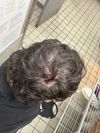
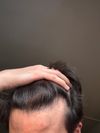
The conversation is about a person starting treatment with RU58841 for hair loss. They are asked to share progress pictures to show if the treatment is effective.
The conversation is about the interest in testing verteporfin, potentially with a dermaroller, for hair loss treatment. There is frustration over the lack of group buys for promising treatments compared to past efforts with less evidence.
People are discussing obtaining and testing PP405 for hair loss treatment, with concerns about its purity and effectiveness. Some are considering delaying hair transplants, while others suggest using existing treatments like finasteride and minoxidil.
The conversation is about the FDA approval of WINLEVI for acne treatment and the anticipation of Breezula, a hair loss treatment using the same active ingredient, which may indicate a positive future for Breezula's release. There is disappointment that Breezula's results are not optimal, but it is seen as progress in hair loss treatment.
Alfatradiol is often discussed at a 1% concentration, but studies typically use 0.025%. Some users report success using it as a topical treatment alongside other hair loss treatments like finasteride.
GHK-RU58841 is used for hair loss, with positive results when combined with finasteride, stemoxydine, redensyl, and alfatradiol. Users report effectiveness after adding finasteride.
PP405 is a potential hair loss treatment showing promise, especially for men with severe balding. Some are hopeful it will be a game-changer for those who cannot tolerate finasteride or minoxidil, despite skepticism about the outcomes.
The user is seeking a new source for RU58841 in the EU after their previous supplier stopped selling it. They mention considering Anagen, Actifolic, Minoxidilmax, and rudirect, and ask for advice on shipping within the EU and product quality, while also mentioning their current hair loss treatment involves mixing RU with Stemoxydine and Alfatradiol.
User shares progress after 4 months of using finasteride and dermarolling, with occasional use of coconut and rosemary oil. They aim to stop hair loss and hope for increased top density.
A user is seeking advice on purchasing RU58841 from Biolab Shop in Poland and is looking for trustworthy sources that deliver to Germany from Europe or China. They are interested in the product's composition and user experiences.
Visible hair improvement after 10 weeks using minoxidil, estradiol enanthate, acetophenide algestone, and bicalutamide. The user is a 25-year-old male with reduced testosterone levels, expressing a preference for less masculinity.
Progress achieved with finasteride, oral minoxidil and derma rolling in the span of three months. The replies discussed potential regrowth from using these treatments as well as advised seeking professional medical help for further hair loss advice.
Federal funding cuts have delayed PP405 research, affecting hair loss treatment progress, though clinical trials will continue. The discussion highlights PP405's potential compared to minoxidil and finasteride and stresses the importance of government-funded research.
The conversation is about the progress and development of a hair loss treatment called GT20029. People are discussing updates on its status and speculating on how long it will take to become available.
Kintor plans to release pyrilutamide foam and a plant-based Koshine by year-end, with GT20029 progressing in their pipeline. Users are pleased about the absence of propylene glycol (PG) in the new products.
Extended-release oral minoxidil (VDPHL01) shows promising results for hair growth with improved safety, achieving significant hair count increases and minimal side effects compared to placebo. The treatment is designed to maintain effective concentrations while reducing side effects, making it a safer option for those who cannot tolerate standard minoxidil.
A 20-year-old experiencing crown thinning is using a topical minoxidil/finasteride treatment and is concerned about shedding. Shedding is common and temporary, lasting weeks to months, and it's advised to continue the treatment as results can take up to a year.
Hair loss treatment with latanoprost, minoxidil, and biotin showed progress. Latanoprost, a glaucoma drug, stimulates anagen phase and increases conversion of vellus hair to terminal hair.
The user is considering combining 1mg oral finasteride with 0.1% topical finasteride due to reduced effectiveness after 5 years and is also using minoxidil twice daily. They previously tried dutasteride but stopped due to side effects and are hesitant to try RU58841.
The user shared their hair loss treatment progress using topical products like exosomes, fluridil, Kx826, and topical dutasteride, avoiding oral finasteride and dutasteride due to side effects. They found exosomes from Creative Biolabs most effective and also used topical probiotics, noting improvements without significant side effects.
The user is using topical finasteride 0.3% and minoxidil 5% for hair regrowth, along with dermal stamping, zinc, fish oils, and biotin. They report some regrowth and shedding, with no significant side effects.
The user experienced some hair regrowth using twice daily topical 5% minoxidil and once daily oral 1mg finasteride, along with dermarolling. They plan to continue this regimen for at least two years and may try additional treatments if needed.
The user is concerned about starting finasteride due to ongoing body development and seeks alternatives to maintain hair until age 25. They are considering options other than finasteride for hair loss management.
A user is starting a hair loss treatment with a 3-in-1 spray containing 6% minoxidil, 0.3% finasteride, and 0.025% tretinoin. Users are skeptical about its effectiveness due to advanced hair loss, but some suggest adding microneedling and using affordable generics.
Hair looks thinner in sunlight, and users discuss using hair fibers, minoxidil, finasteride, and considering dutasteride for hair loss. Hair fibers like Toppik help conceal thinning, and some users suggest additional treatments like derma stamping and micro-needling.