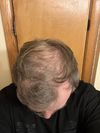
User started Finasteride for hair loss and uses Toppik to cover bald spots. They wonder if Toppik's keratin fibers will block follicles and affect hair regrowth.
Verteporfin and FAK inhibitors being looked at as potential treatments for hair regeneration, with updates on the unofficial off-label human trial being discussed.
The conversation discusses a transgender individual's successful hair loss treatment over 1.5 years using 2.5mg oral minoxidil, 5mg finasteride, and 8mg weekly injectable estradiol valerate. Some users debate the appropriateness of this approach within the group's goals, while others support the individualized treatment and its additional benefits for transgender individuals.
A user shared impressive hair growth results after 77 days using oral finasteride, topical minoxidil, and weekly microneedling. They reported thicker, darker hair and minimal shedding, with treatment costs around 30 euros per month.
Pyrilutamide, a potential hair loss treatment that has recently been released for sale, and is thought to have similar efficacy to Dutasteride without side effects. It was discussed in terms of its effectiveness compared to Finasteride, its use by females, and whether it can be safely mixed with RU58841.
A double-blind clinical study that found ingestion of tocotrienols resulted in a 34.5% increase in hair regrowth compared to the placebo group, and discussion about potential side effects and cost of supplementation with vitamin E pills. The conversation noted that it may be more effective than commonly used treatments like minoxidil and finasteride.
A 32-year-old male started using a topical spray containing 0.01% finasteride and 6% minoxidil to combat hereditary male pattern baldness. He reports no side effects and is optimistic about potential hair regrowth.
Fluridil was discussed as a hair loss treatment, with some users experiencing side effects like lethargy and chest tightness. Users also mentioned other treatments like RU58841 and finasteride, with mixed opinions on their effectiveness.
A 22-year-old is frustrated with friends and family's dismissive attitudes towards hair loss and finds support and hope in an online community. They have not yet treated their hair loss but are considering medications like minoxidil and finasteride.
The post discusses a user's 6-month progress using topical finasteride (0.08%) and minoxidil (5%) once a day, combined with scalp micropigmentation (SMP). The user hopes for improved hair growth as they let their hair grow out.
The user reports significant hair regrowth after 5 months using oral finasteride and minoxidil. They seek advice on restarting treatment and using derma rollers after a 2-month break.
A 31-year-old male shared his 3-year progress using finasteride 1 mg daily, with additional treatments including nutrafol, multivitamins, vitamin D, marine collagen, PRP scalp injections, micro-needling, and Nizoral. He experienced temporary libido issues but currently has no side effects.
A user shared their successful hair regrowth experience using 1.25mg finasteride daily, alternating oral and topical minoxidil, and weekly dermarolling. They reported significant improvement in their hairline and crown coverage over a year, with minimal side effects.
A woman who is considering giving up on her hair loss journey after trying minoxidil and spironolactone, but other posters offer words of encouragement and suggest the use of wigs.
A 37-year-old is using topical Minoxidil once daily to address hair thinning, avoiding finasteride due to regular blood donations. They are satisfied with the results, seeing new hair growth, and prioritize blood donation over additional treatments.
The user noticed new baby hairs after using sulforaphane but is still experiencing shedding. They are seeking a supplement to stop shedding, possibly grape seed extract.
Hair regrowth using oral finasteride and topical minoxidil, with significant improvement after three months. Some users experienced side effects like bloating and dark circles, and discussed alternative treatments like microneedling and natural oils.
The conversation is about a user's hair regrowth after using only finasteride for 5 months, with some users expressing congratulations and curiosity about the lack of minoxidil use and potential side effects.
A user shared their hair regrowth journey from ages 31 to 39, using finasteride, oral and topical minoxidil, and dutasteride. They experienced significant hair density improvement and temple regrowth, with increased hair growth as the only side effect.
The conversation is about a user experiencing small hair regrowth after 4 weeks of using oral Minoxidil and Dutasteride, and considering a future FUE transplant. Some users express skepticism about the regrowth, while others share similar experiences or doubts about the effectiveness of the treatment.
A 19-year-old is using keto shampoo, topical Minoxidil 5% for 3 months, and topical finasteride 0.1% for 1.5 months to address hair loss. They are noticing baby hairs and shedding, questioning if the hairs will thicken and if more time is needed for finasteride to work.
The user has been using topical minoxidil, finasteride, microneedling, and laser light therapy for 11 weeks to address hair thinning. They report difficulty applying the treatment due to increased hair thickness and are unsure if the results are significant.
A 24-year-old male using topical finasteride for hair loss is experiencing thinning despite treatment and has high estrogen levels. He is seeking advice on whether high estrogen could be causing hair loss and how others with high estrogen levels have addressed it.
The user shared their positive experience with a hair loss treatment regimen, which includes a diluted version of Hims finasteride spray, Kirkland 5% minoxidil, and weekly dermarolling. The user also mentioned taking hair multivitamins and plans to continue updating on their progress.
User shares progress after 4 months of using finasteride and dermarolling, with occasional use of coconut and rosemary oil. They aim to stop hair loss and hope for increased top density.
The user experienced hair regrowth after four months of using finasteride, dutasteride, and oral minoxidil. They noted increased oiliness in their hair after starting the treatment.
The user is experiencing hair regrowth using 1mg oral finasteride daily, Minoxidil foam twice a day, and microneedling weekly with a 1.5mm needle. They are seeking feedback and suggestions to optimize their hair regrowth.
The user started using 1mg finasteride and Regaine foam post-hair transplant, noticing significant hair growth at three months. They experienced testicular cramps as a side effect but no other issues, and are considering microneedling for further improvement.
The conversation is about the effectiveness of finasteride (fin) in preventing hair loss after a hair transplant. Some users have experienced hair thinning and loss after stopping finasteride, while others have had success with finasteride and minoxidil (min) in maintaining their transplanted hair. The general consensus is that finasteride is important for younger patients to prevent further hair loss.