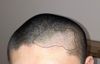
Concerns about the impact of hair loss treatments like finasteride on fertility and future children. The user is worried about reduced sperm count and quality due to lowered DHT levels.
The user has been using finasteride and dutasteride for hair loss but is experiencing low energy and motivation, possibly due to high prolactin levels. Despite treatment, hairline recession continues, and the user is considering the impact of low DHT levels on overall health and energy.
The user observed new tiny white hairs after 12 days of using minoxidil, finasteride, microneedling, and biotin, hoping they will become terminal hairs. Others advise that while some hairs may not fully grow, consistent treatment, patience, and scalp massages could enhance results.
The user is considering continuing minoxidil and microneedling, possibly adding low-dose topical finasteride, and undergoing a large FUE hair transplant to improve hair appearance. They plan to use hair fibers for added density, aiming for a convincing cosmetic look rather than full density.
The user "Venom7337" shared their progress with hair loss, mentioning the treatments they used: Dutasteride, Minoxidil, and Ketoconazole shampoo. They hope to see further improvement in hair density and hairline.
A 19-year-old is experiencing hair thinning and recession above the temples, causing stress and consideration of starting finasteride despite financial constraints. They are unsure whether to begin treatment immediately or wait to assess the situation further.
The user is experiencing one-sided diffuse thinning and has been using finasteride and liquid minoxidil for 4-5 years with minimal results. They are considering whether to save for a hair transplant or address scalp sensitivity and irritation first.
The user's experience with hair loss treatments such as finasteride, dutasteride, and minoxidil, and how they are affecting their density. Replies to the post suggest different hairstyles and hair transplant options, and provide encouragement for the original poster's situation.
User reports regrowth at temples and improved hairline density after 6 months of using 0.5 mg Dutasteride daily, topical minoxidil twice daily, and vitamins. Considering adding copper peptide but concerned about overdoing it; experiencing increased shedding on the crown.
Temporal peaks are crucial for a natural-looking hair transplant, but they are challenging to achieve due to the need for precise angles and appropriate hair thickness. Many users emphasize the importance of finding a skilled surgeon and using finasteride to maintain hairline stability.
Finasteride and dutasteride can show initial hair count increases within 12 weeks, but visible improvements often take longer, with many users reporting noticeable changes after a year or more. While early results may be seen under a microscope, significant cosmetic improvements typically require more time for hair to thicken and become visibly denser.
A user discussing their hair transplant progress at 8 months, expressing concern about lack of growth in the front. They're currently using Minoxidil and dutasteride, and considering microneedling. The responses suggest waiting for full growth, which can take up to 13-14 months.
The conversation is about someone planning to start finasteride for hair loss and wanting to interpret pre-treatment blood panels to assess the risk of side effects like gynecomastia. They list various tests to measure hormone levels and other health indicators.
Finasteride improved hair thickness for someone with diffused thinning after 11 months, with no side effects. Patience and consulting a dermatologist are advised, and minoxidil is suggested for additional support.
The user has been using a combination of treatments including Dutasteride, Minoxidil, RU58841, ketoconazole shampoo, microneedling, and low-level laser therapy to address hair loss but continues to experience shedding and density loss. Despite high testosterone and iron levels, the user is frustrated with the lack of improvement and is considering adjusting treatment or exploring other options like a hair transplant.
The user is happy with the progress in hair density after using a regimen of oral Dutasteride, topical Minoxidil, Tretinoin cream, Ketoconazole shampoo, and an LLLT helmet. They reported no side effects and noted that Dutasteride and Tretinoin were particularly effective.
The conversation is about organizing hair regrowth results using a standard format in a single post for easier access. Treatments mentioned include oral minoxidil, oral finasteride, and dermarolling.
AMP-303, a new injectable treatment for androgenetic alopecia, showed promising results in increasing hair count and density with minimal side effects. The treatment demonstrated significant hair regrowth and durability, offering new hope for those with hair loss.
Topical melatonin was found to significantly increase hair density and decrease scalp conditions like seborrheic dermatitis. The user is considering using it alongside finasteride and oral minoxidil for treating hair loss and scalp health.
The conversation discusses the use of trichoscopy to predict hair loss patterns and inform treatment approaches. Treatments mentioned include minoxidil, finasteride, and dutasteride, with varying effectiveness based on gender-specific hair loss patterns.
A user shared progress pictures after 3 years on finasteride, showing improved hair thickness and density, and mentioned losing 15kg. The user plans to fix their hairline next month and received mixed feedback on their hairstyle and the effectiveness of finasteride.
The conversation discusses hair shedding after starting a treatment regimen including topical dutasteride, RU58841, minoxidil, and keto shampoo. Shedding is considered normal, and users suggest adjustments like increasing dutasteride dosage or using oral medications for better results.
The user is experiencing new hair growth after using oral dutasteride, topical minoxidil, and microneedling, but is concerned about black dots on the hairline, which might be clogged pores or dormant follicles. The user previously used a topical minoxidil/finasteride spray and had good results, despite a shedding phase after switching treatments.
Hair appearance fluctuates due to factors like styling, product buildup, and humidity, causing frustration for those with diffuse thinning. Treatments mentioned include minoxidil, finasteride, ketoconazole shampoo, and RU58841, with mixed results.
The user experienced high estradiol levels after using topical finasteride at 0.1 mg/day, which normalized after discontinuation. They are questioning if this low dosage could significantly impact hormone levels.
The user experienced hair regrowth using 5% minoxidil and 1 mg finasteride, with additional supplements like a DHT blocker and foligrowth. Despite initial shedding, consistent use led to visible improvement in hair density.
A user shared their positive experience with a 5% minoxidil and 0.1% finasteride topical serum for hair loss, noting improvements in hair density and new growth within 2.5 months. They also mentioned using red light therapy, vitamin D+K2 supplements, and an all-natural shampoo.