Lab-grown hair using iPSCs is being explored, but practical applications are limited. Finasteride is suggested as the only current effective treatment.
Clascoterone has shown promising results in increasing hair density without systemic side effects, potentially offering benefits similar to finasteride. There is skepticism due to the lack of published photos despite the market interest.
Pyrilutamide (KX-826) is discussed as an anti-androgen treatment for hair loss, with mixed user experiences. Some users report no results, while others find it mildly effective.
GT20029 shows promising results for hair loss treatment, with potential approval in China by 2026 or 2027, but U.S. approval may take longer. It could serve as an alternative to finasteride, with a potentially better side effect profile.
PP405 is a new topical treatment for hair loss, showing promise in trials but still requires finasteride for maintenance. There is skepticism about its effectiveness and safety, with concerns about needing finasteride to maintain results.
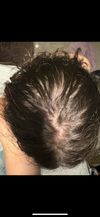
The user is considering using topical finasteride for thinning hair around the middle part, vertex, and crown, and is unsure if the whole scalp is thinning. Another user suggests oral finasteride is more effective than topical, and recommends consulting a dermatologist for proper treatment.
A case study that suggests verteporfin may be able to help regrow donor hairs after FUE extraction, and the potential implications of this result. Treatments discussed include Minoxidil, Finasteride, and RU58841.
OP is planning a hair transplant but has gyno surgery scheduled next month. It's recommended to wait 4-6 weeks after the gyno surgery before proceeding with the hair transplant.
Eirion Therapeutics is recruiting for phase 1 of ET-02 in Texas, which showed promising hair growth results in non-clinical studies. ET-02 demonstrated significantly more hair growth compared to Minoxidil.
PP405 is a potential hair loss treatment that may work by blocking signals that cause hair cells to stop growing, requiring daily application for effectiveness. It could serve as an alternative to minoxidil and finasteride, but it is not yet available on the market and may take several years to be released.
Pelage is recruiting for phase 2 trials, showing promise for treating bald regions. The discussion highlights its potential effectiveness based on its mechanism of action.
David Barreto shared that a London-based research group is conducting a 12-month trial for a new nutraceutical treatment for pattern hair loss, designed with Dr. Carlos Puig. The trial aims to provide robust data, with results expected in 1-2 years, potentially representing a significant advancement since finasteride’s introduction in 1997.
Clascoterone is promising for hair loss, showing 24.5% improvement in satisfaction compared to placebo. Users consider it an alternative to finasteride, with concerns about absorption and side effects.
PP405 is a promising new treatment for hair loss that activates dormant stem cells in hair follicles, potentially bypassing the effects of DHT. It is currently in phase 2 trials and could be available between 2027 and 2030, but it is not considered a definitive cure.
A 22-year-old with high estradiol levels is considering starting finasteride for hair loss. They have an upcoming endocrinologist appointment to discuss whether they should proceed with the treatment.
Hair loss treatments are advancing, with Coegin Pharma's FOL005 expected this year and Breezula potentially later. Pyrilutamide is available but not very effective, while Kintor's products face skepticism; traditional treatments like finasteride and minoxidil remain dominant.
A 16 year old's experience with using pyrilutamide to treat hair loss, and the potential side effects of adding tretinoin to minoxidil and finasteride treatments.
User noticed tiny black hairs on temples after using rosemary oil along with finasteride, minoxidil, and 0.5mm derma roller. They are curious if these hairs will become terminal.
Tretinoin can cause non-telogen hair loss in some men by inducing catagen-like changes in hair follicles and through retinoid toxicity, especially when used with minoxidil. Some users report hair loss even when using retinoids on the face, while others experience benefits when combined with treatments like finasteride and minoxidil.
The conversation is about analyzing receded temple closeups for signs of fibrosis, scarring, or androgenetic alopecia (AGA). Specific treatments like Minoxidil, finasteride, or RU58841 are not mentioned in the conversation.
The user is experiencing hair loss without a family history and suspects stress or telogen effluvium (TE) as the cause, despite using finasteride without results. Others suggest stress, vitamin deficiencies, or other conditions could be factors, and some mention that balding can occur without a family history.
Hair loss treatments discussed include cosmeRNA, minoxidil, finasteride, RU58841, and pyrilutamide. Users debate effectiveness, side effects, and upcoming treatments, with some expressing skepticism and others optimism.
The conversation is about treatments for androgenetic alopecia, focusing on hyperresponders. Treatments include Minoxidil, finasteride, RU58841, leg training, and cold therapy.
A 26-year-old is experiencing hair thinning and has received conflicting diagnoses of androgenetic alopecia and telogen effluvium. They are considering treatments like dutasteride, oral and topical minoxidil, and are unsure whether to start treatment or pursue further diagnosis like a scalp biopsy.
The Phase 2 trial for Pyrilutamide in the US, which started a year after the China trials, and inquiring about any available information on when it will finish. Treatments discussed include Minoxidil, Finasteride, and RU58841.
The conversation discusses concerns that Anagenic's version of GT20029 might not be as effective or safe as Kintor's, with comparisons to issues faced by pyrilutamide. The chemical structure of the drug has been published.
A peptide from Japanese water chestnut fruit may help with hair loss by suppressing DHT's effect on hair follicle cell death, potentially serving as a finasteride alternative. The treatment's effectiveness and safety in humans remain uncertain.
Treatments for hair loss, including the effectiveness and safety of Pyrilutamide compared to RU58841; experiences using both medications with varying results; and recommendations to try Pyrilutamide instead of RU58841.
The conversation discusses an interview with Dr. Tsuji about hair follicle stem cell multiplication and the financial challenges of starting human clinical trials. It also mentions the need for funding to secure a patent for a protein that promotes hair growth.
The user has been managing hair loss with microneedling, Nutrafol, topical finasteride/minoxidil foam, LLLT, and Nizoral, and plans to add oral minoxidil. They are seeing improvement and are cautious about using oral finasteride due to past gynecomastia concerns.